
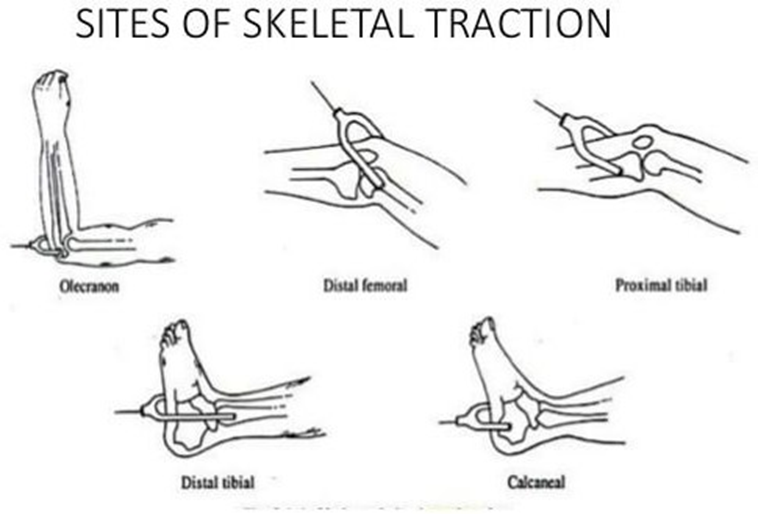
Which nursing intervention is appropriate for a client with skeletal traction?
Pin site care
Five-pound weight lifting restriction
Prone positioning
Intermitent weights
The Correct Answer is A
Choice A reason: Pin site care is essential for a client with skeletal traction to prevent infection and ensure proper healing.
Choice B reason: A five-pound weight lifting restriction is not related to the care of a client with skeletal traction.
Choice C reason: Prone positioning is not typically recommended for clients with skeletal traction as it may interfere with the traction setup.
Choice D reason: Intermitent weights are not a standard intervention for skeletal traction, which requires consistent and controlled application of force.
Nursing Test Bank
Naxlex Comprehensive Predictor Exams
Related Questions
Correct Answer is D
Explanation
Choice A reason: While painful and red-tinged urination is a concern, it is not directly related to the intravenous pyelogram procedure.
Choice B reason: The end of the menstrual period is not relevant to the intravenous pyelogram procedure.
Choice C reason: Drinking fluids is generally encouraged but does not need to be reported unless it is restricted before the procedure.
Choice D reason: The client's allergy to shellfish is important to report because the contrast dye used in an intravenous pyelogram may contain iodine, which can cause a reaction in people with shellfish allergies.
Correct Answer is B
Explanation
Choice A reason: Requesting a job that requires sitting all day does not reflect an understanding of correct body mechanics or how to manage chronic back pain through activity.
Choice B reason: Beginning exercises to strengthen the lower back indicates that the patient understands the importance of muscle strength in supporting the spine and preventing back pain.
Choice C reason: Keeping the back straight while lifting is important, but the statement about lifting "heavy objects above my waist" suggests a misunderstanding, as lifting objects above the waist increases the risk of back injury.
Choice D reason: Sleeping with knees and back extended is not recommended for preventing back pain. It is better to sleep with knees slightly bent to maintain the natural curve of the spine.
Whether you are a student looking to ace your exams or a practicing nurse seeking to enhance your expertise , our nursing education contents will empower you with the confidence and competence to make a difference in the lives of patients and become a respected leader in the healthcare field.
Visit Naxlex, invest in your future and unlock endless possibilities with our unparalleled nursing education contents today