
Which process leads to the development of a hypertensive crisis?
Activation of platelets
Activation of coagulation mediators
Activation of the renin-angiotensin system
Activation of rapid cell proliferation
The Correct Answer is C
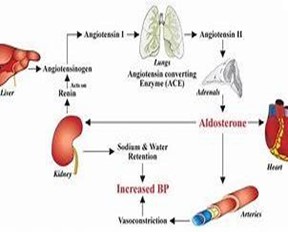
The renin-angiotensin system (RAS) is a hormonal system that regulates blood pressure and fluid balance. When blood pressure is low, the kidneys secrete renin, which converts angiotensinogen into angiotensin I, which is then converted into angiotensin II by angiotensin-converting enzyme (ACE). Angiotensin II is a potent vasoconstrictor that narrows blood vessels and increases blood pressure. It also stimulates the release of aldosterone, which increases sodium and water retention and further raises blood pressure. When the RAS is overactivated, it can lead to a hypertensive crisis, which is a severe elevation of blood pressure that can damage organs and cause stroke, heart attack, or kidney failure.
Nursing Test Bank
Naxlex Comprehensive Predictor Exams
Related Questions
Correct Answer is A
Explanation
Respiratory alkalosis is a condition where the blood's pH is elevated due to excessive removal of CO2 from the body. This can occur when the breathing rate is too fast or deep, such as in response to hypoxia, anxiety, fever, or lung disease. When CO2 is removed from the blood, less H2CO3 is formed, which raises the blood's pH by decreasing the concentration of H+ and HCO3- . A normal blood pH is between 7.35 and 7.45, and a normal partial pressure of arterial carbon dioxide (PaCO2) is between 35- and 45 mm Hg. Therefore, a patient with respiratory alkalosis would have a higher-than-normal pH and a lower-than-normal PaCO2.
Correct Answer is B
Explanation
Naïve T cells are a type of white blood cell that has not encountered a specific antigen before and are ready to respond to new infections. As people age, the number of naïve T cells decreases due to the shrinking of the thymus gland, which produces and matures T cells. This reduces the ability of the immune system to recognize and fight new pathogens and lowers the effectiveness of vaccines.
Whether you are a student looking to ace your exams or a practicing nurse seeking to enhance your expertise , our nursing education contents will empower you with the confidence and competence to make a difference in the lives of patients and become a respected leader in the healthcare field.
Visit Naxlex, invest in your future and unlock endless possibilities with our unparalleled nursing education contents today