
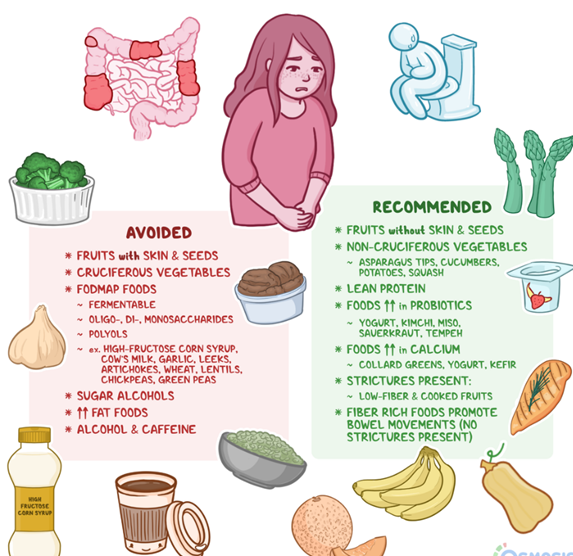
A client with newly diagnosed Crohn's disease asks the nurse about dietary restrictions. How should the nurse respond?
Instruct the client to avoid foods with gluten, such as wheat bread.
Explain that the need to restrict fluids is the primary limitation.
Advise the client to limit foods that are high in calcium and iron.
Describe the use of an elimination diet to find trigger foods
The Correct Answer is D
A. Instruct the client to avoid foods with gluten, such as wheat bread.
While some individuals with Crohn's disease may experience improvement by avoiding certain types of carbohydrates, including gluten, this recommendation is not universally applicable to all individuals with Crohn's disease. Gluten restriction is more relevant for those with gluten sensitivity or celiac disease.
B. Explain that the need to restrict fluids is the primary limitation.
This statement is not accurate. Fluid restriction is not a primary dietary limitation for individuals with Crohn's disease. In fact, maintaining adequate hydration is generally important for overall health. Restricting fluids is not a standard dietary recommendation for managing Crohn's disease.
C. Advise the client to limit foods that are high in calcium and iron.
Limiting foods high in calcium and iron is not a standard recommendation for Crohn's disease. In fact, adequate intake of essential nutrients, including calcium and iron, is important for overall health. Limiting these nutrients could lead to nutritional deficiencies.
D. Describe the use of an elimination diet to find trigger foods.
This is the most appropriate response. Crohn's disease symptoms can vary among individuals, and identifying trigger foods through an elimination diet can help personalize dietary recommendations. By systematically eliminating and reintroducing foods, individuals can identify which specific foods may exacerbate their symptoms.
Nursing Test Bank
Naxlex Comprehensive Predictor Exams
Related Questions
Correct Answer is B
Explanation
A. Evaluate the urine for a strong odor.
While evaluating urine for a strong odor can provide some information about a possible urinary tract infection (UTI), it is not the most immediate concern. The priority in this case is to assess for signs of systemic infection, and checking for a strong odor can be done later.
B. Measure her temperature and pulse rate.
This is the correct choice. Measuring temperature and pulse rate is a critical initial step to assess for signs of systemic infection. Fever and an elevated pulse rate can indicate that the infection may have spread beyond the bladder, possibly involving the kidneys.
C. Test her urine for the presence of hematuria.
Testing for hematuria (blood in the urine) is an important diagnostic step for a UTI, but it is not the first priority. Vital sign assessment takes precedence to determine the severity of the condition and the need for urgent intervention.
D. Palpate the right flank for tenderness.
Palpating the right flank for tenderness is a relevant physical assessment to check for kidney involvement, which is important in cases of suspected pyelonephritis. However, assessing vital signs is a more immediate and critical step to determine the severity of the condition.
Correct Answer is D
Explanation
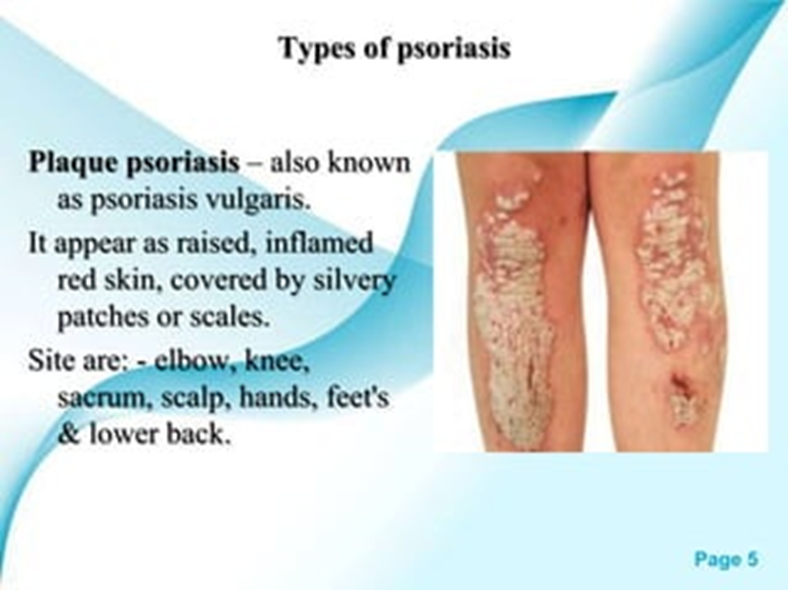
A. Thick skin plaques topped by silvery white scales:
This is a characteristic presentation of psoriasis vulgaris, not an indicator of overexposure to PUVA.
B. Tenderness upon palpation and generalized erythema:
This may be associated with various skin conditions but is not specific to overexposure to PUVA.
C. Brown, rough, greasy, wart-like papules on the face:
This description is not consistent with the expected outcomes or side effects of PUVA treatment.
D. Requires sunglasses because sunlight hurts the eyes.
PUVA treatment involves the use of psoralen, a light-sensitizing medication, followed by exposure to ultraviolet A (UVA) light. Overexposure to PUVA can lead to phototoxic reactions, including eye sensitivity to sunlight (photophobia). If the client requires sunglasses because sunlight hurts the eyes, it suggests that the eyes have been affected by the treatment, and the nurse should intervene to prevent further damage.
Whether you are a student looking to ace your exams or a practicing nurse seeking to enhance your expertise , our nursing education contents will empower you with the confidence and competence to make a difference in the lives of patients and become a respected leader in the healthcare field.
Visit Naxlex, invest in your future and unlock endless possibilities with our unparalleled nursing education contents today