
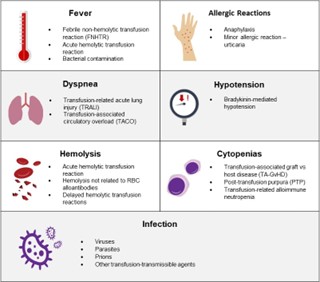
A nurse is administering a blood transfusion to a client. After 15 minutes, the client reports difficulty breathing. What is the first action by the nurse?
Stop the transfusion.
Notify the health care provider of the client s response.
Check the client s vital signs.
Document the findings.
The Correct Answer is A
Difficulty breathing is a sign of a potential transfusion reaction. When a client reports difficulty breathing during a blood transfusion, the nurse should stop the transfusion immediately to prevent the reaction from worsening. Once the transfusion is stopped, the nurse can then assess the client's vital signs and notify the healthcare provider of the client's response. Documentation of the findings should also be completed after the client's condition has stabilized. However, stopping the transfusion takes priority over documenting the findings.
Nursing Test Bank
Naxlex Comprehensive Predictor Exams
Related Questions
Correct Answer is C
Explanation
Dehydration can cause a decrease in blood volume, leading to a drop in blood pressure (hypotension) and an increase in heart rate (tachycardia) as the body tries to compensate. Tenting skin and dry mucous membranes are also signs of dehydration, but wet mucous membranes are not. Crackles in the lungs, edema, and confusion can occur with fluid overload, but not with dehydration.
Correct Answer is D
Explanation

AB+ blood type is known as the universal recipient because individuals with this blood type have both A and B antigens on the surface of their red blood cells, as well as the Rh antigen. This means that they can receive blood from donors of any ABO blood type (A, B, AB, or O) and Rh factor (positive or negative) without experiencing a transfusion reaction.
Therefore, in the case of a patient who will be needing a blood transfusion, if the nurse knows that the patient's blood type is unknown, it is ideal to give them AB+ blood type as it is considered the safest option.
Whether you are a student looking to ace your exams or a practicing nurse seeking to enhance your expertise , our nursing education contents will empower you with the confidence and competence to make a difference in the lives of patients and become a respected leader in the healthcare field.
Visit Naxlex, invest in your future and unlock endless possibilities with our unparalleled nursing education contents today