
A nurse is assisting a client who has irritable bowel syndrome with meal selections.
Which of the following foods should the nurse remind the client to include in her diet?
Yogurt
Honey
Watermelon
Ice cream
The Correct Answer is A
Explanation:
Yogurt can be beneficial for individuals with irritable bowel syndrome (IBS) because it contains probiotics, which are live bacteria that can help promote a healthy balance of gut bacteria.
Probiotics have been shown to potentially alleviate symptoms of IBS, such as bloating, gas, and abdominal discomfort. Additionally, yogurt is a good source of calcium and protein.
B- On the other hand, "Honey" is not specifically recommended for individuals with IBS as it can be a source of fermentable carbohydrates and may contribute to symptoms such as bloating and gas in some individuals.
C- "Watermelon" is generally well-tolerated by most people and can be included in the diet of individuals with IBS, as it is low in FODMAPs (fermentable carbohydrates that can trigger IBS symptoms in some individuals).
D- "Ice cream" is not typically recommended for individuals with IBS, as it often contains high amounts of fat and lactose, which can aggravate symptoms in some individuals. However, this can vary depending on the individual's tolerance to dairy and fat.
Nursing Test Bank
Naxlex Comprehensive Predictor Exams
Related Questions
Correct Answer is A
Explanation
This statement accurately reflects the client's own account of what happened, providing important information about the circumstances leading to the fall. Including the client's statement helps document the client's perspective and can contribute to a more comprehensive understanding of the event.
"The client fell because the assistive personnel did not place nonskid slippers on the client." This statement assigns blame to the assistive personnel without sufficient evidence. It is important to maintain objectivity and avoid making assumptions or assigning fault without proper investigation or documentation of facts.
"The client does not appear to have any injuries resulting from the fall." While it is important to assess the client for any injuries after a fall, documenting this information may be more appropriate in the client's assessment or nursing notes rather than in the specific documentation about the fall incident itself.
"An incident report has been completed and sent to risk management." While it is important to report falls and complete an incident report for quality improvement and risk management purposes, this information is more relevant to internal documentation and reporting processes rather than inclusion in the medical record for the client's care.
Correct Answer is B
Explanation
The AIMS is specifically designed to assess for the presence and severity of abnormal involuntary movements, which can be a side effect of long-term antipsychotic medication use, including tardive dyskinesia. It consists of a series of standardized movements and observations that assess different body regions for abnormal movements. The nurse can use this tool to monitor the client's movements and identify any signs of tardive dyskinesia.
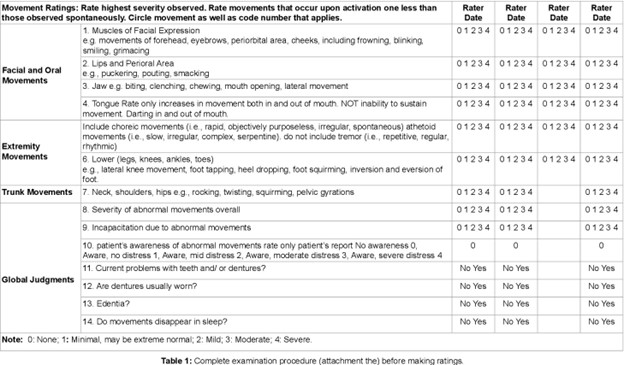
Mental Status Examination (MSE): The MSE is a comprehensive assessment of a client's mental status, including their cognition, mood, and thought processes. While the MSE is an important tool in assessing overall mental health, it is not specific to tardive dyskinesia. Patient Health Questionnaire-9 (PHQ-9): The PHQ-9 is a screening tool for depression that assesses the severity of depressive symptoms. While depression can be a comorbidity in individuals with schizophrenia, the PHQ-9 does not directly assess for tardive dyskinesia. Brief Psychiatric Rating Scale (BPRS): The BPRS is a rating scale used to assess the severity of psychiatric symptoms in individuals with mental disorders. While it is useful in evaluating overall symptomatology in schizophrenia, it does not specifically target tardive dyskinesia.
Whether you are a student looking to ace your exams or a practicing nurse seeking to enhance your expertise , our nursing education contents will empower you with the confidence and competence to make a difference in the lives of patients and become a respected leader in the healthcare field.
Visit Naxlex, invest in your future and unlock endless possibilities with our unparalleled nursing education contents today