
A nurse is reviewing the guidelines for documenting client care.
Which of the following actions should the nurse plan to take?
Avoid quoting client comments when documenting.
Limit documentation to subjective information.
Document giving a dose of pain medication just prior to administration.
Document information telephoned in by a nurse who left the unit for the day.
The Correct Answer is A
Avoid quoting client comments when documenting: This is the correct action to take. When documenting client care, it is important to use objective language and avoid directly quoting client comments. Instead, the nurse should summarize or paraphrase the client's statements using professional and objective language.
Incorrect:
B- Limit documentation to subjective information: This is an incorrect action to take.
Documentation should include both subjective and objective information. Subjective information refers to the client's own experiences, perceptions, and feelings, while objective information refers to measurable and observable data.
C- Document giving a dose of pain medication just prior to administration: This is an incorrect action to take. Documentation should accurately reflect the timing and administration of medications. Documenting giving a dose of pain medication just prior to administration would be inaccurate and could lead to confusion and potential medication errors.
D- Document information telephoned in by a nurse who left the unit for the day: This is an incorrect action to take. Documentation should only include information that the nurse personally witnesses, assesses, or performs. Information provided by another nurse should be documented as a report or handoff communication rather than direct documentation.
Nursing Test Bank
Naxlex Comprehensive Predictor Exams
Related Questions
Correct Answer is B
Explanation
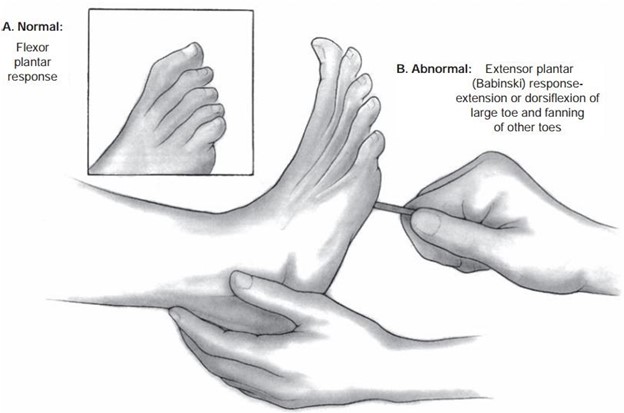
The plantar Babinski reflex is assessed by stroking the sole of the foot from the heel towards the toes. A normal response is the flexion or curling of the toes. An abnormal response, known as a positive Babinski sign, is the extension and fanning out of the toes, which indicates an upper motor neuron lesion.
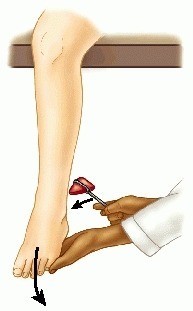
"Place your foot in my hand and I will tap the back of your heel": This instruction is more relevant to testing the Achilles tendon reflex, where the nurse taps the back of the heel to elicit a plantarflexion response.
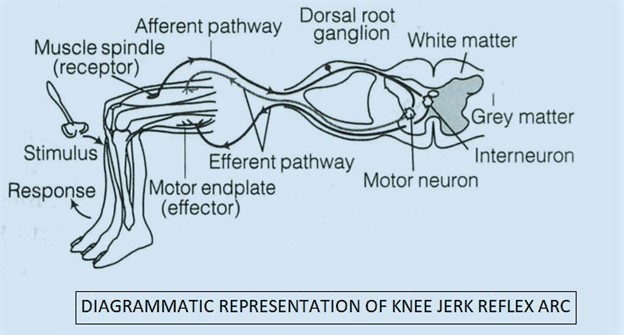
"Sit on the edge of the bed while I tap your knee": This instruction is more relevant to testing the patellar reflex, also known as the knee-jerk reflex. The nurse taps the patellar tendon just below the kneecap to elicit a reflexive contraction of the quadriceps muscle.
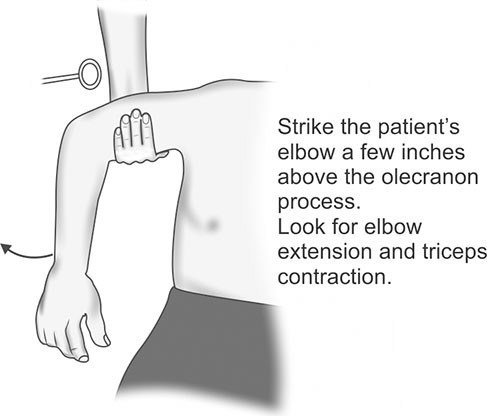
"Relax your arm across your chest and I will test your elbow extension": This instruction is more relevant to testing the triceps reflex, where the nurse taps the triceps tendon to elicit a reflexive extension of the elbow.
Correct Answer is C
Explanation
The presence of edema and coolness around the catheter's insertion site suggests that infiltration may have occurred. Infiltration refers to the unintended leakage of fluid into the surrounding tissues instead of flowing into the vein. It can lead to tissue damage and compromised circulation. Stopping the infusion is the initial priority to prevent further infiltration and minimize potential harm to the client.
Applying a warm compress may be appropriate to promote comfort and circulation in some cases, but it should be done after stopping the infusion and assessing the severity of the infiltration.
Documenting the infiltration is necessary for accurate record-keeping and to communicate the occurrence to the healthcare team. However, it is not the first immediate action required in this situation.
Elevating the arm can help reduce swelling and promote venous return. It can be done after stopping the infusion, but it is not the first action to address the potential infiltration.
Whether you are a student looking to ace your exams or a practicing nurse seeking to enhance your expertise , our nursing education contents will empower you with the confidence and competence to make a difference in the lives of patients and become a respected leader in the healthcare field.
Visit Naxlex, invest in your future and unlock endless possibilities with our unparalleled nursing education contents today