
A nurse is evaluating a client’s understanding of a low-purine diet for gout management.
Which of the following food choices by the client indicates an understanding of the teaching?
Liver and onions with mashed potatoes
Grilled cheese sandwich with tomato soup
Roast beef with green beans and rice
Sardines on whole wheat crackers with cheese
The Correct Answer is B
Grilled cheese sandwich with tomato soup. This food choice indicates an understanding of the teaching because it is low in purines, which are chemicals that break down into uric acid and can trigger gout attacks.
Some additional information for the response are:
• Choice A. Liver and onions with mashed potatoes is wrong because liver is an organ meat that is high in purines and should be avoided by people with gout.
• Choice C. Roast beef with green beans and rice is wrong because roast beef is a red meat that is high in purines and should be limited by people with gout.
• Choice D. Sardines on whole wheat crackers with cheese is wrong because sardines are a type of oily fish that is high in purines and should be avoided by people with gout.
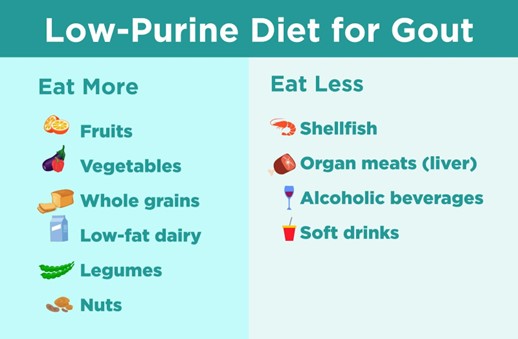
• A low-purine diet for gout management should include fruits, vegetables, whole grains, legumes, nuts, and low-fat dairy products. It should also limit sugar, alcohol, and meat consumption.
Nursing Test Bank
Naxlex Comprehensive Predictor Exams
Related Questions
Correct Answer is B
Explanation
Runs with a wide stance.This indicates normal gross motor development for an 18-month-old toddler.Gross motor skills are the abilities to use large muscles for movements such as walking, running, jumping, and climbing.
Choice A is wrong because walking up and down stairs with assistance is a skill that most toddlers can do by 24 months.
Choice C is wrong because kicking a ball forward without falling is a skill that most toddlers can do by 24 months.
Choice D is wrong because jumping in place with both feet is a skill that most toddlers can do by 30 months.
Correct Answer is ["A","B"]
Explanation
The nurse should assess for proper latch-on technique and encourage skin-to-skin contact between mother and infant.
These actions promote successful breastfeeding and bonding.
Choice C is wrong because limiting feeding time to 10 min per breast can interfere with the infant’s intake of hindmilk, which is rich in fat and calories.The infant should be allowed to nurse until satisfied, which may take longer than 10 min per breast.
Choice D is wrong because instructing the client to offer both breasts at each feeding can lead to nipple soreness and engorgement.The client should offer one breast until it is emptied, then switch to the other breast if the infant is still hungry.
Choice E is wrong because advising the client to feed the infant every 2 to 3 hr can disrupt the infant’s natural feeding cues and rhythms.The client should feed the infant on demand, which may be more or less frequent than every 2 to 3 hr.
Whether you are a student looking to ace your exams or a practicing nurse seeking to enhance your expertise , our nursing education contents will empower you with the confidence and competence to make a difference in the lives of patients and become a respected leader in the healthcare field.
Visit Naxlex, invest in your future and unlock endless possibilities with our unparalleled nursing education contents today