
A nurse is providing teaching about increasing dietary fiber to an antepartum client who reports constipation. Which of the following food selections has the highest fiber content per cup?
Lentils
Oatmeal
Cabbage
Asparagus
The Correct Answer is A
Lentils. Lentils have the highest fiber content per cup compared to the other options. One cup of cooked lentils provides approximately 15.6 grams of fiber. Oatmeal provides approximately 4 grams of fiber per cup, asparagus provides approximately 3.6 grams of fiber per cup, and cabbage provides approximately 2.6 grams of fiber per cup. Increasing dietary fiber is an effective way to manage constipation during pregnancy, as it can promote bowel regularity and prevent complications such as hemorrhoids. The nurse can provide additional education on other high-fiber food options, the importance of drinking adequate fluids, and the need to increase physical activity to help manage constipation. 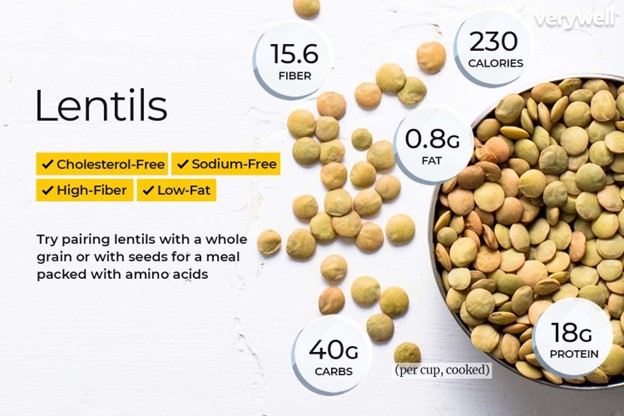
Nursing Test Bank
Naxlex Comprehensive Predictor Exams
Related Questions
Correct Answer is D
Explanation
The correct answer is choice D. "The nurse should measure the newborn's muscle tone when assigning an Apgar score." components of the Apgar score:
|
Component |
0 Points |
1 Point |
2 Points |
|
Heart Rate |
Absent |
<100 bpm |
>100 bpm |
|
Respiratory Effort |
Absent |
Slow, irregular |
Good, crying |
|
Muscle Tone |
Flaccid |
Some flexion |
Active motion |
|
Reflex Irritability |
No response |
Grimace |
Vigorous cry |
|
Color |
Blue, pale |
Body pink, extremities blue |
Completely pink |
The score for each component is summed up to a maximum score of 10, with 10 indicating the healthiest newborn. The NRP guidelines emphasize that resuscitation efforts should be initiated immediately after delivery, regardless of the Apgar score, thus choice C is wrong.
Correct Answer is D
Explanation
"Transmission can occur via the saliva and urine of the newborn." Maternal cytomegalovirus (CMV) is a viral infection that can be transmitted to the fetus during pregnancy or to the newborn during delivery or through breast milk. Lesions on the mother's genitalia are associated with herpes simplex virus, not CMV. Mothers with active CMV infection may not show any symptoms, and there is no specific prophylactic treatment with acyclovir for CMV infection. Airborne precautions are not necessary for newborns with CMV infection since the virus is primarily spread through contact with body fluids, such as saliva and urine.
Whether you are a student looking to ace your exams or a practicing nurse seeking to enhance your expertise , our nursing education contents will empower you with the confidence and competence to make a difference in the lives of patients and become a respected leader in the healthcare field.
Visit Naxlex, invest in your future and unlock endless possibilities with our unparalleled nursing education contents today