
It is night time and a client who suffers from dementia is agitated and is having difficulty staying in his bed. Which of the following actions should the nurse take first?
Turn off the lights and TV and close the door for privacy
Use one wrist restraint to keep the client safe
Ask the physician for a sedative
Identify if there is a cause for the agitation
The Correct Answer is D
Choice A Reason: This is incorrect because turning off the lights and TV and closing the door may increase the client's anxiety and confusion. The nurse should provide adequate lighting and familiar objects to help orient the client.
Choice B Reason: This is incorrect because using restraints may increase the risk of injury, infection, and psychological distress for the client. The nurse should use restraints only as a last resort and with a physician's order.
Choice C Reason: This is incorrect because asking for a sedative may not address the underlying cause of the agitation. The nurse should use non-pharmacological interventions first, such as calming music, massage, or aromatherapy.
Choice D Reason: This is correct because identifying the cause of the agitation may help resolve it. The nurse should assess for possible triggers, such as pain, hunger, thirst, infection, or environmental factors.
Nursing Test Bank
Naxlex Comprehensive Predictor Exams
Related Questions
Correct Answer is D
Explanation
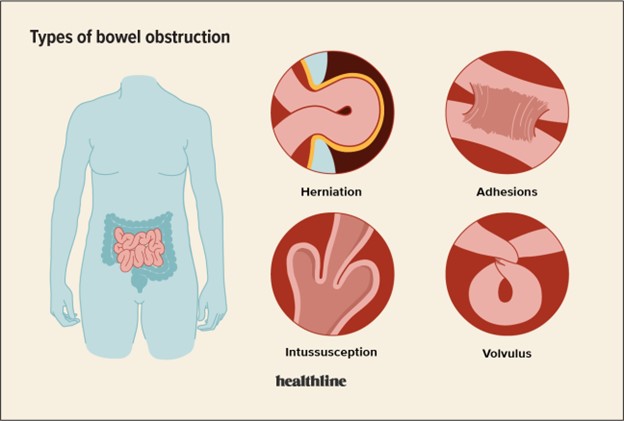
Choice A Reason: Colorectal cancer is not likely to cause nausea with projectile vomiting or high-pitched sounds in the left upper quadrant. Colorectal cancer may cause symptoms such as rectal bleeding, change in bowel habits, abdominal pain, or weight loss.
Choice B Reason: Paralytic ileus is a condition where the bowel stops working and does not contract or move food along. Paralytic ileus may cause symptoms such as abdominal distension, absence of bowel sounds, constipation, or vomiting.
Choice C Reason: Large bowel obstruction is a blockage of the colon or rectum that prevents the passage of stool. Large bowel obstruction may cause symptoms such as abdominal distension, low-pitched sounds in the right lower quadrant, constipation, or ribbon-like stools.
Choice D Reason: Small bowel obstruction is a blockage of the small intestine that prevents the passage of food and fluids. Small bowel obstruction may cause symptoms such as nausea with projectile vomiting, high-pitched sounds in the left upper quadrant, abdominal cramps, or dehydration.
Correct Answer is A
Explanation
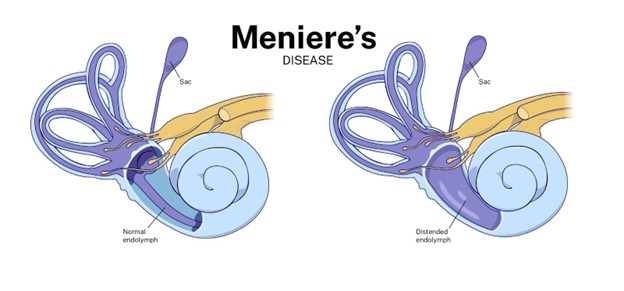
Choice A Reason: This is incorrect because Ménière's disease is not caused by an allergic response. Ménière's disease is a disorder of the inner ear that causes vertigo, tinnitus, hearing loss, and a feeling of fullness in the ear. The exact cause of Ménière's disease is unknown, but it may be related to fluid imbalance, infection, trauma, or autoimmune reaction.
Choice B Reason: This is correct because diphenhydramine can help offset the nauseous feeling. Diphenhydramine is an antihistamine that blocks histamine receptors in the brain and inner ear, which can reduce nausea and vomiting associated with vertigo.
Choice C Reason: This is correct because anticholinergics will help you rest. Anticholinergics are a class of drugs that block acetylcholine receptors in the brain and body, which can have sedative effects and reduce motion sickness. Diphenhydramine has anticholinergic properties.
Choice D Reason: This is correct because diphenhydramine can help reduce vomiting episodes. As mentioned above, diphenhydramine can reduce nausea and vomiting by blocking histamine receptors in the brain and inner ear.
Whether you are a student looking to ace your exams or a practicing nurse seeking to enhance your expertise , our nursing education contents will empower you with the confidence and competence to make a difference in the lives of patients and become a respected leader in the healthcare field.
Visit Naxlex, invest in your future and unlock endless possibilities with our unparalleled nursing education contents today