
The mother of a toddler yells to the nurse." Help! He is choking to death on his food." The nurse determines that lifesaving measures are necessary based on which of the following?
Coughing
inability to speak
Gagging
Pulse of 100 beats per minute
The Correct Answer is B
A. Coughing indicates a normal protective mechanism when the toddler is attempting to dislodge and cough out the food.
B. Inability to speak is a significant sign of choking and indicates that the airway is nearly completely obstructed.
C. Gagging shows that the toddler is partially obstructed and still attempting to dislodge the food
D. Pulse of 100 Beats per minute is not a direct indicator of choking.
Nursing Test Bank
Naxlex Comprehensive Predictor Exams
Related Questions
Correct Answer is B
Explanation
To calculate the appropriate dosage of amoxicillin for the toddler; Given:
Weight of the toddler = 20 kg
Recommended dosage range = 20 to 25 mg/kg/day Calculate the total daily dose:
Minimum recommended dosage = 20 mg/kg/day Maximum recommended dosage = 25 mg/kg/day
Minimum total daily dose = 20 mg/kg/day × 20 kg = 400 mg/day Maximum total daily dose = 25 mg/kg/day × 20 kg = 500 mg/day
The prescribed dosage is 100 mg every 8 hours, which means 300 mg per day (100 mg × 3 times a day). As 300 mg is below the minimum recommended total daily dose (400 mg) for a toddler weighing 20 kg, the nurse should determine that the prescribed dosage is insufficient to achieve the desired effect.
Correct Answer is A
Explanation
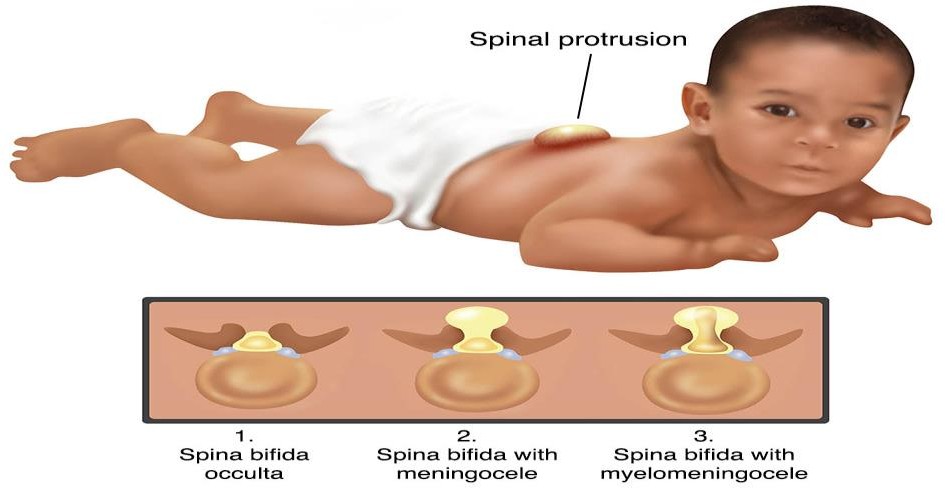
Neural tube defects (NTDs) are congenital abnormalities that occur during early embryonic development when the neural tube fails to close completely. Spina bifida is one type of neural tube defect where the spinal column doesn't close all the way, resulting in spinal cord and nerve damage. It can lead to various complications, including paralysis, bladder and bowel problems, and learning difficulties. Therefore, it is an appropriate example of a neural tube defect.
 |
B. Cerebral palsy is a group of permanent movement disorders that appear in early childhood.
C. Muscular dystrophy is a genetic disorder characterized by progressive weakness and loss of muscle mass.
D. Hydrocephalus is a condition where there's an accumulation of cerebrospinal fluid in the brain, often due to obstruction or impaired drainage.
Whether you are a student looking to ace your exams or a practicing nurse seeking to enhance your expertise , our nursing education contents will empower you with the confidence and competence to make a difference in the lives of patients and become a respected leader in the healthcare field.
Visit Naxlex, invest in your future and unlock endless possibilities with our unparalleled nursing education contents today