
The phase of the nurse-client relationship that begins when the individuals first meet, and that is characterized by an agreement to continue meeting and assessing needs is the:
termination phase.
orientation phase.
working phase.
preinteraction phase.
The Correct Answer is B
B. This is the initial phase of the nurse-client relationship where the individuals first meet. It is characterized by establishing rapport, clarifying roles, setting goals, and developing an agreement or contract for the relationship.
A. This phase occurs towards the end of the nurse-client relationship when goals have been achieved or the relationship is ending for other reasons. It involves summarizing, evaluating progress, and saying goodbye.
C. This phase follows the orientation phase. It is characterized by actively working together to achieve mutually agreed upon goals. During this phase, the nurse and client explore issues, develop and implement solutions, and evaluate progress towards goals.
D. This phase occurs before the nurse and client meet formally. It involves gathering information about the client from various sources, such as medical records or other healthcare professionals.
Nursing Test Bank
Naxlex Comprehensive Predictor Exams
Related Questions
Correct Answer is C
Explanation
C. This reflex is an important protective mechanism that prevents objects from entering the throat and causing choking. Assessing the gag reflex before oral care can help ensure the safety of the client, especially if they have difficulty swallowing or are at risk for aspiration.
A. It's important to assess if the client is experiencing any pain, as oral care procedures can sometimes cause discomfort, especially if the client has oral lesions or sensitive gums. However, it is not a priority.
B. Presence of saliva: Saliva is essential for oral health, as it helps to cleanse the mouth and buffer acids produced by bacteria. Assessing the amount of saliva can indicate the overall oral hydration status and potential risk of dry mouth (xerostomia).
D. assessing the condition of the skin around the mouth and on the lips is important. It can reveal issues such as dryness, cracking, lesions, or signs of infection but not directly related to oral care.
Correct Answer is B
Explanation
B. This finding suggests deep tissue involvement and is characteristic of a Stage IV pressure injury. Stage IV pressure injuries involve full-thickness tissue loss with exposure of underlying structures such as bone, tendon, or muscle. This level of tissue damage requires extensive wound care and management to promote healing.
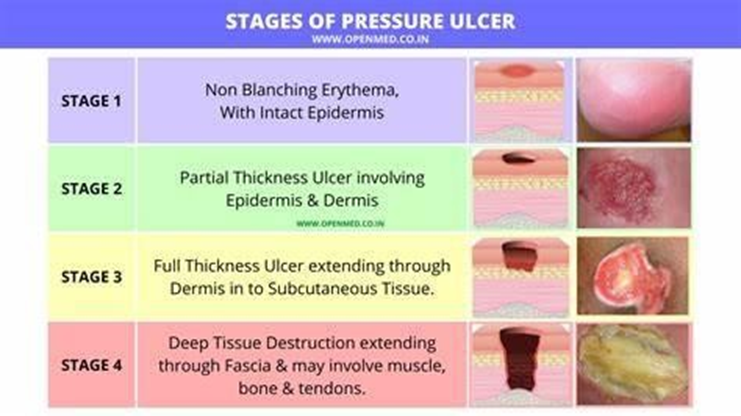
A. Thick dark eschar indicates necrotic tissue that typically covers the wound. While eschar itself is a characteristic of severe wounds, its presence alone does not define a Stage IV pressure injury. Eschar can be present in various stages of pressure injuries.
C. Partial-thickness loss of dermis typically corresponds to Stage II pressure injuries, where the injury extends into the epidermis and dermis but does not yet involve full-thickness tissue loss. This finding does not indicate a Stage IV pressure injury.
D. This finding is characteristic of a Stage III pressure injury, where the wound extends through the dermis into the subcutaneous tissue layer. In Stage IV pressure injuries, the damage progresses further to involve deeper structures such as muscle and bone, beyond the subcutaneous tissue.
Whether you are a student looking to ace your exams or a practicing nurse seeking to enhance your expertise , our nursing education contents will empower you with the confidence and competence to make a difference in the lives of patients and become a respected leader in the healthcare field.
Visit Naxlex, invest in your future and unlock endless possibilities with our unparalleled nursing education contents today