
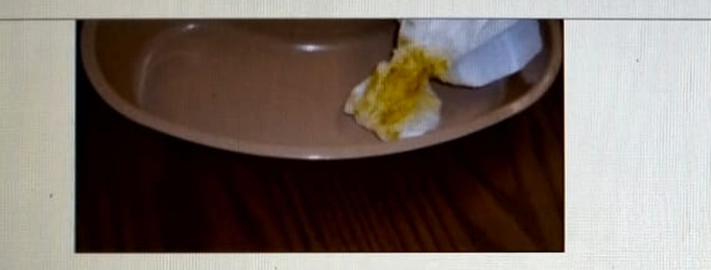
The practical nurse (PN) explains to a client how to obtain a sputum specimen and the client indicates understanding the procedure. After the PN leaves the room, the client obtains the specimen and notifies the PN. When the PN arrives to collect the specimen it appears as seen in the picture (in a non sterile basin with tissue paper). Which action should the PN take?
Place a biohazard bag over the basin and seal the bag securely for transport to the lab.
Assist the client in obtaining another specimen coughed directly into a sterile cup.
Use a wooden applicator to place the sputum specimen in a sterile container.
Apply gloves and place the tissue and specimen in a container for transport to the lab.
The Correct Answer is B
A. Placing a biohazard bag over the basin and sealing it is not appropriate because the specimen should have been collected directly into a sterile container, and the specimen's current state in a non-sterile basin is not acceptable for lab analysis.
B. Assisting the client in obtaining another specimen is necessary to avoid cross contamination.
C. Using a wooden applicator to place the sputum specimen in a sterile container is the incorrect as it breaches sterility.
D. Applying gloves and placing the tissue and specimen in a container is incorrect as the specimen must be in a sterile container from the start. Using a non-sterile basin means the specimen might be contaminated.
Nursing Test Bank
Naxlex Comprehensive Predictor Exams
Related Questions
Correct Answer is C
Explanation
A. Observing for signs of pain or discomfort during the treatment is not a direct method for evaluating ondansetron’s effectiveness. Ondansetron is used to prevent nausea and vomiting, not to manage pain.
B. While assessing vital signs is important for overall monitoring, it does not specifically measure the effectiveness of ondansetron for preventing nausea and vomiting.
C. Monitoring for nausea or vomiting following the treatment is the most direct way to evaluate the effectiveness of ondansetron. The primary goal of ondansetron is to prevent or reduce these symptoms associated with chemotherapy.
D. Evaluating if the client feels calm and relaxed is not a measure of ondansetron’s effectiveness. The focus should be on the medication’s ability to prevent nausea and vomiting rather than the client's emotional state before treatment.
Correct Answer is D
Explanation
A. Assigning the UAP to more stable clients does not address the immediate issue of the protocol omission and does not ensure that the protocol is followed correctly in the future.
B. Completing an unusual occurrence report is not necessary if the omission was corrected and the situation does not involve a significant error or safety issue.
C. Reporting to the charge nurse may be appropriate, but the priority is to ensure the UAP understands and follows the protocol, which is best achieved through direct supervision.
D. Supervising the UAP and reviewing the protocol ensures that the UAP understands and adheres to the fall prevention protocol moving forward, addressing both the immediate issue and future adherence.
Whether you are a student looking to ace your exams or a practicing nurse seeking to enhance your expertise , our nursing education contents will empower you with the confidence and competence to make a difference in the lives of patients and become a respected leader in the healthcare field.
Visit Naxlex, invest in your future and unlock endless possibilities with our unparalleled nursing education contents today