
The primary factor responsible for possible multiple clinical manifestations in cystic fibrosis is which of the following?
Hyperactivity of sweat glands
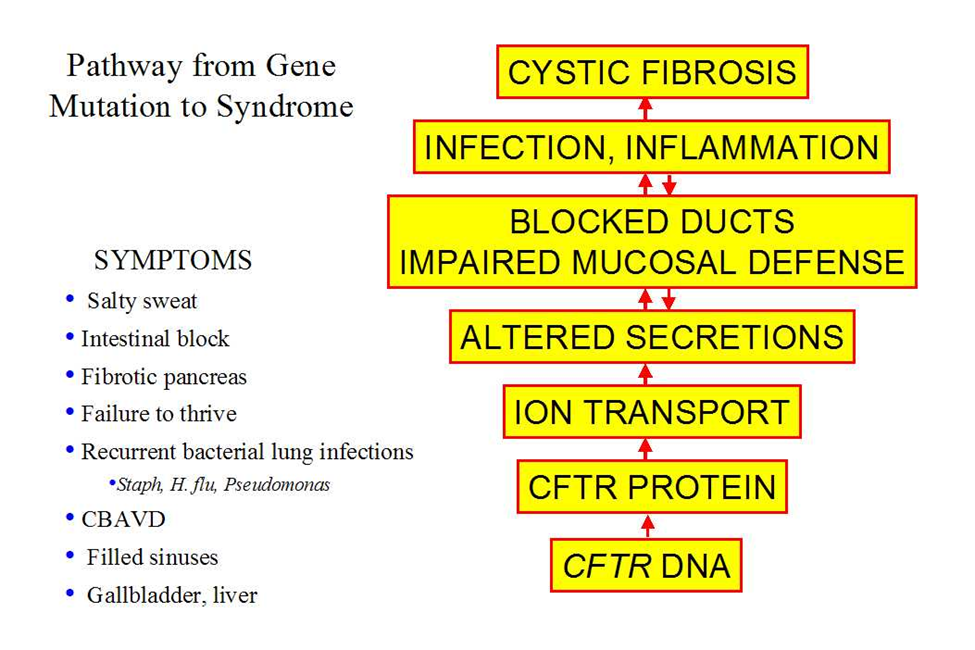
Mechanical obstruction caused by increased viscosity of mucous gland secretion
Hypoactivity of autonomic nervous system
Atrophic changes in mucosal wall of intestines
The Correct Answer is B
A. Hyperactivity of sweat glands:
In cystic fibrosis (CF), there is an abnormality in the CF transmembrane conductance regulator (CFTR) protein, leading to increased salt concentration in sweat. However, this is not the primary factor responsible for the diverse clinical manifestations in CF. The primary issue lies in the abnormal production of thick and sticky mucus affecting various organs.
B. Mechanical obstruction caused by increased viscosity of mucous gland secretion:
This is the correct choice. CF is characterized by the production of thick and sticky mucus due to abnormal CFTR protein function. This increased viscosity leads to mechanical obstruction in organs such as the respiratory, digestive, and reproductive systems, causing a range of clinical manifestations.
C. Hypoactivity of the autonomic nervous system:
CF is not characterized by hypoactivity of the autonomic nervous system. The primary issue lies in the mechanical obstruction caused by the abnormal mucus production.
D. Atrophic changes in the mucosal wall of the intestines:
Atrophic changes in the mucosal wall of the intestines are not the primary factor responsible for the clinical manifestations of CF. The key problem is the mechanical obstruction due to increased viscosity of mucous gland secretions.
Nursing Test Bank
Naxlex Comprehensive Predictor Exams
Related Questions
Correct Answer is C
Explanation
A. Offer the child cherry popsicles to encourage fluid intake:
This may be a helpful intervention to soothe the child's throat and provide hydration. However, it might not be the priority action.
B. Notify the physician regarding the risk of dehydration:
This is a reasonable consideration. Dehydration can be a concern, especially if the child is not drinking fluids postoperatively. However, there might be more immediate priorities.
C. Evaluate the operative site for post-op bleeding:
This is the priority action. Postoperative bleeding is a potential complication after a tonsillectomy. Spitting up clear mucus may indicate bleeding, and a thorough assessment of the operative site is crucial. Prompt recognition and intervention are essential to prevent complications.
D. Medicate the child with Tylenol with Codeine as ordered for pain:
Pain management is important post-tonsillectomy, but in this scenario, the priority is to assess for postoperative bleeding before administering pain medication.
Correct Answer is C
Explanation
A. Ridiculing their fears so they understand that there is no need to be afraid.
This option is not recommended. Ridiculing a child's fears can be emotionally harmful and may lead to increased anxiety. It's important to approach fears with empathy and support.
B. Using logical persuasion to explain away their fears and help them recognize how unrealistic the fears are.
While providing information and reassurance is important, simply dismissing or explaining away a child's fears may not be sufficient. Preschoolers may need more concrete strategies and involvement in managing their fears.
C. Actively involving them in finding practical methods to deal with the frightening experience.
This is the recommended choice. Actively involving preschoolers in finding practical methods allows them to participate in the process, promoting a sense of control and autonomy. It encourages them to develop coping skills.
D. Forcing them to confront the frightening object or experience in the presence of their parents.
Forcing a child to confront their fears may intensify anxiety and is generally not a recommended approach. It's essential to respect a child's pace and provide support as they work through their fears.
Whether you are a student looking to ace your exams or a practicing nurse seeking to enhance your expertise , our nursing education contents will empower you with the confidence and competence to make a difference in the lives of patients and become a respected leader in the healthcare field.
Visit Naxlex, invest in your future and unlock endless possibilities with our unparalleled nursing education contents today