
Which instructions should a nurse give to a client prior to obtaining a throat culture?
“While depressing your tongue, I will swab the back of your throat.”.
“You won’t be able to eat or drink for one hour after the procedure.”.
“Take a deep breath and then cough while I swab your throat.”.
“I just need to swab your anterior tongue. It will be very quick.”.
The Correct Answer is A
This is the proper way to obtain a throat culture, which is a test to look for infections in the back of the throat.
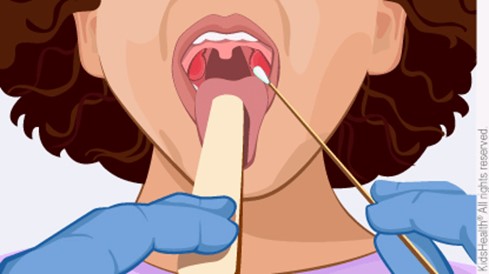
Some possible explanations for the other choices are:
Choice B is wrong because there is no need to avoid eating or drinking after a throat culture.
The swab does not interfere with the normal function of the mouth or throat.
Choice C is wrong because coughing while swabbing the throat could contaminate the sample or cause discomfort to the client. The swab should be gently passed along the back area of the throat and tonsils.
Choice D is wrong because swabbing only the anterior tongue would not collect enough cells from the infected area. The swab should reach the back of the throat where bacteria or fungi may grow.
Nursing Test Bank
Naxlex Comprehensive Predictor Exams
Related Questions
Correct Answer is B
Explanation
This is because itching is a subjective assessment finding, which means it is based on the personal experience, view or feeling of the
patient. The other choices are objective assessment findings, which means they are based on observable or measurable data that the nurse can collect.
For example:
Choice A is wrong because hives are a visible skin reaction that can be seen and measured by the nurse.
Choice C is wrong because vomiting is an observable action that can be verified and recorded by the nurse.
Choice D is wrong because abdominal distension is a measurable change in the size or shape of the abdomen that can be assessed by the nurse.
Normal ranges for objective assessment findings may vary depending on the source and context, but some possible examples are:
- Hives: No hives or rashes on the skin are normal.
- Vomiting: No vomiting or nausea are normal.
- Abdominal distension: Normal abdominal girth for adults ranges from 68 to 100 cm (27 to 40 inches).
Correct Answer is A
Explanation
This is the proper way to obtain a throat culture, which is a test to look for infections in the back of the throat.
Some possible explanations for the other choices are:
Choice B is wrong because there is no need to avoid eating or drinking after a throat culture.
The swab does not interfere with the normal function of the mouth or throat.
Choice C is wrong because coughing while swabbing the throat could contaminate the sample or cause discomfort to the client. The swab should be gently passed along the back area of the throat and tonsils.
Choice D is wrong because swabbing only the anterior tongue would not collect enough cells from the infected area. The swab should reach the back of the throat where bacteria or fungi may grow.
Whether you are a student looking to ace your exams or a practicing nurse seeking to enhance your expertise , our nursing education contents will empower you with the confidence and competence to make a difference in the lives of patients and become a respected leader in the healthcare field.
Visit Naxlex, invest in your future and unlock endless possibilities with our unparalleled nursing education contents today