
Barrier Methods
A. Male condom
o This is a thin sheath that covers the penis during sexual intercourse.
o It can be made of latex, polyurethane, or natural membrane (such as lambskin).
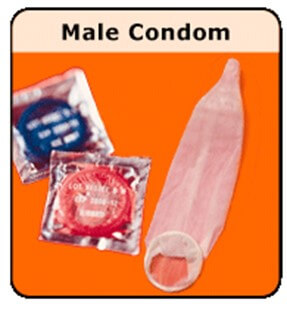
o Only water-soluble lubricants should be used with latex condoms to avoid breakage.
o Male condoms are 98% effective at preventing pregnancy when used correctly and consistently.
B. Female condom
o This is a pouch that lines the inside of the vagina and partially covers the external genitalia.
o It is made of nitrile (a nonlatex synthetic rubber) with flexible rings on both ends that hold it in place.
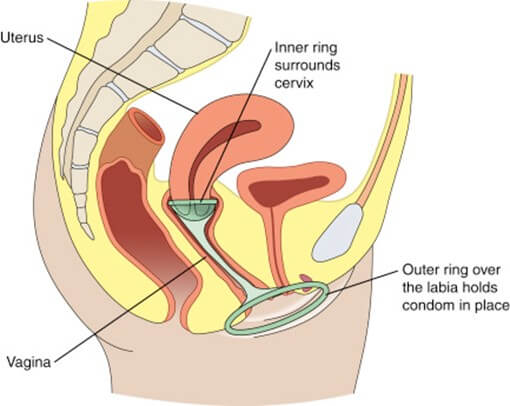
o It is pre-lubricated with a spermicide (a substance that kills sperm).
o Female condoms are 95% effective at preventing pregnancy when used correctly and consistently.
C. Spermicide
o This is a chemical barrier that destroys sperm before they enter the cervix (the opening of the uterus).
o It also makes the vaginal flora more acidic, which inhibits sperm motility.
o Spermicide should be inserted into the vagina 15 minutes before sexual intercourse and is only effective for one hour.
o It should not be removed until six hours after intercourse, but no more than 24 hours later.
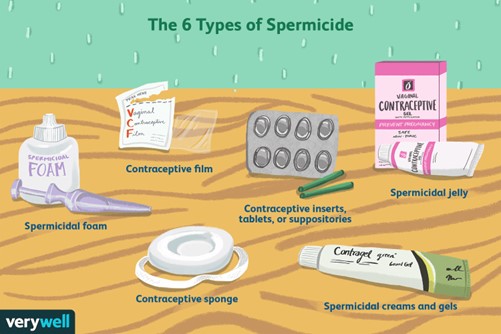
o Spermicide can come in different preparations, such as suppositories, foams, creams, gels, or films.
o Spermicide alone is 72% effective at preventing pregnancy when used correctly and consistently.
o Spermicide is contraindicated (not recommended) in people with cervical infections or allergies to its ingredients.
o Some spermicides contain nonoxynol-9 (N-9), which can cause lesions (sores) in the vaginal or rectal lining and increase the risk of HIV transmission if used more than twice a day.
D. Diaphragm
o A diaphragm is a dome-shaped cup that fits snugly over the cervix.
o It acts as a physical barrier to prevent sperm from entering the uterus.
o Its effectiveness is increased with the use of a spermicide or gel that is placed in the dome and around the rim of the diaphragm.
o A diaphragm needs to be properly fitted by a healthcare provider and replaced every two years.
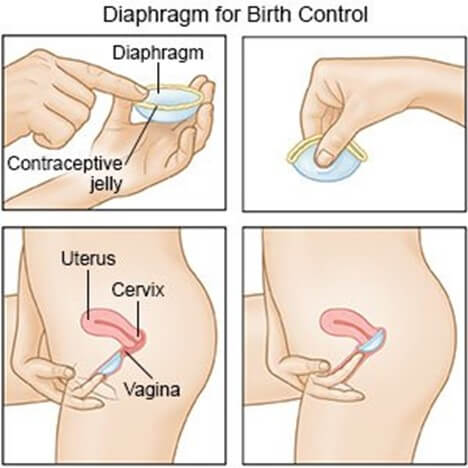
o It also requires proper insertion and removal techniques.
o A woman should empty her bladder prior to insertion and wash the diaphragm with warm water and mild soap after each use.
o A diaphragm is not recommended for people who have a history of toxic shock syndrome (TSS), cystocele, uterine prolapse, or urinary tract infection (UTI).
o Clinical findings of TSS include high fever, faint feeling, drop in blood pressure, watery diarrhea, headache, macular rash, and muscle aches.
E. Cervical Cap
o A cervical cap is a silicone rubber cap that fits tightly around the base of the cervix.
o It also acts as a physical barrier to prevent sperm from entering the uterus.
o It comes in three sizes and needs to be fitted by a health care provider.
o It should be inserted at least 6 hours before intercourse and left in place for at least 6 hours after intercourse, but no more than 48 hours.
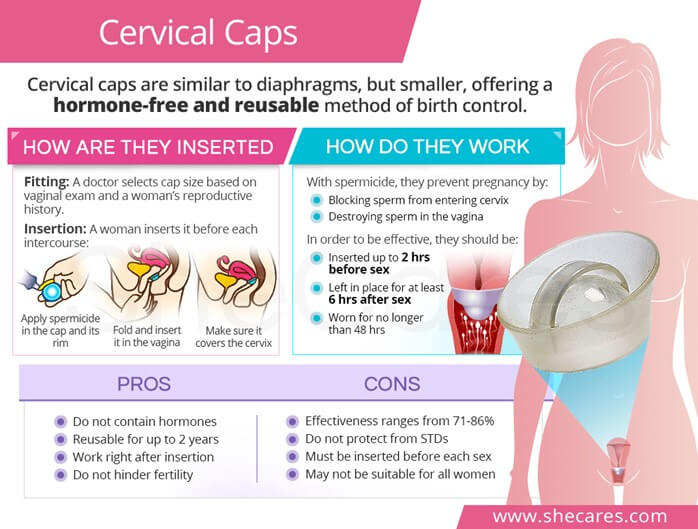 o It should be replaced every two years.
o A cervical cap is not suitable for clients who have abnormal Pap test results or a history of TSS.
F. Contraceptive Sponge
o A contraceptive sponge is a small, round, concave-shaped, polyurethane sponge that contains spermicide.
o It acts as both a physical and a chemical barrier to prevent sperm from entering the uterus.
o It is one-size fits all and does not require fitting by a health care provider.
o It should be moistened with water before insertion and left in place for 6 hours after the last act of intercourse.
o It provides protection for up to 24 hours and can be used for repeated acts of intercourse within that time frame.
Nursing Test Bank
Naxlex Comprehensive Predictor Exams
Questions on Barrier Methods