
A nurse is planning care for a child who has varicella. Which of the following interventions should the nurse plan to include?
Provide the child with a warm blanket.
Assess the oral cavity for Koplik spots.
Administer aspirin for fever.
Initiate airborne precautions.
The Correct Answer is D
A. Providing a warm blanket can help alleviate discomfort associated with fever and chills, which are common symptoms of varicella.
B. Koplik spots are seen in measles, not varicella.
C. Aspirin administration is contraindicated in varicella due to the risk of Reye's syndrome. Acetaminophen or ibuprofen may be used for fever.
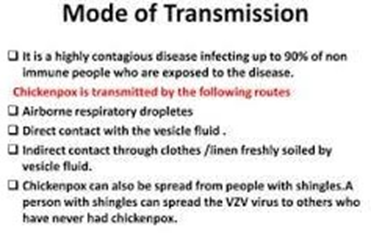
D. Varicella is spread through respiratory droplets, so standard precautions are typically sufficient. Airborne precautions are necessary to prevent transmission.
Nursing Test Bank
Naxlex Comprehensive Predictor Exams
Related Questions
Correct Answer is ["B","C","D"]
Explanation
A. Partial thromboplastin time (PTT) is not typically used to diagnose rheumatic fever. It is used to evaluate coagulation disorders.
B. Elevated C-reactive protein (CRP) levels indicate inflammation, which can be associated with rheumatic fever.
C. Elevated erythrocyte sedimentation rate (ESR) is a marker of inflammation and can be elevated in rheumatic fever.
D. Elevated Antistreptolysin O (ASO) titer indicates recent streptococcal infection, which is a predisposing factor for rheumatic fever.
E. Blood urea nitrogen (BUN) is not typically used to diagnose rheumatic fever. It is used to assess kidney function.
Correct Answer is C
Explanation
A. Pediculosis capitis (head lice) does not require droplet precautions.
B. Viral conjunctivitis is typically transmitted through contact precautions rather than droplet precautions.
C. Correct. Seasonal influenza is transmitted via respiratory droplets, necessitating droplet precautions to prevent transmission.
D. Hepatitis A is transmitted via the fecal-oral route and does not require droplet precautions.
Whether you are a student looking to ace your exams or a practicing nurse seeking to enhance your expertise , our nursing education contents will empower you with the confidence and competence to make a difference in the lives of patients and become a respected leader in the healthcare field.
Visit Naxlex, invest in your future and unlock endless possibilities with our unparalleled nursing education contents today