
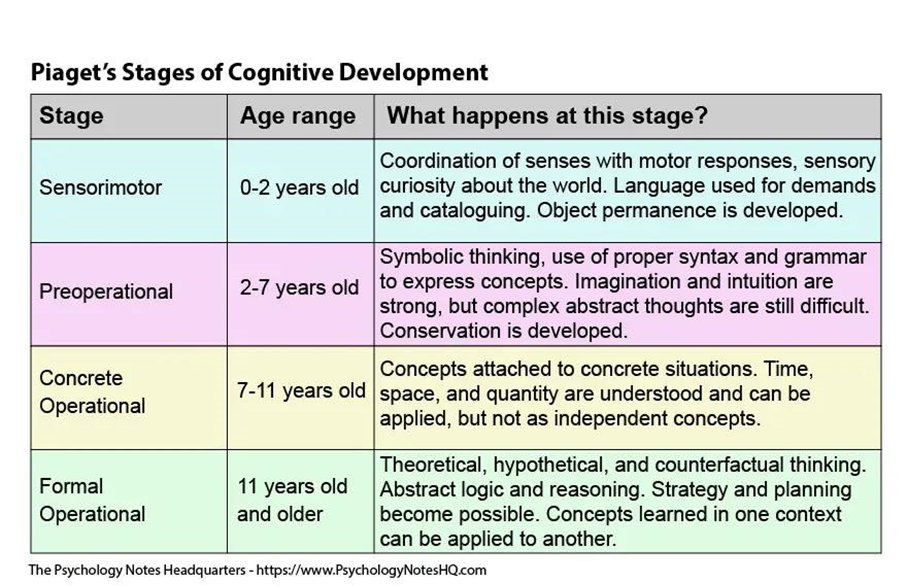
A nurse planning care for a 10 year old child should take into account that which thought process is seen at this age?
Magical thinking
Thoughts are all-powerful
Ability to conserve
Animism
The Correct Answer is C
A. Magical thinking
Magical thinking is a cognitive characteristic commonly observed in preschool-aged children. It involves believing that one's thoughts, wishes, or actions can influence events, even when there is no logical or causal connection. For example, a preschooler might believe that simply thinking about a toy can make it appear.
B. Thoughts are all-powerful
The belief that thoughts have omnipotent power is often seen in the preoperational stage of cognitive development, which occurs in early childhood. Children in this stage may think that their thoughts alone can cause significant changes or events.
C. Ability to conserve
Conservation is a cognitive skill associated with the concrete operational stage of development, typically occurring around 7 to 11 years of age. Children at this stage understand that certain properties of objects remain the same despite changes in appearance. For example, they recognize that the amount of liquid stays the same when poured into a differently shaped container.
D. Animism
Animism is a concept observed in the preoperational stage, where children attribute life-like qualities to inanimate objects. For instance, a child might believe that a stuffed animal has feelings or thoughts.
Nursing Test Bank
Naxlex Comprehensive Predictor Exams
Related Questions
Correct Answer is D
Explanation
A. The child's current vital signs are consistent with vital signs over the past 4 hours.
Vital signs alone may not be sufficient to assess pain in a child. Children may experience pain without significant changes in vital signs. Behavioral cues and self-reporting are important indicators of pain in pediatric patients.
B. The child becomes quiet when held and cuddled.
While seeking comfort through cuddling may be a sign of distress or discomfort, it is not specific enough to determine the need for pain medication. Additional assessment is required to understand the underlying cause of the child's change in behavior.
C. The child has a temperature of 38.5°C.
Fever alone does not necessarily indicate the need for pain medication. It may suggest an infection or illness, but the specific assessment of pain requires consideration of the child's behavior, verbal expressions, and any other cues related to pain.
D. The child is lying stiffly in bed, not moving, and refusing to get up.
In this scenario, the child's behavior of lying stiffly in bed, not moving, and refusing to get up is indicative of potential pain. Children may express pain in various ways, and behavioral cues such as changes in activity, refusal to move, or guarding certain body parts can suggest discomfort. It is important for the nurse to assess and address the child's pain promptly.
Correct Answer is C
Explanation
A. Airborne precautions: RSV is primarily spread through respiratory droplets, not airborne particles. Therefore, airborne precautions are not necessary.
B. Contact Precautions and droplet precautions: Contact precautions are not typically required for RSV. The main mode of transmission is respiratory droplets, so droplet precautions are appropriate.
C. Standard Precautions and droplet precautions: This is the correct answer. Standard precautions involve using protective barriers to prevent the spread of infection and are applied to all patients. In addition, droplet precautions are necessary for infections transmitted through respiratory droplets.
D. Positive pressure isolation and airborne isolation: Positive pressure isolation and airborne isolation are generally used for conditions where the infectious agents are transmitted through the air, such as tuberculosis. These precautions are not necessary for RSV.
Whether you are a student looking to ace your exams or a practicing nurse seeking to enhance your expertise , our nursing education contents will empower you with the confidence and competence to make a difference in the lives of patients and become a respected leader in the healthcare field.
Visit Naxlex, invest in your future and unlock endless possibilities with our unparalleled nursing education contents today