
A nursing is reviewing nutrition therapy with a client who has Cushing’s disease. Which of the following dietary modifications should the nurse include in this discussion?
Limit potassium rich foods in the diet.
Decrease sodium intake.
Increase calorie intake.
Consume more calories from carbohydrates than protein.
The Correct Answer is B
A. Limit potassium-rich foods in the diet.
Limiting potassium is not a typical dietary modification for Cushing's disease. Potassium levels are usually affected in conditions such as Addison's disease, where there is a deficiency of cortisol. In Cushing's disease, the focus is more on sodium balance.
B. Decrease sodium intake.
This is the correct choice. Decreasing sodium intake is a dietary modification relevant to individuals with Cushing's disease. Excessive cortisol production can lead to sodium and water retention, and reducing sodium intake helps manage fluid balance.
C. Increase calorie intake.
While weight gain is a common symptom in individuals with Cushing's disease, simply increasing calorie intake may not be the most specific or appropriate dietary modification. Attention to overall dietary balance and specific components like sodium is more relevant.
D. Consume more calories from carbohydrates than protein.
The macronutrient composition of the diet (carbohydrates vs. protein) is not a specific consideration for individuals with Cushing's disease. The focus is more on overall dietary balance and addressing sodium intake.
Nursing Test Bank
Naxlex Comprehensive Predictor Exams
Related Questions
Correct Answer is C
Explanation
A. The stockings are used to reduce pain.
This statement is not accurate. While antiembolism stockings may provide some relief from discomfort and swelling, their primary purpose is to prevent venous stasis and reduce the risk of blood clots, not to directly reduce pain.
B. The stockings prevent varicose veins.
This statement is not entirely accurate. While compression stockings can provide some support to veins, their primary role is in preventing blood clots (venous thromboembolism) rather than preventing varicose veins, which are typically related to venous insufficiency.
C. The stockings prevent venous stasis.
This is the correct answer. Antiembolism stockings are specifically designed to prevent venous stasis, which refers to the slowing or stagnation of blood flow in the veins. They exert gentle pressure on the legs to enhance blood circulation and reduce the risk of blood clots.
D. The stockings replace the need for postoperative leg exercises.
This statement is not accurate. While antiembolism stockings are a preventive measure, they do not replace the need for postoperative leg exercises. Leg exercises are important for promoting circulation, preventing complications such as deep vein thrombosis (DVT), and maintaining overall mobility after surgery.
Correct Answer is B
Explanation
A. Electrolyte imbalances
Administering diluted enteral feedings is not typically done to address electrolyte imbalances. Instead, monitoring the electrolyte levels in the patient's blood and adjusting the content of the enteral formula (such as adjusting the concentration of electrolytes) would be more appropriate.
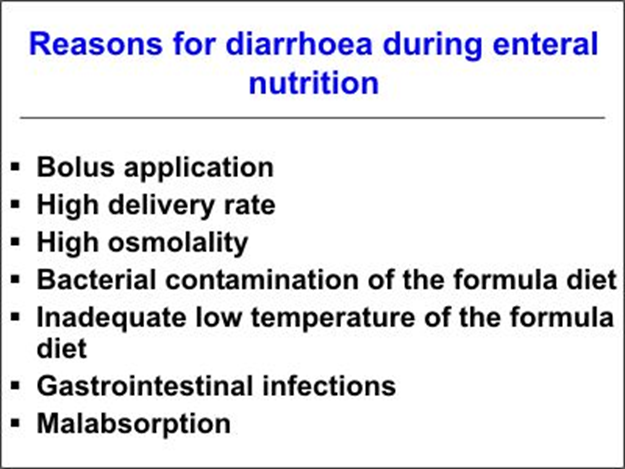
B. Diarrhea
Administering diluted enteral feedings is a strategy that may be employed to prevent or manage diarrhea. High concentrations of nutrients can overwhelm the gastrointestinal tract, leading to diarrhea. Diluting the formula helps reduce the risk of this complication.
C. Constipation
Administering diluted enteral feedings is not typically done to address constipation. Management of constipation is more commonly achieved through adjustments in fiber intake, fluid intake, and medications as needed.
D. Delayed gastric emptying
Administering diluted enteral feedings is not a standard approach for addressing delayed gastric emptying. Instead, adjustments in the rate of enteral feedings or specific interventions for delayed gastric emptying, such as medication or changes in positioning, would be considered.
Whether you are a student looking to ace your exams or a practicing nurse seeking to enhance your expertise , our nursing education contents will empower you with the confidence and competence to make a difference in the lives of patients and become a respected leader in the healthcare field.
Visit Naxlex, invest in your future and unlock endless possibilities with our unparalleled nursing education contents today