




 Video Library


Maternal Newborn 2019 with NGN Proctored Exam
ATI Maternal Newborn 2019 with NGN Proctored Exam
Total Questions : 71
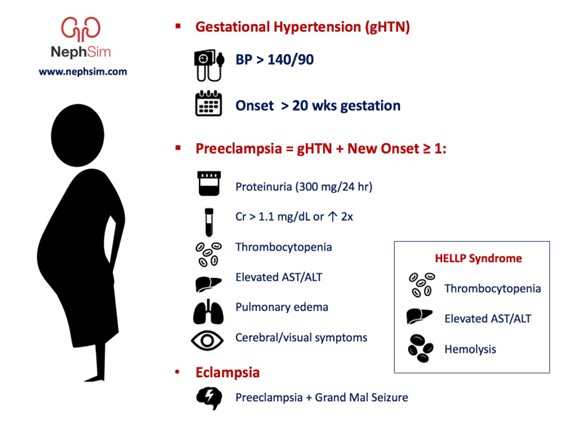
Showing 10 questions Sign up for moreA nurse is assessing a client who has preeclampsia during a prenatal visit. Which of the following findings should the nurse report to the provider?
Explanation
Answer is: a. Urine protein of 3+
Explanation:
- Urine protein of 3+ indicates severe proteinuria, which is a sign of preeclampsia and can lead to kidney damage. The nurse should report this finding to the provider as it may require medication or delivery intervention.
- Deep tendon reflexes of 2+ are normal and do not indicate preeclampsia. The nurse should monitor the client for hyperreflexia, which is a sign of increased neuromuscular irritability and can precede seizures.
- Hemoglobin 13 g/dL is within the normal range for a pregnant client and does not indicate preeclampsia. The nurse should monitor the client for anemia, which can cause maternal and fetal complications.
- Blood glucose 110 mg/dL is slightly elevated but not diagnostic of gestational diabetes, which is a different condition from preeclampsia. The nurse should advise the client to follow a balanced diet and exercise regimen and to undergo a glucose tolerance test at 24 to 28 weeks of gestation.
. 
A nurse is planning care for a newborn who is scheduled to start phototherapy using a lamp. Which of the following actions should the nurse include in the plan?
Explanation
The correct answer is choice C, Ensure the newborn's eyes are closed beneath the shield. Phototherapy is a treatment used to reduce high bilirubin levels in newborns. It involves exposing the newborn's skin to special lights, which helps to break down the excess bilirubin in the blood. It is important to ensure that the newborn's eyes are closed beneath the shield to prevent damage to the eyes from the bright lights. Giving the newborn 1 oz of glucose water every 4 hr, applying lotion to the newborn's skin every 8 hr, and dressing the newborn in a thin layer of clothing during therapy are not indicated interventions during phototherapy.
A nurse is performing an assessment for a newborn and notes breast tissue that has a flat areola with no bud. The nurse should identify that this finding indicates which of the following conditions?
Explanation
Answer and explanation
A. Decreased maternal hormones during pregnancy might affect fetal development, but it is not directly linked to the assessment finding of flat areola with no bud in a newborn.
B. Preterm gestational age is the most likely condition indicated by the finding of flat areola with no bud. Breast tissue development in newborns correlates with gestational age. In preterm infants, the breast tissue is often less developed, resulting in a flat areola without a bud.
C. Ambiguous secondary sex characteristics refer to physical traits that do not distinctly fit typical definitions of male or female. The described finding of flat areola with no bud is a specific developmental feature rather than a characteristic of ambiguous secondary sex traits.
D. Congenital anomalies are structural or functional abnormalities present at birth, but the described finding of flat areola with no bud is more indicative of prematurity rather than a congenital anomaly.
A nurse is caring for a newborn immediately following birth and notes a large amount of mucus in the newborn's mouth and nose. Identify the sequence the nurse should follow when performing suction with a bulb syringe.
Explanation
The correct answer is choice B, D, C, A. B. Compress the bulb syringe: The nurse should first compress the bulb syringe to expel air from it. This ensures that when it is placed in the newborn’s mouth or nose, it can create suction to effectively remove mucus. D. Place the bulb syringe in the newborn's mouth: The nurse should then place the compressed bulb syringe into the newborn’s mouth first, as clearing the mouth is essential before the nose to prevent aspiration. C. Use the bulb syringe to suction the newborn's nose: After suctioning the mouth, the nurse should use the bulb syringe to suction the nose. Suctioning the nose after the mouth helps to clear the airway more effectively and reduce the risk of mucus being aspirated into the lungs. A. Assess the newborn for reflex bradycardia: After suctioning, the nurse should assess the newborn for any signs of reflex bradycardia, which can occur due to vagal stimulation during suctioning. This ensures the newborn's heart rate and overall well-being are monitored.
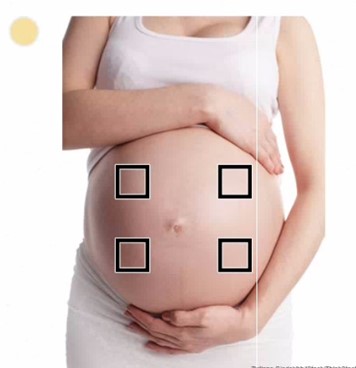
A nurse is assessing a client who is at 39 weeks of gestation and determines that the fetus is in a left occipitoanterior position. On which of the following sites should the nurse place the external fetal monitor to hear the point of maximum impulse of the fetal heart rate?
Explanation
A.This would be appropriate if the fetus were in a breech presentation.
B.This is incorrect because the fetal back is in the lower left quadrant, not the upper quadrant.
C.In the Left Occipitoanterior (LOA) Position, the fetal occiput (back of the head) is facing the mother’s left side and anteriorly (toward the front of the uterus). The fetal back will be on the left side of the maternal abdomen, making the PMI in the left lower quadrant. The best location to place the fetal monitor is over the fetal back, closest to the head. Since the fetus is cephalic (head down) in LOA position, the heart sounds are heard in the left lower quadrant.
D.This would be appropriate if the fetus were in a right occipitoanterior (ROA) position, but in LOA, the back is on the left.
A nurse is caring for a 2-day-old newborn who was born at 35 weeks of gestation.
Which of the following actions should the nurse take
Explanation
The nurse should insert an orogastric decompression tube with low wall suction. The newborn has Escherichia coli infection resulting in necrotizing enterocolitis, which can cause abdominal distention, decreased activity level, and bloody stools. The newborn also has a superficial rash on the abdominal wall, which may indicate a bacterial infection. The presence of a fist clenching, thrashing, and crying during light palpation of the
abdomen may indicate pain caused by bowel distention. An orogastric decompression tube with low wall suction can help decompress the bowel and relieve abdominal distention.
A nurse is performing an assessment for a newborn and notes breast tissue that has a flat areola with no bud. The nurse should identify that this finding indicates which of the following conditions?
Explanation
A. This option is incorrect because the development of breast tissue in newborns is not directly related to the mother’s hormone levels during pregnancy. Newborns typically have breast buds regardless of maternal hormone variations.
B. A flat areola with no breast bud is a characteristic finding in preterm newborns. Breast tissue development is one of the physical markers used to assess gestational age, and the lack of a breast bud is an indicator of immaturity, suggesting a preterm gestational age.
C. Ambiguous secondary sex characteristics are not related to the presence or absence of breast buds in newborns. This option focuses on sexual development rather than gestational markers.
D. A flat areola with no breast bud is a normal finding in preterm infants and does not indicate a congenital anomaly. This condition is expected in preterm newborns based on their developmental stage.
A nurse is assessing a postpartum client during a follow-up visit.
The nurse is teaching the client about postpartum depression. The nurse should encourage the client to
Explanation
The correct answer is Eating a well-balanced diet and exercising for 30 minutes per day.
Itcan help to reduce stress and improve mood, which can help to prevent postpartum depression. This provide the body with the essential nutrients it needs to function properly and maintain good health. Exercise can help to reduce stress and improve mood by releasing endorphins, which are hormones that can help to improve mood and reduce stress.
A nurse on the labor and delivery unit is planning care for a client who has human immunodeficiency virus (HIV). Which of the following is an appropriate action for the nurse to take following the birth of the newborn?
Explanation
A. While contact precautions may be necessary for certain infections, they are not specifically required for an HIV-positive mother’s newborn if the infant is not infected. The newborn’s HIV status should be confirmed through testing.
B. IV antibiotics are not routinely administered to newborns of HIV-positive mothers unless there is a specific indication for infection prevention or treatment.
C. It is crucial to clean the newborn promptly after delivery to reduce the risk of HIV transmission, as HIV can be present in blood and other bodily fluids. Proper cleansing helps minimize the risk of exposure.
D. Breastfeeding is contraindicated for mothers with HIV because HIV can be transmitted through breast milk. Instead, formula feeding is recommended to prevent transmission.
A nurse is teaching a newly hired nurse about Apgar scoring. Which of the following statements by the newly hired nurse indicates an understanding of the teaching?
Explanation
The correct answer is choice D. "The nurse should measure the newborn's muscle tone when assigning an Apgar score." components of the Apgar score:
|
Component |
0 Points |
1 Point |
2 Points |
|
Heart Rate |
Absent |
<100 bpm |
>100 bpm |
|
Respiratory Effort |
Absent |
Slow, irregular |
Good, crying |
|
Muscle Tone |
Flaccid |
Some flexion |
Active motion |
|
Reflex Irritability |
No response |
Grimace |
Vigorous cry |
|
Color |
Blue, pale |
Body pink, extremities blue |
Completely pink |
The score for each component is summed up to a maximum score of 10, with 10 indicating the healthiest newborn. The NRP guidelines emphasize that resuscitation efforts should be initiated immediately after delivery, regardless of the Apgar score, thus choice C is wrong.
You just viewed 10 questions out of the 71 questions on the ATI Maternal Newborn 2019 with NGN Proctored Exam Exam. Subscribe to our Premium Package to obtain access on all the questions and have unlimited access on all Exams. Subscribe Now