






 Video Library


Microbiology lab proctored exam
Microbiology lab proctored exam
Total Questions : 30
Showing 10 questions Sign up for more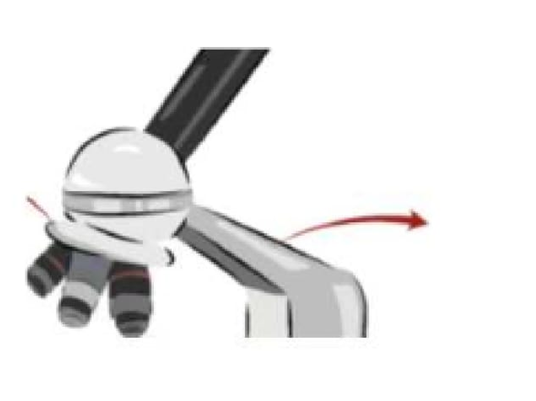
Explanation
Based on the image provided, the arrow is pointing to the arm of the microscope.
Arm: The arm is the curved or slanted part of the microscope that connects the base to the head (which contains the eyepiece and revolving nosepiece). It serves two main purposes: It holds the upper portion of the microscope (the optical components) securely above the stage. It is the primary part of the microscope designed to be gripped when carrying the instrument.
Shoulder: The shoulder is the upper supporting part of the microscope where the arm meets the head or body tube. It provides structural support for the optical components and helps maintain proper alignment of the microscope parts.
Explanation
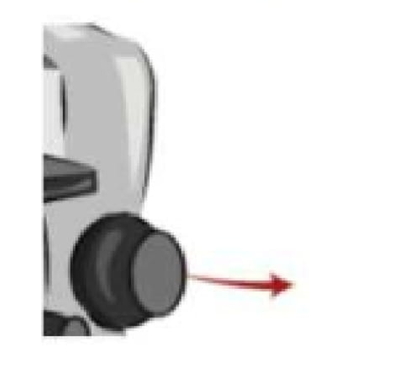
Coarse adjustment: The arrow points to the coarse adjustment knob, a large focusing knob on the microscope used to move the stage up or down quickly to bring the specimen into general focus. It is typically used with low-power objective lenses to locate the specimen and obtain an initial image. Using it with high-power lenses can risk damaging the slide or lens because it moves the stage in large increments.
Fine adjustment: A smaller focusing knob that moves the stage very slightly to sharpen the image after the specimen has been brought into general focus. It is mainly used with high-power or oil immersion objectives to achieve precise, clear visualization of cellular details without risking damage to the specimen.
The fine adjustment knob is used to sharpen the image after it has been focused with the coarse adjustment knob
Explanation
The fine adjustment knob on a microscope is used to sharpen or clarify the image after the initial focus has been achieved with the coarse adjustment knob. The coarse adjustment knob moves the stage or objective lens quickly over a larger distance to bring the specimen roughly into focus, which is especially useful with low-power objectives. Once the image is visible, the fine adjustment knob allows for precise, gradual adjustments to enhance the clarity and detail of the specimen, particularly under high-power or oil immersion objectives. This ensures accurate visualization of cellular structures without damaging the slide or lens.
What is the total magnification when using a 10x eyepiece and a 40x objective lens?
Explanation
A. 40x: 40x represents only the magnification of the objective lens alone. Total magnification is calculated by multiplying the objective lens magnification by the eyepiece magnification, so 40x alone does not reflect the combined power.
B. 100x: 100x would result from a 10x eyepiece combined with a 10x objective lens, not a 40x objective. Using the wrong combination for calculation would underestimate the actual total magnification.
C. 400x: Total magnification is calculated by multiplying the eyepiece (10x) by the objective lens (40x): 10 × 40 = 400. This total magnification allows clear visualization of medium-sized bacterial cells under the light microscope.
D. 4,000x: 4,000x would be achieved with much higher objective lenses, such as an oil immersion 400x objective combined with a 10x eyepiece. Using 40x for the objective does not reach this level of magnification.
What instruments are used to perform sterile transfer from one medium to another
Explanation
A. Loop & needle: In microbiology, a sterile inoculating loop or needle is commonly used to transfer microorganisms from one culture medium to another while maintaining aseptic technique. Loops are typically used for streaking or spreading bacteria on agar, while needles are used for stabbing into agar or transferring small amounts of culture into broth, allowing precise and sterile handling.
B. Loop & syringe: Syringes are generally not used for routine transfer of microbial cultures between media because they increase the risk of contamination and are more appropriate for measuring or injecting liquids rather than streaking or inoculating media.
C. Needle & syringe: Needles with syringes are mainly used in clinical or laboratory procedures for injecting liquids or drawing samples. They are not standard instruments for sterile transfer between culture media in microbiology because they are less precise for streaking or isolating colonies.
D. all above are true: Only the loop and needle are routinely used for sterile transfers in microbiology. Syringes are not standard instruments for transferring cultures between media, so this option is incorrect.
Explanation
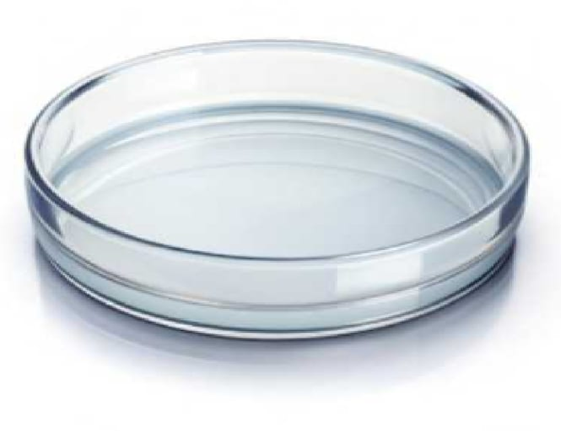
A Petri dish is a shallow, cylindrical, lidded container commonly used in laboratories for culturing microorganisms such as bacteria, fungi, and cells. It is typically made of clear glass or disposable sterile plastic, which allows easy observation of microbial growth. The dish consists of two parts: a flat bottom portion that holds the growth medium and a slightly larger lid that covers it to protect the culture from contamination while still allowing gas exchange. In microbiology, the bottom of the dish is usually filled with a nutrient medium such as agar that supports microbial growth. Samples are inoculated onto the agar surface and incubated under controlled temperature conditions. As microorganisms multiply
The isolation streak plate technique is used to separate individual bacterial cells on an agar plate.
Explanation
The isolation streak plate technique is specifically designed to separate individual bacterial cells on the surface of an agar plate. By streaking a loop or swab across the agar in a systematic pattern, the bacterial population is progressively diluted, allowing single cells to land apart from each other. These isolated cells then grow into distinct colonies, which can be used for identification, further testing, or pure culture development. This technique is fundamental in microbiology for obtaining pure cultures from mixed bacterial samples, ensuring accurate study of bacterial morphology, physiology, and biochemical characteristics.
The goal of streaking is to Not evenly spread bacteria, so they grow in a thick, continuous layer:
Explanation
The goal of streaking is to isolate individual bacterial colonies from a mixed or dense culture, not to produce a thick, continuous layer. By streaking a loop across an agar plate in a systematic pattern, bacteria are progressively thinned out, allowing single cells to settle separately. These individual cells then grow into discrete colonies that can be identified, counted, or further studied. Producing a thick, continuous layer would prevent isolation and make it difficult to distinguish individual colonies, defeating the purpose of streaking for isolation and accurate microbiological analysis.
What is the main purpose of simple staining?
Explanation
A. To differentiate between Gram-positive and Gram-negative bacteria: Differentiating Gram-positive from Gram-negative bacteria is the purpose of Gram staining, a differential staining technique. Simple staining does not distinguish between bacterial cell wall characteristics or species based on Gram reaction.
B. To determine bacterial motility: Bacterial motility is assessed using methods such as the hanging drop technique or motility agar. Simple staining does not provide information about motility because it stains all cells uniformly and immobilizes them on the slide.
C. To visualize the size, shape, and arrangement of bacteria: The primary purpose of simple staining is to enhance the contrast between bacterial cells and the background, allowing clear observation of cellular morphology, including size, shape (cocci, bacilli, spirilla), and arrangement (chains, clusters, pairs). This information is fundamental for bacterial identification and classification in microbiology.
D. To identify bacterial endospores: Endospore identification requires special staining techniques, such as the Schaeffer-Fulton method using malachite green and safranin. Simple staining cannot differentiate spores from vegetative cells because all structures take up the basic dye similarly.
Which of the following dyes is commonly used in simple staining?
Explanation
A. Safranin: Safranin is a basic dye that is primarily used as a counterstain in differential staining techniques such as the Gram stain and endospore staining. It provides contrast to differentiate between Gram-positive and Gram-negative bacteria or to highlight structures like spores, but it is not typically used alone for simple staining.
B. Methylene blue: Methylene blue is a cationic (basic) dye that binds electrostatically to negatively charged components of bacterial cells, such as nucleic acids and cell walls. Its use in simple staining allows clear visualization of cell morphology, size, and arrangement under a light microscope. This makes it a reliable and widely accepted stain in microbiology for rapid identification of bacterial cellular features.
C. Malachite green: Malachite green is a primary stain used in endospore staining procedures because it can penetrate the tough keratin coat of bacterial spores, usually with the aid of heat. It is not suitable for simple staining as it does not readily stain vegetative cells and requires additional steps, making it more specialized.
D. Carbol fuchsin: Carbol fuchsin is a phenolic dye used in acid-fast staining to identify mycobacteria, which have waxy, lipid-rich cell walls resistant to conventional stains. Its medical significance lies in tuberculosis and leprosy diagnostics, but it is not used for simple staining because its application requires heat and decolorization with acid-alcohol.
You just viewed 10 questions out of the 30 questions on the Microbiology lab proctored exam Exam. Subscribe to our Premium Package to obtain access on all the questions and have unlimited access on all Exams. Subscribe Now