






 Video Library


Child Maltreatment
Study Questions
Practice Questions 1
The nurse is assessing a client suspected of physical abuse. Which of the following findings would most strongly support this diagnosis?
Explanation
Physical abuse produces injuries inconsistent with the reported mechanism. Spiral fractures, bruises in varying stages of healing, and immersion burns of the buttocks indicate intentional trauma. Delayed care-seeking heightens suspicion.
Rationale for correct answer:
B. A spiral fracture results from rotational torque applied along the long axis of the humerus. Accidental falls generate compressive or angular force, not twisting force. Forcible grabbing and wrenching of the arm produces this oblique fracture line. It is a recognized sentinel injury.
Rationale for incorrect answers:
A. Symmetrical bruises over both knees overlie bony prominences exposed during kneeling, crawling, or tripping. These sites sustain frequent accidental impact. The distribution lacks a patterned or defensive configuration. Such bruising carries low diagnostic value.
C. Palmar abrasions arise from bracing reflexively against the ground during a forward fall. The palms are protective contact surfaces. These lesions are superficial and epidermal. The mechanism offered is anatomically plausible and accidental.
D. Linear forearm scratches may be self-inflicted during pruritus, dermatitis, or contact with vegetation. Superficial excoriations heal rapidly without scarring. They lack the force signature of inflicted trauma. Isolated scratches remain nonspecific.
Test-taking strategy:
- Analyze the Scenario/Question: The nurse assesses a client for suspected physical abuse. The stem asks which finding most strongly supports the diagnosis, so the answer must be the injury least explainable by accident.
- Apply Knowledge of Inflicted Versus Accidental Injury Patterns:
- Accidental injuries cluster over bony prominences and anterior surfaces struck during falls. Inflicted injuries occur on protected areas and follow mechanisms the client cannot reproduce accidentally. Fracture geometry reveals the direction of force applied.
- Rule out Choice 1: Bilateral knee bruising is a common accidental finding with no patterned shape.
- Rule in Choice 2: Rotational force required for a spiral fracture is not generated by a simple fall.
- Rule out Choice 3: Palmar abrasions match the expected bracing reflex of a forward fall.
- Rule out Choice 4: Superficial scratches are nonspecific and often self-inflicted.
- Select the Conclusion: Select Choice 2, because the spiral humeral fracture is the only finding requiring an applied twisting force.
Take home points
- Spiral fractures of long bones require rotational force and strongly suggest inflicted injury.
- Injuries over bony prominences and palms are usually accidental and low specificity.
- Bruises in varying stages of healing indicate repeated trauma over time.
- History inconsistent with the injury pattern is the single strongest indicator of abuse.
The nurse is caring for a client with suspected sexual abuse. Which of the following would be the most appropriate initial nursing action?
Explanation
Sexual assault care requires evidence preservation, trauma-informed communication, and mandatory reporting. Biological evidence degrades within 72 to 120 hours. An unbroken chain of custody determines whether collected specimens remain legally admissible.
Rationale for correct answer:
A. Verbatim documentation records the client's exact words inside quotation marks. This preserves evidentiary integrity and eliminates nurse interpretation. Paraphrasing introduces observer bias and weakens courtroom admissibility. Accurate initial recording forms the foundation of the forensic record.
Rationale for incorrect answers:
B. Detailed forensic explanations overwhelm a client in acute stress response. Catecholamine surge impairs encoding and comprehension. Information should be delivered in short statements with stepwise consent. This is supportive, not the initial action.
C. Encouraging confrontation exposes the client to retaliation and re-traumatization. Confrontation is never a nursing intervention. Safety planning and protective separation take precedence. This action breaches trauma-informed care principles.
D. Reporting is triggered by reasonable suspicion, not confirmed evidence. Delay obstructs protective services and allows continued abuse. Forensic specimens degrade rapidly and become unrecoverable. Withholding a report is legally indefensible.
Test-taking strategy:
- Analyze the Scenario/Question: The client has suspected sexual abuse. The stem asks for the initial action, so the answer must be the first, safest, and legally required step.
- Apply Knowledge of Forensic and Trauma-Informed Nursing:
- Initial care centers on safety, accurate documentation, and evidence preservation before any procedure begins. Documentation is non-invasive, requires no consent for procedures, and can be performed immediately. Actions that increase risk or delay legal duty are always eliminated first.
- Rule in Choice 1: Recording exact wording is immediate, harmless, and protects legal admissibility.
- Rule out Choice 2: Excessive detail during acute stress impairs processing and is not the first step.
- Rule out Choice 3: Confrontation endangers the client and is outside the nursing scope.
- Rule out Choice 4: Reporting is mandatory on suspicion; delay is unlawful and destroys evidence.
- Select the Conclusion: Select Choice 1, because verbatim documentation is the safest and legally protective initial nursing action.
Take home points
- Verbatim quotation of the client's statements preserves forensic and legal value.
- Mandatory reporting is based on reasonable suspicion, not proof of injury.
- Confronting an alleged abuser is never a nursing intervention and increases danger.
- Forensic evidence collection follows documentation and requires informed consent at each step.
The nurse is evaluating a client for emotional and psychological abuse. Which of the following client statements would be most concerning?
Explanation
Emotional abuse involves verbal degradation, rejection, isolation, and terrorizing by a caregiver. Chronic exposure elevates cortisol, impairs hippocampal development, and produces reactive attachment disorder, depression, and suicidal ideation.
Rationale for correct answer:
C. Repeated verbal degradation by a caregiver constitutes psychological maltreatment. Naming a client worthless attacks core self-concept rather than behaviour. This pattern predicts internalizing disorders and self-harm. The statement identifies a perpetrator and a recurring act.
Rationale for incorrect answers:
A. Situational nervousness with unfamiliar people reflects normal social apprehension. Mild autonomic arousal in novel encounters is developmentally expected. No caregiver behaviour is implicated. The statement lacks any degrading or coercive element.
B. Solitary time after school is a temperament variation consistent with introversion. Restorative withdrawal differs from enforced social isolation. The client chooses the behaviour voluntarily. No functional impairment or coercion is described.
D. Distress after losing demonstrates frustration intolerance, a common developmental finding. Emotional reactivity to competition is age-appropriate. The response is transient and self-limiting. No external humiliating agent is identified.
Test-taking strategy:
- Analyze the Scenario/Question: The nurse evaluates a client for emotional and psychological abuse. The most concerning statement must implicate a caregiver behaviour, not a normal emotional trait.
- Apply Knowledge of Psychological Maltreatment Indicators:
- Emotional abuse is defined by a caregiver pattern of belittling, blaming, threatening, or rejecting the client. Statements describing internal feelings or personal preferences are not abuse indicators. The distinguishing feature is an external person inflicting repeated degradation.
- Rule out Choice 1: Nervousness with strangers is a normal social response without caregiver involvement.
- Rule out Choice 2: Preferring solitude is a personality trait, not enforced isolation.
- Rule in Choice 3: A caregiver repeatedly calling the client worthless is direct verbal degradation.
- Rule out Choice 4: Upset after losing reflects normal frustration tolerance limits for age.
- Select the Conclusion: Select Choice 3, because it identifies a caregiver inflicting repeated verbal humiliation.
Take home points
- Emotional abuse is a caregiver pattern of degrading, rejecting, isolating, or terrorizing the client.
- Normal developmental traits such as shyness or preference for solitude are not abuse indicators.
- Psychological maltreatment leaves no physical marks but predicts depression, anxiety, and suicidality.
- Statements naming a perpetrator and a repeated harmful act carry the highest clinical concern.
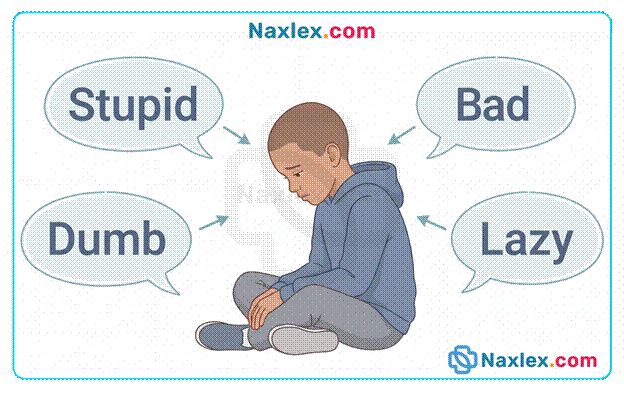
The nurse is assessing a child with suspected neglect. Which of the following findings should the nurse prioritize?
Explanation
Neglect is failure to provide nutrition, shelter, hygiene, supervision, and medical care. Failure to thrive with weight below the 5th percentile causes immunosuppression, delayed myelination, and irreversible cognitive impairment.
Rationale for correct answer:
B. Severe malnutrition below the 5th percentile signals physiological compromise with protein-energy deficit. Depleted glycogen and visceral protein stores produce hypoglycemia, hypoalbuminemia, and immune failure. Maslow's hierarchy places nutrition first. This finding is potentially life-threatening.
Rationale for incorrect answers:
A. Inadequate clothing raises risk of hypothermia but is environmentally correctable. The child is not currently in physiological collapse. It is a supporting indicator of neglect. It ranks below an established nutritional deficit.
C. Absent age-appropriate toys suggests stimulation deprivation affecting cognitive and social development. The consequence is developmental, not immediately physiological. Poverty alone may explain the finding. It carries the lowest priority.
D. Poor dental hygiene produces dental caries, gingivitis, and pain. Untreated caries can progress to odontogenic abscess over months. The process is chronic rather than acute. It does not outrank severe wasting.
Test-taking strategy:
- Analyze the Scenario/Question: A child has suspected neglect and the nurse must prioritize among four findings. The word prioritize converts this into a physiological-urgency question.
- Apply Knowledge of Prioritization in Neglect Assessment:
- Maslow's hierarchy directs the nurse to physiological needs before safety, then developmental needs. Growth parameters below the 5th percentile indicate established organ-level compromise. Findings that are chronic, correctable, or developmental rank lower than acute physiological deficit.
- Rule out Choice 1: Insufficient clothing is a safety-level risk, correctable immediately without physiological harm present.
- Rule in Choice 2: Weight below the 5th percentile confirms protein-energy malnutrition with systemic consequences.
- Rule out Choice 3: Absent toys affects developmental stimulation, the lowest tier of need.
- Rule out Choice 4: Dental neglect causes chronic morbidity, not acute physiological instability.
- Select the Conclusion: Select Choice 2, because severe malnutrition is the only finding threatening physiological survival.
Take home points
- Prioritize physiological findings over safety, developmental, and psychosocial findings in neglect assessment.
- Weight below the 5th percentile defines failure to thrive and requires immediate nutritional evaluation.
- Poor hygiene, dental caries, and inadequate clothing support neglect but are not first priority.
- Neglect is the most common form of maltreatment and is diagnosed by pattern, not by a single finding.
The nurse is evaluating risk factors for child maltreatment. Which of the following would increase the child's vulnerability? Select all that apply.
Explanation
Child maltreatment risk rises with increased caregiving demand and reduced disclosure capacity. Prematurity, disability, chronic illness, and communication deficits disrupt bonding and amplify caregiver stress and frustration.
Rationale for correct answers:
B. Chronic illness with repeated hospitalization generates caregiver burden, financial strain, and role fatigue. Complex regimens increase daily demand and frustration. Dependency limits the child's escape options. Medical neglect and inflicted injury risk both rise.
D. Limited verbal skills at 4 years impair the child's ability to disclose maltreatment. Perpetrators select victims with low credibility and poor recall. Communication failure escalates caregiver frustration. Detection is delayed and abuse persists.
E. Premature birth with developmental delay disrupts early parent-infant bonding through prolonged separation. Irritability, feeding difficulty, and high-pitched crying provoke caregiver frustration. Parental expectations are unmet. Inflicted head trauma risk is elevated.
Rationale for incorrect answers:
A. High socioeconomic status with stable housing reduces financial stressors linked to maltreatment. Resources permit respite care and consistent healthcare access. Abuse occurs across all income strata but incidence is lower. It is not a vulnerability factor.
C. Strong attachment to a supportive caregiver is a protective factor. Secure attachment predicts emotional regulation and disclosure to a trusted adult. Responsive caregiving buffers physiological stress reactivity. It decreases rather than increases vulnerability.
Test-taking strategy:
- Analyze the Scenario/Question: The nurse evaluates risk factors that increase a child's vulnerability to maltreatment. Each option must be classified as a risk factor or a protective factor.
- Apply Knowledge of Child-Related Vulnerability Factors:
- Maltreatment arises from interaction between caregiver stress, environmental strain, and child characteristics that increase demand. Children who are difficult to care for, dependent, or unable to report abuse carry the highest risk. Protective factors reduce exposure and must be eliminated in select-all items.
- Rule out Choice 1: Financial stability and secure housing are protective, lowering environmental stress.
- Rule in Choice 2: Chronic illness increases caregiving demand and dependency.
- Rule out Choice 3: Secure attachment buffers stress and encourages disclosure.
- Rule in Choice 4: Poor expressive language blocks reporting and reduces perceived credibility.
- Rule in Choice 5: Prematurity impairs bonding and raises caregiver frustration.
- Select the Conclusion: Select Choice 2, Choice 4, and Choice 5 as the factors increasing maltreatment vulnerability.
Take home points
- Prematurity, disability, and chronic illness increase caregiving demand and maltreatment risk.
- Limited expressive language reduces disclosure ability and delays detection of abuse.
- Secure attachment to a responsive caregiver is a protective factor, not a risk factor.
- Socioeconomic stability lowers risk, though maltreatment occurs at all income levels.
Practice Questions 2
The nurse is assessing a child with suspected toxic stress. Which of the following findings would most strongly support hypothalamic-pituitary-adrenal axis dysregulation?
Explanation
Toxic stress is prolonged adversity without buffering caregiving. Sustained corticotropin-releasing hormone drives adrenocorticotropic hormone and cortisol elevation, producing amygdala hypertrophy, hippocampal atrophy, and failed negative feedback.
Rationale for correct answer:
C. Elevated cortisol with persistent hypervigilance demonstrates lost glucocorticoid negative feedback at hypothalamic and pituitary receptors. Amygdala hyperactivity sustains threat scanning and exaggerated startle. Diurnal secretion rhythm flattens. This confirms axis dysregulation.
Rationale for incorrect answers:
A. Consistent growth with achieved milestones indicates unimpaired growth hormone and insulin-like growth factor 1 signalling. Chronic hypercortisolemia suppresses linear growth and epiphyseal activity. Neurodevelopment proceeds normally. No endocrine disruption exists.
B. Rapid stress resolution with caregiver reassurance defines buffered tolerable stress. Responsive caregiving terminates the adrenal response within minutes. Cortisol returns promptly to baseline. This reflects healthy axis function.
D. Preserved sleep-wake cycles with stable appetite indicate an intact circadian cortisol rhythm with morning peak and nocturnal nadir. Hypothalamic appetite regulation remains unaffected. No allostatic overload is evident. The finding is normal.
Test-taking strategy:
- Analyze the Scenario/Question: The nurse assesses for toxic stress. The finding must demonstrate axis dysregulation, not normal physiology.
- Apply Knowledge of the Stress Response Axis:
- Tolerable stress resolves with caregiver buffering, while toxic stress produces sustained activation with lost feedback. Three options here describe intact or protective physiology.
- Rule out Choice 1: Normal growth excludes glucocorticoid excess.
- Rule out Choice 2: Reassurance-responsive stress is buffered.
- Rule in Choice 3: Sustained cortisol with hypervigilance shows failed feedback.
- Rule out Choice 4: Intact sleep reflects a preserved circadian rhythm.
- Select the Conclusion: Select Choice 3, because sustained hypercortisolemia with hyperarousal is the only dysregulated finding.
Take home points
- Toxic stress is prolonged adversity without a buffering, responsive caregiver relationship.
- Sustained cortisol elevation causes amygdala hypertrophy and hippocampal volume loss.
- Chronic hypercortisolemia suppresses linear growth, immunity, and memory consolidation.
- Tolerable stress resolves rapidly with caregiver support and leaves no lasting axis change.
The nurse is evaluating a child for neurodevelopmental consequences of maltreatment. Which of the following would be the most concerning finding?
Explanation
Maltreatment during synaptic pruning windows disrupts corpus callosum myelination and prefrontal maturation. Linguistic deprivation produces expressive language delay, impaired joint attention, and executive dysfunction.
Rationale for correct answer:
C. Delayed language acquisition with absent social reciprocity reflects deprivation during critical developmental periods. Reduced caregiver verbal input limits vocabulary and phonological mapping. Disordered attachment impairs turn-taking. Both deficits indicate neurodevelopmental injury.
Rationale for incorrect answers:
A. Normal school performance with sustained attention indicates intact prefrontal executive function. Working memory and inhibitory control operate normally. Chronic stress would fragment attention. The finding is reassuring.
B. Age-appropriate motor skills with intact coordination demonstrate preserved cerebellar and corticospinal integrity. Milestones follow expected sequence. Gait and manipulation are unimpaired. No developmental compromise exists.
D. Strong peer relationships with stable regulation reflect secure attachment and effective limbic modulation. Reciprocal friendships require intact social cognition. Emotional control indicates functional prefrontal-amygdala connectivity. This is protective.
Test-taking strategy:
- Analyze the Scenario/Question: The nurse evaluates neurodevelopmental consequences. The concerning option must show a developmental deficit.
- Apply Knowledge of Maltreatment Sequelae:
- Early adversity disrupts language, attachment, and executive function more than motor development. Options describing intact abilities are protective.
- Rule out Choice 1: Stable performance shows preserved executive function.
- Rule out Choice 2: Intact motor skills indicate normal cerebellar function.
- Rule in Choice 3: Language delay with poor reciprocity signals deprivation injury.
- Rule out Choice 4: Reciprocal friendships reflect secure attachment.
- Select the Conclusion: Select Choice 3, because combined language and social deficits indicate maltreatment-related harm.
Take home points
- Early maltreatment most affects language, attachment, and executive function.
- Reduced caregiver verbal interaction produces measurable expressive language delay.
- Poor social reciprocity reflects disrupted attachment and impaired joint attention.
- Preserved milestones and peer relationships are protective, not concerning, findings.
The nurse is assessing a client with suspected physical abuse. Which of the following cutaneous findings should the nurse initially prioritize?
Explanation
Bruise dating relies on colour evolution from red-purple to green, yellow, then brown over 1 to 2 weeks. Multiple stages indicate repeated trauma. Truncal bruising over protected areas is highly suspicious for inflicted injury.
Rationale for correct answer:
C. Varied healing stages on the trunk demonstrate repeated trauma across separate occasions. The trunk is protected during ordinary falls. Hemoglobin degradation produces the sequential colour changes. This pattern is highly specific for abuse.
Rationale for incorrect answers:
A. Symmetrical knee bruising overlies bony prominences repeatedly struck during crawling and falling. Ambulatory children accrue these routinely. All lesions share a single age. Specificity is minimal.
B. Linear forearm scratches are frequently self-inflicted during pruritus or vegetation contact. Excoriations remain epidermal. Healing occurs without scarring. The finding is nonspecific.
D. Elbow abrasions result from protective contact during falls onto extended arms. The extensor surface is an expected impact site. Injury is superficial and single-aged. The mechanism is accidental.
Test-taking strategy:
- Analyze the Scenario/Question: The nurse assesses cutaneous findings for suspected abuse. The priority is the pattern least explainable by accident.
- Apply Knowledge of Bruise Patterns:
- Accidental bruises occur over bony prominences and share one age; inflicted bruises appear on protected areas in multiple healing stages.
- Rule out Choice 1: Knee bruising is accidental over bony prominences.
- Rule out Choice 2: Scratches are nonspecific and often self-inflicted.
- Rule in Choice 3: Multiple healing stages indicate repeated trauma.
- Rule out Choice 4: Elbow abrasions reflect a protective fall mechanism.
- Select the Conclusion: Select Choice 3, because bruises of differing ages on a protected area indicate repeated inflicted trauma.
Take home points
- Bruises in various healing stages indicate repeated trauma on separate occasions.
- Bruising on the trunk, ears, neck, buttocks, and inner thighs is highly suspicious.
- Accidental bruises cluster over bony prominences such as knees, shins, and elbows.
- Bruise colour progresses from red-purple through green and yellow to brown.
The nurse is evaluating a child for sexual abuse. Which of the following findings would most strongly support this diagnosis?
Explanation
Child sexual abuse produces anogenital trauma, recurrent urogenital infection, sexually transmitted infection, and sexualized behaviour beyond developmental stage. Posterior hymenal transection and pregnancy are definitive indicators.
Rationale for correct answer:
C. Anogenital trauma with recurrent urinary tract infections indicates mucosal disruption and ascending periurethral contamination. Posterior fourchette lacerations are non-accidental. The combination has high diagnostic specificity. Sexually transmitted infection screening is mandatory.
Rationale for incorrect answers:
A. Stress-related headaches reflect tension-type cephalalgia from pericranial muscle contraction. The psychosocial trigger is identified. No anogenital pathology accompanies it. Specificity is negligible.
B. Rest-relieved abdominal pain suggests functional abdominal pain or constipation. Absent nocturnal waking and weight loss exclude alarm features. The symptom is ubiquitous in childhood. No injury is implied.
D. Isolated enuresis may represent primary enuresis from delayed bladder maturation. Secondary regression requires corroborating findings. Alone it is developmentally common. It cannot support the diagnosis.
Test-taking strategy:
- Analyze the Scenario/Question: The nurse evaluates for sexual abuse. The finding must be anatomically specific, not a general somatic complaint.
- Apply Knowledge of Specific Abuse Indicators:
- Specific indicators involve the anogenital region: trauma, bleeding, discharge, or infection. Nonspecific somatic symptoms cannot stand alone.
- Rule out Choice 1: Stress headaches are nonspecific.
- Rule out Choice 2: Rest-relieved pain suggests a functional etiology.
- Rule in Choice 3: Anogenital injury with infection is highly specific.
- Rule out Choice 4: Isolated enuresis is developmentally common.
- Select the Conclusion: Select Choice 3, because anogenital trauma with recurrent infection is the only specific physical indicator.
Take home points
- Anogenital trauma and recurrent urogenital infection are specific abuse indicators.
- Sexually transmitted infection in a prepubertal child is diagnostic until proven otherwise.
- Enuresis, headaches, and abdominal pain are nonspecific without corroborating findings.
- Sexualized behaviour beyond developmental stage is a strong behavioural indicator.
The nurse is assessing a child for emotional and psychological abuse. Which of the following findings would be consistent with this diagnosis? Select all that apply.
Explanation
Psychological maltreatment comprises spurning, terrorizing, isolating, and denying responsiveness. Sequelae include internalized worthlessness, social withdrawal, guilt, anticipatory fear of the caregiver, and sleep disturbance from hyperarousal.
Rationale for correct answers:
A. Social withdrawal with excessive guilt reflects an internalized negative self-model and anticipated rejection. Avoidance prevents further humiliation. Guilt indicates misattributed responsibility for caregiver behaviour. Function progressively narrows.
C. Verbalized worthlessness directly reproduces the caregiver's degrading messages through internalization. Repeated spurning becomes self-concept. This cognition predicts depression and suicidality. It is the hallmark manifestation.
E. Nightmares with caregiver fear demonstrate conditioned threat association and sustained hyperarousal. The attachment figure has become the source of danger. Sleep architecture fragments. Fear of a caregiver is never developmentally normal.
Rationale for incorrect answers:
B. Strong self-esteem with positive peer interaction indicates consistent affirmation and secure attachment. Emotional abuse erodes self-worth systematically. Reciprocal friendships require intact social confidence. This finding is protective.
D. Age-appropriate coping demonstrates effective emotional regulation learned through caregiver co-regulation. Maltreated children show dysregulation or shutdown. Adaptive strategies imply emotional scaffolding. It contradicts the diagnosis.
Test-taking strategy:
- Analyze the Scenario/Question: The nurse assesses for emotional and psychological abuse. Findings must reflect internalized degradation, not healthy development.
- Apply Knowledge of Psychological Maltreatment:
- Emotional abuse produces worthlessness, withdrawal, guilt, and fear of the caregiver. Options describing self-esteem or effective coping are protective indicators.
- Rule in Choice 1: Withdrawal with guilt reflects a negative self-model.
- Rule out Choice 2: Strong self-esteem indicates consistent affirmation.
- Rule in Choice 3: Verbalized worthlessness shows internalized spurning.
- Rule out Choice 4: Effective coping implies emotional scaffolding.
- Rule in Choice 5: Caregiver fear reflects conditioned threat association.
- Select the Conclusion: Select Choice 1, Choice 3, and Choice 5 as findings consistent with emotional abuse.
Take home points
- Emotional abuse is a repeated caregiver pattern of spurning, terrorizing, and isolating.
- Children internalize degrading messages and verbalize feelings of worthlessness.
- Fear of a caregiver is never developmentally normal and warrants investigation.
- Psychological maltreatment leaves no physical signs yet predicts depression and suicidality.
Practice Questions 3
The nurse is obtaining a history from a child suspected of maltreatment. Which of the following historical red flags should the nurse initially prioritize?
Explanation
The single strongest historical indicator of inflicted injury is a history incompatible with the observed lesion. Additional red flags include delayed presentation, changing accounts between informants, and mechanisms exceeding the child's developmental ability.
Rationale for correct answer:
C. Inconsistent explanations of injury constitute the strongest historical predictor of maltreatment. Fabricated accounts shift between tellings and informants. Stated mechanisms fail to match injury biomechanics. Discrepancy alone mandates protective evaluation.
Rationale for incorrect answers:
A. Forgetting homework is a common executive functioning lapse in childhood. Attention and organization mature gradually. No injury or caregiver behaviour is implicated. The finding carries no diagnostic significance.
B. Describing a child as clumsy may reflect accurate developmental observation or a normalizing explanation. It becomes concerning only alongside injury discrepancy. Alone it is nonspecific. Corroborating findings are required.
D. Occasional headaches after school suggest tension-type cephalalgia, eye strain, or dehydration. The pattern is common and self-limiting. No inflicted mechanism is implied. Specificity is negligible.
Test-taking strategy:
- Analyze the Scenario/Question: The nurse takes a history for suspected maltreatment. The priority red flag must be the strongest historical predictor.
- Apply Knowledge of Historical Red Flags:
- The key indicator is a history that does not explain the injury, including changing or developmentally implausible accounts. Ordinary childhood complaints are not red flags.
- Rule out Choice 1: Forgetting homework is a normal executive lapse.
- Rule out Choice 2: Describing clumsiness alone is nonspecific.
- Rule in Choice 3: Inconsistent accounts are the strongest predictor.
- Rule out Choice 4: Occasional headaches are common and benign.
- Select the Conclusion: Select Choice 3, because an inconsistent injury history is the single strongest indicator of maltreatment.
Take home points
- A history inconsistent with the injury is the strongest indicator of maltreatment.
- Delayed presentation and changing accounts between informants are major red flags.
- Injury mechanisms must match the child's developmental capabilities.
- Ordinary childhood complaints without injury are not historical red flags.
The nurse is conducting a forensic interview with a maltreated child. Which of the following approaches would be most appropriate?
Explanation
Forensic interviewing uses open-ended prompts and developmentally matched vocabulary. Children are highly suggestible, so leading questions contaminate recall. Interviews are ideally single-session, recorded, and conducted by trained personnel.
Rationale for correct answer:
C. Open-ended questioning with age-matched language maximizes narrative accuracy and minimizes contamination. Free recall yields more reliable detail than prompted recall. Vocabulary must match cognitive stage. This is the evidence-based standard.
Rationale for incorrect answers:
A. Encouraging confrontation exposes the child to retaliation and re-traumatization. It lies outside nursing scope entirely. Perpetrator contact contaminates investigation. The action is contraindicated.
B. Legal consequence explanations overwhelm a child's cognitive capacity and may induce guilt over outcomes. Fear of consequences suppresses disclosure. Legal process is explained simply and later. It is not an interview technique.
D. Leading questions exploit suggestibility and implant false detail. Contaminated testimony becomes legally inadmissible. Children may acquiesce to perceived adult expectation. This destroys evidentiary value.
Test-taking strategy:
- Analyze the Scenario/Question: The nurse conducts a forensic interview. The approach must preserve testimonial reliability.
- Apply Knowledge of Forensic Interviewing:
- Children are suggestible, so free narrative with open-ended prompts protects accuracy. Leading, confrontational, or burdensome approaches contaminate or harm.
- Rule out Choice 1: Confrontation causes retaliation risk.
- Rule out Choice 2: Legal detail exceeds cognitive capacity.
- Rule in Choice 3: Open-ended prompts maximize narrative accuracy.
- Rule out Choice 4: Leading questions exploit suggestibility.
- Select the Conclusion: Select Choice 3, because developmentally appropriate open-ended questioning preserves testimonial reliability.
Take home points
- Open-ended questions elicit more accurate detail than leading or closed questions.
- Children are highly suggestible, so leading questions contaminate testimony.
- Language must match the child's developmental and cognitive stage.
- Repeated interviews increase distress and error; single recorded sessions are preferred.
The nurse is performing a comprehensive head-to-toe physical examination on a child with suspected abuse. Which of the following findings should the nurse prioritize?
Explanation
Bruise dating follows hemoglobin degradation, progressing red-purple to green, yellow, then brown over 1 to 2 weeks. Multiple stages signify repeated trauma. Truncal bruising over protected surfaces is highly specific for inflicted injury.
Rationale for correct answer:
B. Multiple healing stages on the torso indicate repeated trauma across separate occasions. The torso is shielded during ordinary falls. Sequential colour change reflects biliverdin and bilirubin conversion. Specificity for abuse is high.
Rationale for incorrect answers:
A. Superficial forearm scratches are frequently self-inflicted during pruritus or vegetation contact. Excoriations remain epidermal and heal rapidly. All share a single age. Diagnostic weight is minimal.
C. Mild facial erythema commonly follows cold exposure, exertion, crying, or fever. Vasodilation resolves within minutes. No structural injury exists. The finding is transient and nonspecific.
D. Knee abrasions overlie bony prominences repeatedly struck during play. Ambulatory children accrue these routinely. The mechanism is plainly accidental. Priority remains low.
Test-taking strategy:
- Analyze the Scenario/Question: The nurse examines a child for suspected abuse. The priority finding is the pattern least explainable by accident.
- Apply Knowledge of Bruise Patterns:
- Accidental injuries occur over bony prominences and share one age; inflicted bruises appear on protected areas in multiple healing stages.
- Rule out Choice 1: Scratches are nonspecific and often self-inflicted.
- Rule in Choice 2: Multiple stages indicate repeated trauma.
- Rule out Choice 3: Facial erythema is transient vasodilation.
- Rule out Choice 4: Knee abrasions are accidental over bony prominences.
- Select the Conclusion: Select Choice 2, because bruises of differing ages on a protected area indicate repeated inflicted trauma.
Take home points
- Bruises in multiple healing stages indicate trauma on separate occasions.
- Bruising on the torso, ears, neck, buttocks, and inner thighs is highly suspicious.
- Accidental bruises cluster over knees, shins, elbows, and the forehead.
- Bruising in a non-ambulatory infant is concerning until proven otherwise.
The nurse is reviewing laboratory investigations for a child suspected of neglect. Which of the following findings would most strongly support nutritional deficiency?
Explanation
Nutritional neglect produces iron deficiency anemia, hypoalbuminemia, and micronutrient depletion. Iron deficiency yields microcytic hypochromic indices with low ferritin and elevated red cell distribution width, impairing cognitive development irreversibly.
Rationale for correct answer:
C. Hemoglobin 8 g/dL with microcytosis indicates depleted iron stores and impaired heme synthesis. Mean corpuscular volume falls below 80 femtoliters. Ferritin declines while transferrin saturation drops. Neurocognitive consequences are lasting.
Rationale for incorrect answers:
A. Normal growth hormone levels demonstrate intact somatotropic function. Nonorganic failure to thrive arises from caloric deprivation, not hormonal deficiency. The result excludes endocrine pathology. It supports no deficiency.
B. Stable electrolytes with normal hydration indicate preserved fluid and renal homeostasis. Adequate hydration argues against severe deprivation. No micronutrient information is provided. The finding is reassuring.
D. Normal leukocyte count with intact immunity contradicts the immunosuppression of protein-energy malnutrition. Lymphopenia would be expected in severe deficiency. Immune competence is preserved. This opposes the diagnosis.
Test-taking strategy:
- Analyze the Scenario/Question: The nurse reviews laboratory data for suspected neglect. The result must show an objective deficiency.
- Apply Knowledge of Nutritional Laboratory Markers:
- Malnutrition produces anemia, hypoalbuminemia, and lymphopenia. Normal results argue against deficiency and cannot support the diagnosis.
- Rule out Choice 1: Normal growth hormone excludes endocrine cause.
- Rule out Choice 2: Stable electrolytes indicate preserved homeostasis.
- Rule in Choice 3: Microcytic anemia confirms iron deficiency.
- Rule out Choice 4: Intact immunity contradicts malnutrition.
- Select the Conclusion: Select Choice 3, because microcytic anemia is the only objective evidence of nutritional deficiency.
Take home points
- Iron deficiency produces microcytic hypochromic anemia with low ferritin.
- Hypoalbuminemia and lymphopenia accompany protein-energy malnutrition.
- Iron deficiency in childhood causes lasting cognitive and behavioural deficits.
- Refeeding requires monitoring for hypophosphatemia and cardiac arrhythmia.
The nurse is documenting suspected child maltreatment. Which of the following practices should be included? Select all that apply.
Explanation
Forensic records require objectivity, metric measurement, and attributed verbatim quotation. Documentation must survive judicial scrutiny, preserve chain of custody, and exclude conclusory or interpretive clinical language.
Rationale for correct answers:
B. Date and time stamps authenticate photographs and establish an evidentiary timeline for injury dating. A measuring scale beside each lesion provides dimensional reference. Orientation and close-up views are both obtained. Consent is documented.
C. Verbatim quotation preserves the client's exact wording without nursing interpretation. Quotation marks distinguish account from observation. Paraphrasing introduces bias and weakens admissibility. The speaker is identified.
E. Body mapping with accurate measurements records size, shape, colour, and anatomical position on a standardized diagram. Serial diagrams permit comparison across examinations. Patterned injuries become recognizable. Narrative entries are supplemented objectively.
Rationale for incorrect answers:
A. Nonspecific summaries omit the measurable detail needed to reconstruct findings later. Absent dimensions prevent injury dating. Incomplete records fail evidentiary standards. Contemporaneous detail is mandatory.
D. Conclusory phrasing such as appears abused asserts a diagnostic judgment outside nursing scope. Determination rests with investigative agencies. Subjective conclusions are discredited under cross-examination. Objective description is required.
Test-taking strategy:
- Analyze the Scenario/Question: The nurse documents suspected maltreatment. Each option is classified as objective and specific or subjective and vague.
- Apply Knowledge of Forensic Documentation:
- Defensible entries record what is seen and heard without conclusion, allowing a court to reconstruct findings later. Vague or conclusory wording fails the standard.
- Rule out Choice 1: Vague summaries lack reconstructable detail.
- Rule in Choice 2: Time-stamped images ensure authenticity.
- Rule in Choice 3: Exact quotation preserves unaltered testimony.
- Rule out Choice 4: Appears abused is a conclusory judgment.
- Rule in Choice 5: Measured diagrams provide objective mapping.
- Select the Conclusion: Select Choice 2, Choice 3, and Choice 5 as the legally defensible documentation practices.
Take home points
- Document objectively what is seen and heard, never conclusions about whether abuse occurred.
- Client statements are quoted word for word with the speaker attributed.
- Injuries require measurement, colour description, and body-diagram mapping.
- Photographs need consent, a measuring scale, and accurate date and time stamps.
Practice Questions 4
The nurse is assessing a child with suspected posttraumatic stress disorder (PTSD). Which of the following findings should the nurse priority address?
Explanation
Posttraumatic stress disorder requires intrusion, avoidance, negative cognitions, and hyperarousal beyond 1 month. Children display traumatic play, frightening dreams without recognizable content, and developmental regression.
Rationale for correct answer:
C. Recurrent nightmares with intense fear constitute intrusion symptoms, a core diagnostic cluster. Sleep fragmentation impairs memory consolidation and emotional regulation. Nocturnal reexperiencing sustains sympathetic hyperarousal. Distress severity establishes priority.
Rationale for incorrect answers:
A. Mild irritability after school reflects ordinary end-of-day fatigue. Transient mood change is developmentally expected. Severity fails the arousal criterion. No functional impairment results.
B. Solitary preference may indicate introverted temperament rather than trauma-driven avoidance. The choice is voluntary and purposeful. No distress accompanies it. Diagnostic weight is minimal.
D. Occasional group reluctance reflects situational hesitance common in childhood. Participation follows encouragement. No pervasive avoidance pattern exists. The finding is intermittent and mild.
Test-taking strategy:
- Analyze the Scenario/Question: A child has suspected posttraumatic stress disorder. The priority finding must be a core symptom cluster causing marked distress.
- Apply Knowledge of PTSD Symptom Clusters:
- Diagnosis requires intrusion, avoidance, negative cognition, and hyperarousal beyond 1 month. Mild, transient, or preference-based findings do not meet criteria.
- Rule out Choice 1: Mild irritability lacks functional impairment.
- Rule out Choice 2: Solitary preference reflects temperament.
- Rule in Choice 3: Nightmares are intrusion symptoms with severe distress.
- Rule out Choice 4: Occasional reluctance is situational hesitance.
- Select the Conclusion: Select Choice 3, because recurrent distressing nightmares represent the core intrusion cluster.
Take home points
- PTSD requires symptoms exceeding 1 month; under 1 month indicates acute stress disorder.
- Intrusion, avoidance, negative cognitions, and hyperarousal are the four clusters.
- Children may show traumatic play, regression, and dreams lacking recognizable content.
- Nightmare-related sleep loss worsens emotional regulation and concentration.
The nurse is evaluating a child for reactive attachment disorder. Which of the following behaviors would be most consistent with this diagnosis?
Explanation
Reactive attachment disorder follows pathogenic care before age 5, requiring absent comfort-seeking, blunted positive affect, and unexplained irritability or fearfulness. A developmental age of at least 9 months is required.
Rationale for correct answer:
D. Persistent caregiver withdrawal with minimal emotional response satisfies the core criterion of absent comfort-seeking during distress. The child neither approaches nor responds to soothing. Blunted positive affect accompanies it. Repeated caregiver disruption is the antecedent.
Rationale for incorrect answers:
A. Consistent peer relationships with stable engagement demonstrate functional social reciprocity. Sustained friendships require trust and affect sharing. Attachment disorder impairs these profoundly. The finding is protective.
B. Occasional shyness in unfamiliar settings reflects behavioural inhibition, a normal temperament variant. The child still retreats to a caregiver for reassurance. Comfort-seeking is intact. Attachment pathology is excluded.
C. Selective caregiver attachment with reciprocity confirms a formed preferred figure. The diagnosis requires absence of such selectivity. Mutual responsiveness indicates adequate early care. Criteria are unmet.
Test-taking strategy:
- Analyze the Scenario/Question: The nurse evaluates for reactive attachment disorder. The behaviour must show absent comfort-seeking.
- Apply Knowledge of Attachment Disorder Criteria:
- Diagnosis requires inhibited, emotionally withdrawn behaviour toward caregivers following extremes of insufficient care. Options showing intact attachment or reciprocity are eliminated.
- Rule out Choice 1: Stable friendships reflect intact social reciprocity.
- Rule out Choice 2: Shyness is normal temperament with preserved comfort-seeking.
- Rule out Choice 3: A preferred caregiver bond excludes the criteria.
- Rule in Choice 4: Withdrawal with blunted affect defines inhibited attachment.
- Select the Conclusion: Select Choice 4, because absent comfort-seeking with emotional blunting is the diagnostic hallmark.
Take home points
- Reactive attachment disorder requires documented pathogenic care before age 5.
- The child rarely seeks or responds to comfort and shows minimal positive affect.
- Disinhibited social engagement disorder is the opposite, with indiscriminate familiarity.
- Shyness and selective attachment are normal, protective developmental findings.
The nurse is caring for a child with dissociative symptoms following maltreatment. Which of the following client statements would be most concerning?
Explanation
Dissociation is disrupted integration of consciousness, memory, identity, and perception. Depersonalization, derealization, and dissociative amnesia arise as defensive detachment during inescapable trauma, with reality testing preserved.
Rationale for correct answer:
C. Observing the self externally describes depersonalization, detachment from one's own body and mental processes. The experience protects against overwhelming trauma. Reality testing remains intact, distinguishing it from psychosis. This indicates significant traumatic sequelae.
Rationale for incorrect answers:
A. Preferring solitude after school reflects introverted temperament and restorative withdrawal. The behaviour is voluntary and purposeful. Perception and self-awareness remain continuous. No detachment phenomenon exists.
B. Upset after losing reflects normal frustration tolerance limits. The emotion is proportionate, transient, and situation-bound. Consciousness and identity remain integrated. No dissociative process is described.
D. Nervousness with strangers represents ordinary social apprehension with sympathetic arousal. Awareness of self and surroundings persists. Function is unimpaired. The finding lacks pathological significance.
Test-taking strategy:
- Analyze the Scenario/Question: The child has dissociative symptoms. The statement must describe altered self-perception, not ordinary emotion.
- Apply Knowledge of Dissociative Phenomena:
- Dissociation breaks the continuity of self, memory, or environment. Depersonalization is detachment from the self; derealization is detachment from surroundings.
- Rule out Choice 1: Chosen solitude reflects temperament.
- Rule out Choice 2: Losing distress is proportionate emotional reactivity.
- Rule in Choice 3: Watching the self externally defines depersonalization.
- Rule out Choice 4: Stranger nervousness is normal social anxiety.
- Select the Conclusion: Select Choice 3, because depersonalization indicates trauma-related disruption of self-integration.
Take home points
- Depersonalization is detachment from the self; derealization is detachment from surroundings.
- Dissociation preserves reality testing, distinguishing it from psychotic disorders.
- Dissociative symptoms correlate strongly with severe or repeated maltreatment.
- Grounding techniques and safety precede trauma processing in dissociative clients.
The nurse is planning care for a child with major depressive disorder related to maltreatment. Which of the following interventions should the nurse initially prioritize?
Explanation
Pediatric major depressive disorder features irritable mood, anhedonia, somatic complaints, and psychomotor retardation for at least 2 weeks. Maltreatment history substantially elevates suicide risk and self-injurious behaviour.
Rationale for correct answer:
C. Suicide risk assessment addresses an immediate life-threatening hazard preceding all therapeutic planning. Direct questioning about ideation, plan, means, and intent does not increase risk. Maltreatment plus depression compounds lethality. Safety determines level of care.
Rationale for incorrect answers:
A. Peer support groups offer social reconnection and reduced isolation over time. Participation presupposes established safety. Benefits accrue gradually. This is a maintenance-phase intervention.
B. Coping strategy education is a cognitive intervention requiring concentration and future orientation. Severe depression impairs attention and retention. Teaching during crisis is ineffective. It belongs to a later phase.
D. Recreational participation provides behavioural activation and pleasurable reinforcement. Anhedonia limits initial engagement. The intervention addresses symptoms, not survival. It cannot precede risk screening.
Test-taking strategy:
- Analyze the Scenario/Question: A maltreated child has major depressive disorder. The word initially converts this into a safety prioritization item.
- Apply Knowledge of Prioritization in Depression:
- Safety precedes psychosocial and educational interventions, and maltreatment history markedly elevates suicide risk requiring direct assessment.
- Rule out Choice 1: Group support is a later-phase intervention.
- Rule out Choice 2: Teaching requires intact concentration.
- Rule in Choice 3: Ideation screening removes an immediate lethal risk.
- Rule out Choice 4: Activity addresses anhedonia, not safety.
- Select the Conclusion: Select Choice 3, because establishing safety precedes all therapeutic and educational interventions.
Take home points
- Assess suicidal ideation, plan, means, and intent first in any depressed client.
- Asking directly about suicide does not plant the idea or increase risk.
- Childhood depression presents with irritability and somatic complaints more than sadness.
- Education, activity, and group therapy follow once safety is established.
The nurse is implementing trauma-informed care for a maltreated child. Which of the following nursing actions are appropriate? Select all that apply.
Explanation
Trauma-informed care rests on safety, trustworthiness, choice, collaboration, and empowerment. Predictability lowers amygdala threat activation. Care avoids re-enacting the powerlessness of the original maltreatment.
Rationale for correct answers:
A. Nonjudgmental supportive care establishes trustworthiness through consistent, transparent interaction. Neutral delivery prevents perceived blame and shame. Therapeutic rapport enables disclosure. Trust is a core guiding principle.
C. Predictable routines deliver the environmental safety underpinning all other interventions. Consistency lowers sustained sympathetic arousal. Anticipated events reduce threat appraisal. Safety is the foundational principle.
E. Safe emotional expression supports affect regulation and processing at the child's own pace. Voluntary disclosure restores control. Naming emotions develops regulatory capacity. Expression is invited, never demanded.
Rationale for incorrect answers:
B. Minimizing caregiver involvement universally severs protective attachment relationships that support recovery. Non-offending caregivers are central to trauma-focused treatment. Exclusion is justified only by documented safety risk. Blanket restriction is inappropriate.
D. Coercive strategies replicate the power imbalance of the original maltreatment. Forced compliance triggers re-traumatization and defensive aggression. Autonomy and choice are core principles. The action is contraindicated.
Test-taking strategy:
- Analyze the Scenario/Question: The nurse implements trauma-informed care. Each action is judged against safety, trust, and empowerment.
- Apply Knowledge of Trauma-Informed Principles:
- Care must restore control rather than reproduce powerlessness. Coercion and blanket exclusion of supportive caregivers violate the framework.
- Rule in Choice 1: Nonjudgmental care builds trustworthiness.
- Rule out Choice 2: Excluding caregivers severs protective attachment.
- Rule in Choice 3: Consistent routines establish safety.
- Rule out Choice 4: Coercion recreates the power imbalance.
- Rule in Choice 5: Safe expression supports affect regulation.
- Select the Conclusion: Select Choice 1, Choice 3, and Choice 5 as the appropriate trauma-informed actions.
Take home points
- The six principles begin with safety and end with empowerment and cultural responsiveness.
- Predictable routines reduce hypervigilance by lowering sustained sympathetic arousal.
- Coercion and forced compliance recreate abusive dynamics and cause re-traumatization.
- Non-offending caregivers are included unless documented safety concerns require exclusion.
Practice Questions 5
The nurse is caring for a child with suspected maltreatment. Which of the following actions should the nurse priority take regarding mandatory reporting obligations?
Explanation
Nurses are mandated reporters with a duty triggered by reasonable suspicion, not proof. Reporting is individual and non-delegable. Failure carries criminal and licensure penalties, while good-faith reporting confers legal immunity.
Rationale for correct answer:
C. Immediate reporting satisfies the statutory duty that attaches at reasonable suspicion. Investigation and substantiation belong to protective services, not the nurse. Good-faith reports carry legal immunity from liability. Timeliness prevents ongoing harm.
Rationale for incorrect answers:
A. Delaying for evidence misconstrues the suspicion threshold of the reporting statute. Biological evidence degrades within hours regardless. Continued perpetrator access permits further harm. The delay is legally indefensible.
B. Informing the caregiver first risks evidence destruction, coaching of the child, and flight. The suspected perpetrator may be that caregiver. Notification decisions belong to investigators. Child safety is compromised.
D. Awaiting provider confirmation wrongly treats the duty as delegable. Each mandated reporter holds independent obligation. Hierarchical deferral does not discharge liability. Documentation supplements, never replaces, reporting.
Test-taking strategy:
- Analyze the Scenario/Question: The nurse faces mandatory reporting obligations. The priority action must satisfy the statutory threshold.
- Apply Knowledge of Mandatory Reporting:
- The duty is triggered by reasonable suspicion, is personal to each reporter, and cannot be delayed or delegated. Investigation belongs to protective services.
- Rule out Choice 1: The threshold is suspicion, not confirmed evidence.
- Rule out Choice 2: Caregiver notification risks evidence destruction.
- Rule in Choice 3: Immediate reporting fulfils the statutory duty.
- Rule out Choice 4: The obligation is non-delegable.
- Select the Conclusion: Select Choice 3, because reasonable suspicion obligates immediate, independent reporting.
Take home points
- Nurses are mandated reporters obligated by reasonable suspicion, not proof.
- The reporting duty is personal and cannot be delegated to a physician or supervisor.
- Good-faith reports confer legal immunity from civil and criminal liability.
- Notifying a suspected perpetrator risks evidence destruction and child endangerment.
The nurse is participating in a multidisciplinary team meeting for a maltreated child. Which of the following roles is most appropriate for the nurse?
Explanation
Multidisciplinary teams combine nursing, medicine, social work, law enforcement, and the judiciary. The nurse contributes clinical assessment, care coordination, and therapeutic communication. Custody and placement are judicial determinations.
Rationale for correct answer:
B. Coordinating therapeutic communication with caregivers lies squarely within the nursing scope. The nurse models trauma-informed interaction and teaches de-escalation. Consistency across caregivers supports the child's regulation. Coordination is a core nursing function.
Rationale for incorrect answers:
A. Custody determination is a judicial function requiring legal authority. Courts weigh evidence from multiple agencies. Nurses supply clinical data only. The role exceeds professional scope.
C. Independent placement decisions belong to child protective services and the courts. Unilateral action bypasses due process. Nurses may recommend but never decide. Autonomy in this domain is absent.
D. Medical testimony as an expert witness requires specific credentials and court designation. Staff nurses testify as fact witnesses instead. Testimony occurs in court, not team meetings. The role is misassigned here.
Test-taking strategy:
- Analyze the Scenario/Question: The nurse participates in a multidisciplinary meeting. The role must fall within the nursing scope.
- Apply Knowledge of Team Roles:
- Nurses assess, coordinate care, educate, and communicate; courts and protective services determine custody and placement.
- Rule out Choice 1: Custody is a judicial determination.
- Rule in Choice 2: Communication coordination is a nursing function.
- Rule out Choice 3: Placement belongs to protective services and courts.
- Rule out Choice 4: Expert testimony requires court designation.
- Select the Conclusion: Select Choice 2, because coordinating therapeutic communication is within the nurse's professional scope.
Take home points
- Multidisciplinary teams include nursing, medicine, social work, law enforcement, and the courts.
- The nurse's role is clinical assessment, care coordination, education, and advocacy.
- Custody and placement decisions are made by courts and protective services.
- Staff nurses testify as fact witnesses, not as designated expert witnesses.
The nurse is implementing evidence-based psychotherapy for a traumatized child. Which of the following interventions would be most appropriate?
Explanation
Trauma-focused cognitive behavioural therapy is first-line for pediatric traumatic stress. Components include psychoeducation, relaxation, cognitive restructuring, gradual exposure, and caregiver sessions. It promotes extinction learning and corrects maladaptive appraisals.
Rationale for correct answer:
C. Trauma-focused cognitive behavioural therapy carries the strongest evidence base across pediatric treatment guidelines. Gradual exposure promotes extinction learning and reduces avoidance. Cognitive restructuring corrects self-blame. Caregiver involvement improves outcomes further.
Rationale for incorrect answers:
A. Caregiver reassurance alone provides emotional support without structured processing. Comfort cannot restructure trauma-related cognitions. Established symptoms require formal therapy. This constitutes undertreatment.
B. Encouraging avoidance reinforces the avoidance cluster through negative reinforcement. Escaping reminders prevents extinction learning. Symptoms persist and consolidate. This perpetuates the disorder.
D. Pharmacologic sedation produces symptom suppression without processing. Benzodiazepines impair memory consolidation required for extinction. Dependence and disinhibition may follow. Sedation is not a therapy.
Test-taking strategy:
- Analyze the Scenario/Question: The nurse implements evidence-based psychotherapy. The intervention must be first-line for pediatric trauma.
- Apply Knowledge of Pediatric Trauma Treatment:
- Trauma-focused cognitive behavioural therapy ranks first, while avoidance and sedation impede extinction learning. Reassurance alone is insufficient for established symptoms.
- Rule out Choice 1: Reassurance alone is undertreatment.
- Rule out Choice 2: Avoidance reinforces the avoidance cluster.
- Rule in Choice 3: Trauma-focused therapy promotes extinction learning.
- Rule out Choice 4: Sedation suppresses rather than processes symptoms.
- Select the Conclusion: Select Choice 3, because trauma-focused cognitive behavioural therapy is the first-line evidence-based treatment.
Take home points
- Trauma-focused cognitive behavioural therapy is first-line for pediatric traumatic stress.
- Components include psychoeducation, relaxation, cognitive restructuring, and gradual exposure.
- Non-offending caregiver participation substantially improves treatment outcomes.
- Avoidance and sedation impede extinction learning and prolong symptoms.
The nurse is planning family-focused interventions for a maltreated child. Which of the following actions should the nurse initially prioritize?
Explanation
Family-focused care requires baseline assessment before intervention. Caregiver motivation, insight, and protective capacity determine feasibility. Trauma-focused therapy depends on a non-offending caregiver participating consistently.
Rationale for correct answer:
C. Caregiver readiness assessment applies the nursing process, where data collection precedes planning and implementation. Motivation and protective capacity determine viable interventions. Readiness stage guides selection. Premature planning otherwise fails.
Rationale for incorrect answers:
A. Encouraging family avoidance severs attachment relationships without protective justification. Separation is indicated only when safety is threatened. Reunification with a non-offending caregiver remains the goal. The action is inappropriate.
B. Exclusive peer programming abandons the family system central to the child's environment. Peer support supplements caregiver engagement. Unaddressed family dysfunction perpetuates maltreatment. The approach is incomplete.
D. Antidepressant education is an implementation-phase action requiring a prescribed regimen. Selective serotonin reuptake inhibitors carry a pediatric suicidality warning. Teaching presupposes completed assessment. It is not initial.
Test-taking strategy:
- Analyze the Scenario/Question: The nurse plans family-focused interventions. The word initially signals the nursing process sequence.
- Apply Knowledge of the Nursing Process:
- Assessment precedes planning and implementation, and caregiver readiness determines which family interventions are realistic.
- Rule out Choice 1: Avoiding family severs attachment without justification.
- Rule out Choice 2: Peer-only focus excludes the family system.
- Rule in Choice 3: Readiness screening is the assessment step.
- Rule out Choice 4: Medication teaching is an implementation action.
- Select the Conclusion: Select Choice 3, because assessment of caregiver readiness precedes all family-focused planning.
Take home points
- Assessment is always the first phase of the nursing process before planning.
- Caregiver readiness and protective capacity determine feasible family interventions.
- Trauma-focused therapy requires an involved non-offending caregiver.
- Separation from family is indicated only when the child's safety is threatened.
The nurse is implementing community-level prevention strategies for child maltreatment. Which of the following actions are appropriate? Select all that apply.
Explanation
Primary prevention targets whole populations before maltreatment occurs. Home visitation, parenting education, and policy reform reduce incidence. Secondary prevention screens at-risk families; tertiary prevention limits recurrence after disclosure.
Rationale for correct answers:
B. Policy collaboration operates at the structural level, shaping reporting standards, funding, and licensing. Legislative change affects entire populations at once. Nurses supply epidemiologic evidence to lawmakers. This is upstream primary prevention.
C. Home visitation delivering parenting programs reduces caregiver stress and corrects unrealistic developmental expectations. Nurse-family partnership models demonstrate reduced maltreatment incidence. Attachment and supervision quality improve. Delivery occurs in the natural environment.
E. School-based education on safe relationships builds body autonomy literacy and disclosure skills. Universal delivery reaches all children regardless of risk. Recognition of unsafe touch improves reporting. This is population-level prevention.
Rationale for incorrect answers:
A. Acute care restriction confines nursing to tertiary intervention after injury occurs. Most at-risk families never reach hospital services. Prevention requires community and home outreach. Primary strategies are forfeited.
D. Delaying prevention until confirmation contradicts the definition of prevention, which precedes occurrence. Confirmation implies harm already sustained. Waiting converts prevention into remediation. The approach is logically indefensible.
Test-taking strategy:
- Analyze the Scenario/Question: The nurse implements community-level prevention. Options must act before harm and reach populations.
- Apply Knowledge of Prevention Levels:
- Primary prevention precedes occurrence through education, policy, and support programs. Waiting for harm or confining care to hospitals is tertiary.
- Rule out Choice 1: Hospital-only care is tertiary and limited.
- Rule in Choice 2: Legislative work is structural prevention.
- Rule in Choice 3: Home visitation reduces caregiver stress.
- Rule out Choice 4: Waiting for confirmation abandons prevention.
- Rule in Choice 5: School programs provide universal education.
- Select the Conclusion: Select Choice 2, Choice 3, and Choice 5 as the appropriate community-level prevention strategies.
Take home points
- Primary prevention acts before maltreatment occurs and targets whole populations.
- Nurse home visitation programs demonstrably reduce maltreatment in high-risk families.
- School-based safe relationship education improves recognition and disclosure of abuse.
- Restricting action to acute care limits nursing to tertiary, post-injury intervention.
Comprehensive Questions
The nurse is assessing a client with suspected child neglect. Which of the following findings should the nurse priority address?
Explanation
Neglect is omission of care covering nutrition, shelter, hygiene, supervision, and medical needs. Protein-energy malnutrition produces hypoalbuminemia, hypoglycemia, bradycardia, hypothermia, and immunosuppression with irreversible neurodevelopmental loss.
Rationale for correct answer:
C. Weight below the 5th percentile establishes nonorganic failure to thrive with depleted glycogen and visceral protein reserves. Refeeding risks hypophosphatemia and cardiac arrhythmia. Cortical myelination is permanently compromised. This is the sole life-threatening finding.
Rationale for incorrect answers:
A. Dental caries with poor oral hygiene reflects chronic dental neglect from absent brushing and preventive care. Progression to periapical abscess occurs over months. The child remains hemodynamically stable. Priority is lower than nutritional collapse.
B. Absent age-appropriate toys indicates stimulation deprivation limiting cognitive, language, and fine-motor acquisition. Poverty rather than intent may explain the finding. No physiological derangement exists. This ranks lowest on Maslow's hierarchy.
D. Season-inappropriate clothing creates hypothermia risk through convective and radiant heat loss. The hazard is potential rather than present. It is immediately correctable with a blanket. Nutritional depletion outranks environmental exposure.
Test-taking strategy:
- Analyze the Scenario/Question: The nurse assesses a child for suspected neglect and must address one finding first. The word priority converts this into a physiological urgency item.
- Apply Knowledge of Prioritization in Neglect Assessment:
- Maslow's hierarchy places nutrition, oxygenation, and thermoregulation above safety and developmental needs. Growth parameters below the 5th percentile confirm systemic organ-level compromise already present. Findings that are potential, chronic, or developmental are always ranked lower than active physiological deficit.
- Rule out Choice 1: Caries cause chronic morbidity, not acute instability.
- Rule out Choice 2: Missing toys affect developmental stimulation, the lowest tier of need.
- Rule in Choice 3: Severe wasting confirms protein-energy malnutrition with multisystem consequences.
- Rule out Choice 4: Insufficient clothing is a safety-level risk that is immediately correctable.
- Select the Conclusion: Select Choice 3, because severe malnutrition is the only finding threatening physiological survival.
Take home points
- Physiological findings outrank safety, developmental, and psychosocial findings in neglect prioritization.
- Weight below the 5th percentile defines failure to thrive and demands immediate nutritional intervention.
- Dental caries, missing toys, and thin clothing support the neglect pattern but are not first priority.
- Neglect is the most frequent form of maltreatment and is diagnosed by pattern, not by one finding.
The nurse is caring for a client with suspected sexual abuse. Which of the following would be the most appropriate nursing action?
Explanation
Sexual assault care demands evidence preservation, trauma-informed communication, and mandatory reporting. Motile spermatozoa persist 6 to 12 hours; deoxyribonucleic acid remains recoverable up to 120 hours. Chain of custody governs admissibility.
Rationale for correct answer:
D. Verbatim documentation captures exact wording within quotation marks, preserving evidentiary integrity. Paraphrasing introduces observer bias and weakens judicial credibility. The action is non-invasive and requires no procedural consent. It forms the forensic record foundation.
Rationale for incorrect answers:
A. Delaying the report pending confirmed evidence violates mandatory reporting statutes triggered by reasonable suspicion. Biological trace evidence degrades within hours. Continued perpetrator access permits further assault. The omission is legally indefensible.
B. Reassurance without notification withholds the protective referral that statutory agencies must initiate. Emotional support alone cannot secure the client's environment. Nurses are mandated reporters regardless of parental preference. Safety remains unaddressed.
C. Prompting confrontation of the caregiver invites retaliation and re-traumatization. Confrontation is outside nursing scope and contaminates the investigation. Perpetrator interviews belong to law enforcement. The action breaches trauma-informed principles.
Test-taking strategy:
- Analyze the Scenario/Question: The client has suspected sexual abuse. The most appropriate action must be safe, within nursing scope, and legally protective.
- Apply Knowledge of Forensic and Trauma-Informed Nursing:
- Care sequences from safety, to accurate documentation, to evidence collection with stepwise consent. Reporting duty attaches at reasonable suspicion, never at proof. Any option that endangers the client, delays a legal duty, or exceeds nursing scope is eliminated immediately.
- Rule out Choice 1: Waiting for proof destroys trace evidence and breaches statute.
- Rule out Choice 2: Comfort without referral leaves the protective duty unmet.
- Rule out Choice 3: Confrontation causes retaliation risk and contaminates investigation.
- Rule in Choice 4: Exact quotation preserves legal admissibility and is immediately safe.
- Select the Conclusion: Select Choice 4, because verbatim documentation is the safest, lawful, and evidence-preserving nursing action.
Take home points
- Client statements must be recorded word for word in quotation marks for forensic validity.
- Mandatory reporting is triggered by reasonable suspicion, not by confirmed physical evidence.
- Confronting an alleged perpetrator is never a nursing intervention and increases danger.
- Clothing goes in paper bags and specimens require signed chain-of-custody transfer.
The nurse is evaluating a child for emotional abuse. Which of the following client statements would be most concerning?
Explanation
Emotional abuse comprises spurning, terrorizing, isolating, exploiting, and denying responsiveness. Chronic hypercortisolemia reduces hippocampal volume, producing internalizing disorders, reactive attachment disorder, and elevated suicide risk.
Rationale for correct answer:
B. Repeated caregiver degradation meets the definition of spurning, a core psychological maltreatment subtype. Labelling the child worthless attacks identity rather than conduct. The statement names a perpetrator and a recurring act. Internalized shame predicts self-harm.
Rationale for incorrect answers:
A. Upset after losing reflects immature frustration tolerance, developmentally expected in childhood. The reaction is transient and self-limiting. No caregiver behaviour is implicated. It carries no maltreatment significance.
C. Nervousness with strangers represents normal social apprehension with physiological sympathetic arousal. Novel encounters commonly provoke mild anxiety. Function and daily participation remain intact. No degrading external agent exists.
D. Solitary time after school reflects introverted temperament and restorative withdrawal. The behaviour is self-chosen, not imposed. Enforced isolation by a caregiver would differ entirely. No coercion or impairment is described.
Test-taking strategy:
- Analyze the Scenario/Question: The nurse evaluates a child for emotional abuse. The most concerning statement must describe a caregiver behaviour, not an internal feeling.
- Apply Knowledge of Psychological Maltreatment Indicators:
- Psychological maltreatment requires a repeated caregiver pattern of belittling, rejecting, threatening, or isolating the child. Statements describing normal emotions, temperament, or preferences are developmental findings. The discriminating feature is an external person inflicting degradation over time.
- Rule out Choice 1: Losing distress is normal emotional reactivity for age.
- Rule in Choice 2: A caregiver repeatedly calling the child worthless is direct verbal degradation.
- Rule out Choice 3: Stranger nervousness is expected social apprehension.
- Rule out Choice 4: Chosen solitude is temperament, not enforced isolation.
- Select the Conclusion: Select Choice 2, because it identifies a caregiver inflicting repeated verbal humiliation.
Take home points
- Emotional abuse is a repeated caregiver pattern of spurning, terrorizing, isolating, or ignoring the child.
- Shyness, introversion, and frustration after losing are normal developmental findings.
- Psychological maltreatment leaves no physical signs yet predicts depression, anxiety, and suicidality.
- Statements naming both a perpetrator and a recurring harmful act warrant the greatest concern.
The nurse is assessing a child with suspected abusive head trauma. Which of the following findings should the nurse initially prioritize?
Explanation
Abusive head trauma results from rotational acceleration-deceleration forces tearing bridging veins. The triad includes subdural hematoma, retinal hemorrhages, and encephalopathy, with vomiting, seizures, apnea, and raised intracranial pressure.
Rationale for correct answer:
D. Retinal hemorrhages with altered consciousness indicate intracranial hypertension and diffuse axonal injury. Multilayered hemorrhages extending to the ora serrata are pathognomonic. Declining Glasgow Coma Scale predicts herniation and apnea. Emergent neuroimaging is required.
Rationale for incorrect answers:
A. Palmar abrasions arise from the bracing reflex during a forward fall. Lesions are superficial and epidermal. Healing occurs without intervention. The finding is nonspecific and neurologically irrelevant.
B. Linear forearm scratches are often self-inflicted during pruritus or contact with vegetation. Excoriations remain confined to the epidermis. No systemic compromise results. The finding lacks urgency and diagnostic weight.
C. Knee bruising overlies bony prominences repeatedly struck during crawling and falling. Ambulatory children accrue such ecchymoses routinely. Hemodynamic stability is preserved. The finding never outranks neurological deterioration.
Test-taking strategy:
- Analyze the Scenario/Question: A child has suspected abusive head trauma. The word initially converts this into an ABC and neurological urgency prioritization item.
- Apply Knowledge of Intracranial Injury Prioritization:
- Airway, breathing, and circulation precede all other assessment, and altered consciousness threatens airway patency directly. Retinal hemorrhage with encephalopathy signals rising intracranial pressure requiring emergent computed tomography. Superficial integumentary findings never displace a neurological emergency.
- Rule out Choice 1: Palmar abrasions are superficial and accidental in mechanism.
- Rule out Choice 2: Scratches are nonspecific and frequently self-inflicted.
- Rule out Choice 3: Knee ecchymoses are accidental findings over bony prominences.
- Rule in Choice 4: Retinal hemorrhage with obtundation indicates intracranial hypertension.
- Select the Conclusion: Select Choice 4, because neurological compromise is the only immediately life-threatening finding.
Take home points
- Abusive head trauma presents with subdural hematoma, retinal hemorrhages, and encephalopathy.
- Altered consciousness threatens airway patency and always takes first priority.
- Multilayered retinal hemorrhages reaching the ora serrata strongly indicate inflicted rotational injury.
- Superficial abrasions and bruises over bony prominences are usually accidental and low priority.
The nurse is evaluating risk factors for child maltreatment. Which of the following increase caregiver risk? Select all that apply.
Explanation
Caregiver maltreatment risk rises with impaired impulse control, social isolation, unrealistic developmental expectations, and intergenerational transmission of violence. Untreated psychopathology and intoxication disrupt attunement and supervision.
Rationale for correct answers:
B. Intimate partner violence establishes a coercive household where children sustain collateral and direct injury. Violence normalized as conflict resolution transfers to parenting. Co-occurrence with child abuse approaches 40 percent. Maternal protective capacity is diminished.
D. Caregiver mental illness with deficient coping impairs emotional regulation and empathic responsiveness. Depression blunts attunement, while psychosis may generate delusional child involvement. Frustration escalates into inflicted injury. Untreated illness compounds neglect.
E. Substance use disorder produces disinhibition, impaired judgment, and unpredictable supervision lapses. Intoxication and withdrawal states heighten irritability and aggression. Household income diverts to substance procurement. Children face exposure and abandonment risk.
Rationale for incorrect answers:
A. Strong social support functions as a protective buffer supplying respite, modelling, and monitoring. Connected caregivers access parenting resources earlier. Isolation, not connection, predicts maltreatment. This factor reduces risk.
C. Stable employment with adequate income lowers financial strain, a documented precipitant of stress-driven abuse. Resources permit reliable childcare and healthcare. Maltreatment still occurs across all strata. It remains protective overall.
Test-taking strategy:
- Analyze the Scenario/Question: The nurse identifies caregiver risk factors for maltreatment. Each option must be classified as risk-increasing or protective.
- Apply Knowledge of Caregiver-Level Risk Factors:
- Maltreatment emerges when caregiver impairment, environmental stress, and child demand converge. Factors that reduce impulse control, distort perception, or model violence raise risk directly. Select-all items require independent evaluation of every option, since protective factors are deliberately embedded as distractors.
- Rule out Choice 1: Social connection provides respite and monitoring, lowering risk.
- Rule in Choice 2: Partner violence normalizes coercive discipline within the home.
- Rule out Choice 3: Income stability removes a major financial stressor.
- Rule in Choice 4: Poor coping erodes emotional regulation during caregiving demands.
- Rule in Choice 5: Substance use causes disinhibition and supervision failure.
- Select the Conclusion: Select Choice 2, Choice 4, and Choice 5 as the caregiver factors elevating maltreatment risk.
Take home points
- Substance use disorder, mental illness, and partner violence are the leading caregiver risk factors.
- Intimate partner violence and child abuse co-occur in a large proportion of households.
- Social support and economic stability are protective and lower maltreatment incidence.
- Screening must address the caregiver, the child, and the environment together, not in isolation.
The nurse is assessing a child with suspected toxic stress. Which of the following findings would most strongly support hypothalamic-pituitary-adrenal axis dysregulation?
Explanation
Toxic stress is prolonged adversity without buffering caregiving. Sustained corticotropin-releasing hormone drives adrenocorticotropic hormone and cortisol elevation, causing amygdala hypertrophy, hippocampal atrophy, and impaired negative feedback.
Rationale for correct answer:
C. Elevated cortisol with persistent hypervigilance demonstrates failed glucocorticoid negative feedback at hypothalamic and pituitary receptors. Amygdala hyperactivity sustains threat scanning and exaggerated startle. Basal secretion loses its diurnal rhythm. This confirms axis dysregulation.
Rationale for incorrect answers:
A. Preserved sleep-wake cycles with stable appetite indicate an intact circadian cortisol rhythm with a normal morning peak and nocturnal nadir. Hypothalamic appetite regulation remains unaffected. No allostatic overload is evident. The finding is physiologically normal.
B. Rapid stress resolution after caregiver reassurance defines buffered tolerable stress, not toxic stress. Responsive caregiving terminates the adrenal response promptly. Cortisol returns to baseline within minutes. This reflects healthy axis function.
D. Consistent growth with achieved milestones shows unimpaired growth hormone and insulin-like growth factor 1 signalling. Chronic hypercortisolemia would suppress linear growth and epiphyseal activity. Neurodevelopment proceeds normally. No endocrine disruption exists.
Test-taking strategy:
- Analyze the Scenario/Question: The nurse assesses a child for toxic stress. The finding must demonstrate hypothalamic-pituitary-adrenal dysregulation, not normal physiology.
- Apply Knowledge of the Stress Response Axis:
- Positive and tolerable stress produce transient cortisol elevation that resolves with caregiver buffering. Toxic stress produces sustained activation with lost negative feedback and behavioural hyperarousal. Three options here describe normal or protective findings, which is the discriminating pattern.
- Rule out Choice 1: Intact sleep and appetite reflect a preserved circadian rhythm.
- Rule out Choice 2: Reassurance-responsive stress is buffered, not toxic.
- Rule in Choice 3: Sustained cortisol with hypervigilance confirms failed feedback.
- Rule out Choice 4: Normal growth excludes chronic glucocorticoid excess.
- Select the Conclusion: Select Choice 3, because sustained hypercortisolemia with hyperarousal is the only dysregulated finding.
Take home points
- Toxic stress is prolonged adversity without a buffering, responsive caregiver relationship.
- Sustained cortisol elevation causes amygdala hypertrophy and hippocampal volume loss.
- Chronic hypercortisolemia suppresses linear growth, immunity, and memory consolidation.
- Tolerable stress resolves rapidly with caregiver support and produces no lasting axis change.
The nurse is evaluating a child for neurodevelopmental consequences of maltreatment. Which of the following would be most concerning?
Explanation
Maltreatment during synaptic pruning windows disrupts corpus callosum myelination and prefrontal maturation. Deprivation of linguistic input produces expressive language delay, impaired joint attention, and executive dysfunction.
Rationale for correct answer:
D. Delayed language acquisition with absent social reciprocity reflects deprivation during critical periods of cortical development. Reduced caregiver verbal input limits vocabulary and phonological mapping. Disordered attachment impairs turn-taking and joint attention. Both deficits signal neurodevelopmental injury.
Rationale for incorrect answers:
A. Age-appropriate motor skills with intact coordination demonstrate preserved cerebellar and corticospinal integrity. Gross and fine motor milestones follow expected sequence. Gait, balance, and manipulation are unimpaired. No developmental compromise is present.
B. Normal school performance with sustained attention indicates intact prefrontal executive function. Working memory and inhibitory control operate normally. Chronic stress would fragment attention and lower achievement. The finding is reassuring.
C. Strong peer relationships with stable regulation reflect secure attachment and effective limbic modulation. Reciprocal friendships require intact social cognition. Emotional control demonstrates functional prefrontal-amygdala connectivity. This is a protective finding.
Test-taking strategy:
- Analyze the Scenario/Question: The nurse evaluates neurodevelopmental consequences of maltreatment. The most concerning option must show a developmental deficit, not preserved function.
- Apply Knowledge of Developmental Sequelae of Maltreatment:
- Early adversity disrupts language, attachment, executive function, and emotional regulation more than motor development. Language and social reciprocity depend directly on responsive caregiver interaction. Options describing intact or advanced abilities are protective and eliminated immediately.
- Rule out Choice 1: Intact motor skills indicate normal cerebellar function.
- Rule out Choice 2: Stable school performance shows preserved executive function.
- Rule out Choice 3: Reciprocal friendships reflect secure attachment.
- Rule in Choice 4: Language delay with poor reciprocity signals deprivation injury.
- Select the Conclusion: Select Choice 4, because combined language and social deficits indicate maltreatment-related neurodevelopmental harm.
Take home points
- Early maltreatment most affects language, attachment, and executive function rather than motor skills.
- Reduced caregiver verbal interaction produces measurable expressive and receptive language delay.
- Poor social reciprocity reflects disrupted attachment and impaired joint attention.
- Preserved milestones, attention, and peer relationships are protective, not concerning, findings.
The nurse is assessing a child with suspected sexual abuse. Which of the following findings would most strongly support this diagnosis?
Explanation
Child sexual abuse produces anogenital trauma, recurrent urogenital infection, sexually transmitted infection, and sexualized behaviour beyond developmental stage. Posterior hymenal transection and pregnancy are definitive physical indicators.
Rationale for correct answer:
B. Anogenital trauma with recurrent urinary tract infections indicates mucosal disruption and ascending periurethral bacterial contamination. Lacerations, bruising, or posterior fourchette tears are non-accidental. The combination has high diagnostic specificity. Sexually transmitted infection screening is mandatory.
Rationale for incorrect answers:
A. Recurrent headaches linked to school stress represent tension-type cephalalgia from pericranial muscle contraction. The trigger is identifiable and psychosocial. No anogenital pathology accompanies it. Diagnostic specificity is negligible.
C. Isolated nocturnal enuresis may be primary enuresis from delayed bladder maturation or nocturnal polyuria. Secondary regression requires additional corroborating findings. Occurring alone, it is developmentally common. It cannot support the diagnosis independently.
D. Mild abdominal pain relieved by rest suggests functional abdominal pain or constipation. Absence of nocturnal waking or weight loss excludes organic alarm features. The symptom is nonspecific in childhood. No physical injury is implied.
Test-taking strategy:
- Analyze the Scenario/Question: The nurse assesses a child for suspected sexual abuse. The finding must carry high diagnostic specificity, not general nonspecific complaints.
- Apply Knowledge of Physical Indicators of Sexual Abuse:
- Specific indicators involve the anogenital region: trauma, bleeding, discharge, sexually transmitted infection, or recurrent urogenital infection. Nonspecific somatic complaints occur in many childhood conditions and cannot stand alone. The presence of physical injury in a protected anatomical area is the discriminating feature.
- Rule out Choice 1: Stress headaches are nonspecific with an identified trigger.
- Rule in Choice 2: Anogenital injury with infection is anatomically specific.
- Rule out Choice 3: Isolated enuresis is a common developmental finding.
- Rule out Choice 4: Rest-relieved pain suggests functional etiology.
- Select the Conclusion: Select Choice 2, because anogenital trauma with recurrent infection is the only specific physical indicator.
Take home points
- Anogenital trauma, recurrent urogenital infection, and sexually transmitted infection are specific indicators.
- Sexually transmitted infection in a prepubertal child is diagnostic of abuse until proven otherwise.
- Enuresis, headaches, and abdominal pain are nonspecific and require corroborating findings.
- Sexualized behaviour beyond developmental stage is a strong behavioural indicator.
The nurse is performing a cognitive assessment for a maltreated child. Which of the following would be an expected finding of emotional neglect?
Explanation
Emotional neglect is omission of responsiveness, warmth, and affective attunement. Consequences include insecure attachment, negative internal working models, social withdrawal, anhedonia, and diminished self-efficacy.
Rationale for correct answer:
C. Peer withdrawal with impaired self-esteem reflects an internalized model of the self as unworthy of care. Absent caregiver mirroring blocks affect identification and regulation. Social avoidance follows anticipated rejection. This is the classic neglect presentation.
Rationale for incorrect answers:
A. Age-appropriate social skills with resilience demonstrate secure attachment and intact social cognition. Resilience requires at least one responsive adult relationship. Emotional needs have evidently been met. This finding excludes neglect.
B. Consistent academic performance with positive coping indicates preserved executive function and adaptive stress appraisal. Neglected children typically show declining achievement and absenteeism. Effective coping implies emotional scaffolding. The finding is protective.
D. Strong caregiver attachment with emotional stability confirms responsive caregiving and reliable comfort-seeking. Neglect produces disorganized or avoidant attachment patterns. Affect regulation depends on consistent co-regulation. This directly contradicts neglect.
Test-taking strategy:
- Analyze the Scenario/Question: The nurse assesses a child for emotional neglect. The expected finding must reflect deprivation of responsiveness, not healthy development.
- Apply Knowledge of Emotional Neglect Sequelae:
- Neglect is defined by omission rather than commission, producing insecure attachment and low self-worth. Affected children withdraw socially, show flat affect, and expect rejection. Options describing resilience, secure attachment, or stable achievement are protective indicators and are eliminated.
- Rule out Choice 1: Resilience requires a responsive adult relationship.
- Rule out Choice 2: Stable achievement shows intact coping capacity.
- Rule in Choice 3: Withdrawal with low self-worth reflects insecure attachment.
- Rule out Choice 4: Secure attachment excludes caregiver unresponsiveness.
- Select the Conclusion: Select Choice 3, because social withdrawal with poor self-esteem is the expected consequence of emotional neglect.
Take home points
- Emotional neglect is failure to provide warmth, responsiveness, and affective attunement.
- Neglected children show withdrawal, flat affect, low self-esteem, and insecure attachment.
- Neglect is an act of omission, whereas emotional abuse is an act of commission.
- One consistently responsive adult relationship is the strongest protective factor for resilience.
The nurse is documenting suspected child maltreatment. Which of the following practices should be included? Select all that apply.
Explanation
Forensic documentation requires objectivity, measurable description, and verbatim quotation. Records must withstand judicial scrutiny, preserve chain of custody, and exclude conclusory or interpretive language.
Rationale for correct answers:
A. Body mapping with accurate measurements records injury size, shape, colour, and anatomical location on a standardized diagram. Metric documentation permits comparison across serial examinations. Patterned injuries become identifiable. Diagrams supplement narrative description objectively.
C. Photographic standards with date and time stamps authenticate images and establish an evidentiary timeline. A measuring scale beside each lesion provides dimensional reference. Full-body and close-up views are both required. Consent must be documented.
E. Verbatim quotation of client statements preserves exact wording without nurse interpretation. Quotation marks distinguish the client's account from clinical observation. Paraphrasing introduces bias and weakens admissibility. The speaker must be attributed.
Rationale for incorrect answers:
B. Vague conclusory language such as appears abused states an unsupported diagnosis beyond nursing scope. Determination of abuse belongs to investigative agencies. Subjective conclusions discredit the record under cross-examination. Objective description is required instead.
D. Nonspecific summaries omit measurable detail needed to reconstruct findings later. Missing dimensions, locations, and colours prevent injury dating. Incomplete records are inadmissible as evidence. Detail must be recorded contemporaneously.
Test-taking strategy:
- Analyze the Scenario/Question: The nurse documents suspected maltreatment. Each option must be judged as objective and specific, or subjective and vague.
- Apply Knowledge of Forensic Documentation Standards:
- Legally defensible records describe what is observed and heard without interpretation or conclusion. Measurements, diagrams, photographs, and direct quotations reconstruct findings for a court months later. Any option containing conclusions or omitted detail fails the objectivity standard and is eliminated.
- Rule in Choice 1: Diagrams with measurements provide objective mapping.
- Rule out Choice 2: Appears abused is a conclusory statement outside nursing scope.
- Rule in Choice 3: Time-stamped photographs establish evidentiary authenticity.
- Rule out Choice 4: Vague summaries lack reconstructable detail.
- Rule in Choice 5: Direct quotation preserves unaltered testimony.
- Select the Conclusion: Select Choice 1, Choice 3, and Choice 5 as the legally defensible documentation practices.
Take home points
- Document objectively what is seen and heard, never conclusions about whether abuse occurred.
- Client statements are recorded word for word inside quotation marks with the speaker attributed.
- Injuries are measured, described by colour and shape, and mapped on a body diagram.
- Photographs require consent, a measuring scale, and accurate date and time stamps.
The nurse is assessing a child with suspected reactive attachment disorder. Which of the following behaviors would be most concerning?
Explanation
Reactive attachment disorder follows pathogenic care before age 5, requiring insufficient comfort-seeking, blunted positive affect, and unexplained irritability or fearfulness. Diagnosis demands a developmental age of at least 9 months.
Rationale for correct answer:
D. Persistent caregiver withdrawal with minimal emotional response meets the core criterion of absent comfort-seeking during distress. The child neither approaches nor responds to soothing. Blunted positive affect accompanies the pattern. Repeated caregiver disruption is the etiologic basis.
Rationale for incorrect answers:
A. Situational shyness in unfamiliar settings reflects behavioural inhibition, a normal temperament variant. The child still retreats to a caregiver for reassurance. Comfort-seeking remains intact. This excludes attachment pathology.
B. Consistent peer relationships with stable engagement demonstrate functional social reciprocity. Sustained friendships require trust and affect sharing. Attachment disorder impairs these capacities profoundly. The finding is protective.
C. Selective caregiver attachment with reciprocal interaction confirms a formed preferred attachment figure. Reactive attachment disorder requires the absence of such selectivity. Mutual responsiveness indicates adequate early care. Diagnostic criteria are not met.
Test-taking strategy:
- Analyze the Scenario/Question: The nurse assesses for reactive attachment disorder. The concerning behaviour must show absent comfort-seeking, not normal temperament.
- Apply Knowledge of Attachment Disorder Criteria:
- The disorder requires a consistent pattern of inhibited, emotionally withdrawn behaviour toward caregivers, with minimal social and emotional responsiveness. Extremes of insufficient care, such as repeated placement changes or institutional rearing, must be present. Any option showing intact attachment or reciprocity is eliminated immediately.
- Rule out Choice 1: Shyness is normal temperament with preserved comfort-seeking.
- Rule out Choice 2: Stable friendships reflect intact social reciprocity.
- Rule out Choice 3: A preferred caregiver bond excludes the diagnostic criteria.
- Rule in Choice 4: Withdrawal with blunted affect defines inhibited attachment.
- Select the Conclusion: Select Choice 4, because absent comfort-seeking with emotional blunting is the diagnostic hallmark.
Take home points
- Reactive attachment disorder requires documented pathogenic care before age 5.
- The child rarely seeks or responds to comfort and shows minimal positive affect.
- Disinhibited social engagement disorder is the opposite pattern, with indiscriminate familiarity toward strangers.
- Shyness, stranger anxiety, and selective attachment are normal developmental findings.
The nurse is planning care for a child with major depressive disorder related to maltreatment. Which of the following interventions should the nurse priority implement?
Explanation
Pediatric major depressive disorder presents with irritable mood, anhedonia, somatic complaints, and psychomotor retardation for at least 2 weeks. Maltreatment history markedly elevates suicide risk and self-injurious behaviour.
Rationale for correct answer:
B. Suicide risk assessment addresses an immediate life-threatening hazard and precedes all therapeutic planning. Direct questioning about ideation, plan, means, and intent does not increase risk. Maltreatment plus depression compounds lethality. Safety determines the level of care.
Rationale for incorrect answers:
A. Coping strategy education is a cognitive intervention requiring concentration and future orientation. Severe depression impairs attention and information retention. Teaching is ineffective during acute crisis. It belongs to a later care phase.
C. Peer support groups offer social reconnection and reduced isolation over time. Group participation presupposes established physical safety. Benefits accrue gradually, not immediately. This is a maintenance-phase intervention.
D. Recreational participation provides behavioural activation and pleasurable reinforcement. Anhedonia limits initial engagement and motivation. The intervention addresses symptoms, not survival. It cannot precede risk screening.
Test-taking strategy:
- Analyze the Scenario/Question: A maltreated child has major depressive disorder. The word priority converts this into a safety and risk-reduction item.
- Apply Knowledge of Prioritization in Depression:
- Safety precedes psychosocial and educational interventions in every mental health scenario. Depression with maltreatment history carries substantially elevated suicide risk requiring direct assessment. Options offering education, activity, or group work address recovery, not immediate survival, and are always sequenced later.
- Rule out Choice 1: Teaching requires intact concentration absent in acute depression.
- Rule in Choice 2: Ideation screening removes an immediate lethal risk.
- Rule out Choice 3: Group support is a later-phase intervention.
- Rule out Choice 4: Activity addresses anhedonia, not safety.
- Select the Conclusion: Select Choice 2, because establishing safety always precedes therapeutic and educational interventions.
Take home points
- Assess suicidal ideation, plan, means, and intent first in any depressed client.
- Asking directly about suicide does not plant the idea or increase risk.
- Childhood depression presents with irritability and somatic complaints more than sadness.
- Education, activity, and group therapy follow once physical safety is established.
The nurse is caring for a child with dissociative symptoms following maltreatment. Which of the following client statements would be most concerning?
Explanation
Dissociation is disrupted integration of consciousness, memory, identity, and perception. Depersonalization, derealization, and dissociative amnesia arise as defensive detachment during inescapable trauma, with intact reality testing preserved.
Rationale for correct answer:
B. Observing the self externally describes depersonalization, a detachment from one's own body and mental processes. The experience serves as a protective response to overwhelming trauma. Reality testing remains intact, distinguishing it from psychosis. This signals significant traumatic sequelae.
Rationale for incorrect answers:
A. Upset after losing reflects developmentally normal frustration tolerance limits. The emotion is proportionate, transient, and situation-bound. Consciousness and identity remain fully integrated. No dissociative process is described.
C. Nervousness with strangers represents ordinary social apprehension with sympathetic arousal. Awareness of self and surroundings is preserved throughout. Function is unimpaired. This finding lacks pathological significance.
D. Preferring solitude after school indicates introverted temperament and restorative withdrawal. The behaviour is voluntary and purposeful. Perception and self-awareness remain continuous. It does not suggest detachment phenomena.
Test-taking strategy:
- Analyze the Scenario/Question: The nurse cares for a child with dissociative symptoms. The concerning statement must describe altered self-perception, not ordinary emotion.
- Apply Knowledge of Dissociative Phenomena:
- Dissociation involves a break in the normally continuous experience of self, memory, or environment. Depersonalization is detachment from the self, while derealization is detachment from surroundings. Statements describing proportionate emotions or temperament preferences reflect intact integration and are eliminated.
- Rule out Choice 1: Losing distress is proportionate emotional reactivity.
- Rule in Choice 2: Watching the self externally defines depersonalization.
- Rule out Choice 3: Stranger nervousness is normal social anxiety.
- Rule out Choice 4: Chosen solitude reflects temperament, not detachment.
- Select the Conclusion: Select Choice 2, because depersonalization indicates trauma-related disruption of self-integration.
Take home points
- Depersonalization is detachment from one's own body; derealization is detachment from surroundings.
- Dissociation preserves reality testing, distinguishing it from psychotic disorders.
- Dissociative symptoms in children strongly correlate with severe or repeated maltreatment.
- Grounding techniques and safety establishment precede trauma processing in dissociative clients.
The nurse is implementing trauma-informed care for a maltreated child. Which of the following actions should the nurse initially prioritize?
Explanation
Trauma-informed care rests on safety, trustworthiness, choice, collaboration, and empowerment. Predictability counters hypervigilance by reducing amygdala threat activation. Care avoids re-traumatization through transparent, consistent interaction.
Rationale for correct answer:
C. Predictable routines deliver the physical and psychological safety that forms the foundational principle of trauma-informed care. Environmental consistency lowers sustained sympathetic arousal. Anticipated events reduce threat appraisal. All other interventions depend on this base.
Rationale for incorrect answers:
A. Nonjudgmental support builds trustworthiness, an essential but subsequent principle. Therapeutic rapport develops after the environment feels stable. Attitude alone cannot regulate autonomic hyperarousal. It follows structural safety.
B. Coercive strategies replicate the power imbalance of the original abuse. Forced compliance triggers re-traumatization and defensive aggression. Autonomy and choice are core trauma-informed principles. This action is contraindicated.
D. Emotional expression is a processing intervention requiring established trust and regulation. Premature disclosure can precipitate flooding and dissociation. The child must first feel secure. This belongs to a later therapeutic phase.
Test-taking strategy:
- Analyze the Scenario/Question: The nurse implements trauma-informed care. The word initially requires the foundational principle, not a later therapeutic step.
- Apply Knowledge of Trauma-Informed Care Principles:
- Safety is the first of the six guiding principles and precedes trustworthiness, choice, collaboration, and empowerment. Structural predictability reduces hypervigilance more reliably than attitude or disclosure. Any option involving coercion is eliminated outright as harmful and re-traumatizing.
- Rule in Choice 3: Consistent routines establish foundational safety.
- Rule out Choice 1: Supportive attitude builds trust, a subsequent principle.
- Rule out Choice 2: Coercion recreates the power imbalance of abuse.
- Rule out Choice 4: Expression requires prior regulation and trust.
- Select the Conclusion: Select Choice 3, because establishing predictable safety precedes trust-building and emotional processing.
Take home points
- The six principles of trauma-informed care begin with safety and end with empowerment.
- Predictable routines reduce hypervigilance by lowering sustained sympathetic arousal.
- Coercion and forced compliance recreate abusive dynamics and cause re-traumatization.
- Emotional disclosure occurs only after safety and trust are firmly established.
The nurse is documenting suspected child maltreatment. Which of the following practices are appropriate? Select all that apply.
Explanation
Forensic records demand objective description, metric measurement, and verbatim quotation. Documentation must survive judicial scrutiny, preserve chain of custody, and exclude interpretive or conclusory clinical language.
Rationale for correct answers:
A. Time-stamped photographs authenticate images and fix an evidentiary timeline for injury dating. A measuring scale beside each lesion establishes true dimensions. Both orientation and close-up views are obtained. Documented consent accompanies the images.
C. Verbatim quotation preserves the client's exact wording without nursing interpretation. Quotation marks separate the client's account from clinical observation. Paraphrasing introduces observer bias and weakens admissibility. The speaker is identified by name.
E. Body mapping with precise measurements captures size, shape, colour, and anatomical position on a standardized diagram. Serial diagrams allow comparison over successive examinations. Patterned injuries become recognizable. Diagrams objectively supplement narrative entries.
Rationale for incorrect answers:
B. Nonspecific summaries omit the measurable detail required to reconstruct findings months later. Absent dimensions and colours prevent injury dating. Incomplete records fail evidentiary standards. Contemporaneous detail is mandatory.
D. Conclusory phrasing such as appears abused asserts a diagnostic judgment outside nursing scope. Determination of abuse rests with investigative agencies. Subjective conclusions are discredited under cross-examination. Objective description is required instead.
Test-taking strategy:
- Analyze the Scenario/Question: The nurse documents suspected maltreatment. Each option must be classified as objective and specific or subjective and vague.
- Apply Knowledge of Forensic Documentation Standards:
- Legally defensible entries record what is seen and heard without interpretation or conclusion. Measurements, diagrams, photographs, and direct quotations allow a court to reconstruct findings long afterward. Options containing conclusions or omitted detail fail the objectivity standard and are eliminated.
- Rule in Choice 1: Date-stamped images provide evidentiary authenticity.
- Rule out Choice 2: Vague summaries lack reconstructable detail.
- Rule in Choice 3: Exact quotation preserves unaltered testimony.
- Rule out Choice 4: Appears abused is a conclusory judgment beyond nursing scope.
- Rule in Choice 5: Measured diagrams give objective mapping.
- Select the Conclusion: Select Choice 1, Choice 3, and Choice 5 as the legally defensible documentation practices.
Take home points
- Record observations objectively and never conclude in the chart that abuse occurred.
- Client statements are quoted word for word with the speaker clearly attributed.
- Injuries require measurement, colour description, and body-diagram mapping.
- Photographs need consent, a measuring scale, and accurate date and time stamps.
The nurse is caring for a child with suspected physical abuse. Which of the following findings should the nurse priority address?
Explanation
Inflicted trauma produces injuries incompatible with the history. Spiral fractures, posterior rib fractures, metaphyseal corner lesions, and bruises in varying healing stages indicate non-accidental mechanism.
Rationale for correct answer:
C. A spiral fracture of the humerus requires rotational torque along the long bone axis. Falls generate compressive or angular force instead. Forcible wrenching of the limb produces this oblique fracture line. It demands immediate immobilization and neurovascular assessment.
Rationale for incorrect answers:
A. Linear forearm scratches are commonly self-inflicted during pruritus or contact with vegetation. Excoriations remain epidermal and heal without scarring. No structural injury exists. Diagnostic specificity is minimal.
B. Symmetrical knee bruising overlies bony prominences repeatedly struck while crawling or falling. Ambulatory children accrue such ecchymoses routinely. The distribution lacks any patterned configuration. Hemodynamic stability persists.
D. Palmar abrasions result from the bracing reflex during a forward fall. The palms are protective contact surfaces. Lesions are superficial and self-limiting. The mechanism is anatomically plausible and accidental.
Test-taking strategy:
- Analyze the Scenario/Question: A child has suspected physical abuse. The priority finding must be the injury least explainable by accident and most physically urgent.
- Apply Knowledge of Inflicted Injury Patterns:
- Fracture geometry reveals the direction of applied force, and accidental injuries cluster over bony prominences. Rotational fractures cannot be self-generated by a simple fall.
- Rule out Choice 1: Scratches are nonspecific and often self-inflicted.
- Rule out Choice 2: Knee bruising is an accidental finding over bony prominences.
- Rule in Choice 3: Rotational force indicates inflicted trauma with structural injury.
- Rule out Choice 4: Palmar abrasions match the expected fall mechanism.
- Select the Conclusion: Select Choice 3, because the spiral fracture is both structurally urgent and mechanistically inflicted.
Take home points
- Spiral and oblique long-bone fractures require twisting force and suggest inflicted injury.
- Posterior rib and metaphyseal corner fractures are highly specific for abuse.
- Injuries over knees, palms, and shins are typically accidental and low specificity.
- A history inconsistent with the injury pattern is the strongest single indicator of abuse.
The nurse is evaluating a child for sexual abuse indicators. Which of the following findings would be most concerning?
Explanation
Sexual abuse yields anogenital trauma, recurrent urogenital infection, sexually transmitted infection, and sexualized behaviour beyond developmental stage. Posterior hymenal transection and pregnancy are definitive indicators.
Rationale for correct answer:
D. Anogenital trauma with recurrent infections signals mucosal disruption and ascending periurethral bacterial colonization. Posterior fourchette lacerations and hymenal tears are non-accidental. The combination carries high diagnostic specificity. Sexually transmitted infection screening is mandatory.
Rationale for incorrect answers:
A. Isolated enuresis may represent primary enuresis from delayed bladder maturation or nocturnal polyuria. Secondary regression requires corroborating findings. Alone it is developmentally common. It cannot support the diagnosis.
B. Stress-related headaches reflect tension-type cephalalgia from pericranial muscle contraction. The psychosocial trigger is identified. No anogenital pathology accompanies it. Specificity is negligible.
C. Rest-relieved abdominal pain suggests functional abdominal pain or constipation. Absent nocturnal waking and weight loss exclude alarm features. The symptom is ubiquitous in childhood. No injury is implied.
Test-taking strategy:
- Analyze the Scenario/Question: The nurse evaluates a child for sexual abuse indicators. The finding must be anatomically specific, not a general somatic complaint.
- Apply Knowledge of Physical Abuse Indicators:
- Specific indicators involve the anogenital region: trauma, bleeding, discharge, or infection. Nonspecific somatic symptoms occur in many childhood conditions and cannot stand alone.
- Rule out Choice 1: Enuresis alone is a common developmental finding.
- Rule out Choice 2: Stress headaches are nonspecific with an identified trigger.
- Rule out Choice 3: Rest-relieved pain suggests a functional etiology.
- Rule in Choice 4: Anogenital injury with infection is highly specific.
- Select the Conclusion: Select Choice 4, because anogenital trauma with recurrent infection is the only specific physical indicator.
Take home points
- Anogenital trauma, recurrent urogenital infection, and sexually transmitted infection are specific indicators.
- Sexually transmitted infection in a prepubertal child is diagnostic of abuse until proven otherwise.
- Enuresis, headaches, and abdominal pain are nonspecific without corroborating findings.
- Sexualized behaviour beyond developmental stage is a strong behavioural indicator.
The nurse is assessing a child with suspected emotional neglect. Which of the following findings would most strongly support this diagnosis?
Explanation
Emotional neglect is omission of responsiveness, warmth, and affective attunement. Sequelae include insecure attachment, negative internal working models, social withdrawal, flat affect, and diminished self-efficacy.
Rationale for correct answer:
B. Peer withdrawal with impaired self-esteem reflects an internalized model of the self as unworthy of care. Absent caregiver mirroring blocks affect identification and regulation. Social avoidance follows anticipated rejection. This is the classic neglect presentation.
Rationale for incorrect answers:
A. Stable academic performance with positive coping indicates preserved executive function and adaptive stress appraisal. Neglected children typically show declining achievement. Effective coping implies emotional scaffolding. The finding is protective.
C. Age-appropriate social skills with resilience demonstrate intact social cognition. Resilience requires at least one responsive adult relationship. Emotional needs have evidently been met. This excludes neglect.
D. Strong caregiver attachment with emotional stability confirms responsive caregiving and reliable comfort-seeking. Neglect produces avoidant or disorganized attachment. Affect regulation depends on consistent co-regulation. This contradicts the diagnosis.
Test-taking strategy:
- Analyze the Scenario/Question: The nurse assesses for emotional neglect. The supporting finding must reflect deprivation of responsiveness, not healthy development.
- Apply Knowledge of Emotional Neglect Sequelae:
- Neglect is defined by omission and produces insecure attachment, withdrawal, and low self-worth. Options describing resilience or secure attachment are protective indicators.
- Rule out Choice 1: Stable achievement shows intact coping capacity.
- Rule in Choice 2: Withdrawal with low self-worth reflects insecure attachment.
- Rule out Choice 3: Resilience requires a responsive adult relationship.
- Rule out Choice 4: Secure attachment excludes caregiver unresponsiveness.
- Select the Conclusion: Select Choice 2, because social withdrawal with poor self-esteem is the expected consequence of emotional neglect.
Take home points
- Emotional neglect is failure to provide warmth, responsiveness, and affective attunement.
- Affected children show withdrawal, flat affect, low self-esteem, and insecure attachment.
- Neglect is an act of omission, whereas emotional abuse is an act of commission.
- One consistently responsive adult relationship is the strongest protective factor for resilience.
The nurse is planning family-focused interventions for a maltreated child. Which of the following actions should the nurse initially prioritize?
Explanation
Family-focused care requires baseline assessment before intervention. Caregiver motivation, insight, and protective capacity determine treatment feasibility. Trauma-focused cognitive behavioural therapy depends on a non-offending caregiver participating consistently.
Rationale for correct answer:
C. Caregiver readiness assessment applies the nursing process, where data collection precedes planning and implementation. Motivation, insight, and protective capacity determine which interventions are viable. Readiness stage guides intervention selection. Premature planning otherwise fails.
Rationale for incorrect answers:
A. Exclusive peer programming abandons the family system central to the child's environment. Peer support supplements but never replaces caregiver engagement. Unaddressed family dysfunction perpetuates maltreatment. The approach is incomplete.
B. Antidepressant education is an implementation-phase action requiring a prescribed regimen. Selective serotonin reuptake inhibitors carry a pediatric suicidality warning needing monitoring. Teaching presupposes completed assessment. It is not the initial step.
D. Encouraging family avoidance severs attachment relationships without protective justification. Separation is indicated only when safety is threatened. Reunification remains the goal with a non-offending caregiver. The action is inappropriate.
Test-taking strategy:
- Analyze the Scenario/Question: The nurse plans family-focused interventions. The word initially signals the nursing process sequence, where assessment comes first.
- Apply Knowledge of the Nursing Process and Family Care:
- Assessment precedes planning, implementation, and evaluation in every care scenario. Caregiver readiness determines which family interventions are realistic.
- Rule out Choice 1: Peer-only focus excludes the family system.
- Rule out Choice 2: Medication teaching is an implementation action.
- Rule in Choice 3: Readiness screening is the assessment step.
- Rule out Choice 4: Avoiding family severs attachment without justification.
- Select the Conclusion: Select Choice 3, because assessment of caregiver readiness precedes all family-focused planning.
Take home points
- Assessment is always the first phase of the nursing process before planning interventions.
- Caregiver readiness and protective capacity determine which family interventions are feasible.
- Trauma-focused cognitive behavioural therapy requires an involved non-offending caregiver.
- Separation from family is indicated only when the child's safety is actively threatened.
The nurse is implementing community-level prevention strategies for child maltreatment. Which of the following actions are appropriate? Select all that apply.
Explanation
Primary prevention targets whole populations before maltreatment occurs. Home visitation, parenting education, and policy reform reduce incidence. Secondary prevention screens at-risk families; tertiary prevention limits recurrence after disclosure.
Rationale for correct answers:
B. Policy collaboration operates at the structural level, altering mandatory reporting standards, funding, and licensing requirements. Legislative change affects entire populations simultaneously. Nurses contribute epidemiologic evidence to lawmakers. This is upstream primary prevention.
C. School-based education on safe relationships builds body autonomy literacy and disclosure skills in children. Universal delivery reaches all children regardless of risk. Recognition of unsafe touch improves early reporting. It is population-level primary prevention.
E. Home visitation delivering evidence-based parenting programs reduces caregiver stress and corrects unrealistic developmental expectations. Nurse-family partnership models demonstrate reduced maltreatment incidence. Attachment and supervision quality improve. Delivery occurs in the natural environment.
Rationale for incorrect answers:
A. Acute care restriction confines nursing to tertiary intervention after injury has occurred. Most at-risk families never reach hospital services. Prevention requires community and home outreach. This eliminates primary and secondary strategies.
D. Delaying prevention until confirmation contradicts the definition of prevention, which precedes occurrence. Confirmation implies harm already sustained. Waiting converts prevention into remediation. The approach is logically indefensible.
Test-taking strategy:
- Analyze the Scenario/Question: The nurse implements community-level prevention. Correct options must act before harm occurs and reach populations, not individuals in hospital.
- Apply Knowledge of Prevention Levels:
- Primary prevention precedes any occurrence and targets whole populations through education, policy, and support programs. Options that wait for harm or confine care to hospitals are tertiary.
- Rule out Choice 1: Hospital-only care is tertiary, reaching few families.
- Rule in Choice 2: Legislative work is structural primary prevention.
- Rule in Choice 3: School programs are universal education.
- Rule out Choice 4: Waiting for confirmation abandons prevention entirely.
- Rule in Choice 5: Home visitation reduces caregiver stress proactively.
- Select the Conclusion: Select Choice 2, Choice 3, and Choice 5 as the appropriate community-level prevention strategies.
Take home points
- Primary prevention acts before maltreatment occurs and targets entire populations.
- Nurse home visitation programs demonstrably reduce maltreatment incidence in high-risk families.
- School-based safe relationship education improves children's recognition and disclosure of abuse.
- Restricting nursing action to acute care limits practice to tertiary, post-injury intervention.
The nurse is caring for a child with suspected posttraumatic stress disorder (PTSD). Which of the following findings should the nurse priority address?
Explanation
Posttraumatic stress disorder requires intrusion, avoidance, negative cognitions, and hyperarousal persisting beyond 1 month. Children show traumatic play, frightening dreams without recognizable content, and regression.
Rationale for correct answer:
C. Recurrent nightmares with intense fear constitute intrusion symptoms, a core diagnostic cluster. Sleep fragmentation impairs memory consolidation and emotional regulation. Nocturnal reexperiencing sustains sympathetic hyperarousal. Distress severity makes this the priority.
Rationale for incorrect answers:
A. Solitary preference may indicate introverted temperament rather than avoidance. Chosen and purposeful withdrawal differs from trauma-driven evasion. No distress accompanies the behaviour. It lacks diagnostic weight.
B. Occasional group reluctance reflects situational hesitance common in childhood. Participation eventually occurs with encouragement. No pervasive avoidance pattern exists. The finding is intermittent and mild.
D. Mild irritability after school suggests ordinary end-of-day fatigue. Transient mood change is developmentally expected. Severity does not reach the arousal criterion. It causes no functional impairment.
Test-taking strategy:
- Analyze the Scenario/Question: A child has suspected posttraumatic stress disorder. The priority finding must represent a core symptom cluster causing marked distress.
- Apply Knowledge of PTSD Symptom Clusters:
- Diagnosis requires intrusion, avoidance, negative alterations in cognition, and hyperarousal for over 1 month. Mild, transient, or preference-based findings do not meet criteria.
- Rule out Choice 1: Solitary preference reflects temperament, not avoidance.
- Rule out Choice 2: Occasional reluctance is situational hesitance.
- Rule in Choice 3: Nightmares are intrusion symptoms with severe distress.
- Rule out Choice 4: Mild irritability lacks functional impairment.
- Select the Conclusion: Select Choice 3, because recurrent distressing nightmares represent the core intrusion cluster requiring immediate attention.
Take home points
- PTSD requires symptoms lasting more than 1 month; under 1 month indicates acute stress disorder.
- Intrusion, avoidance, negative cognitions, and hyperarousal are the four symptom clusters.
- Children may present with traumatic play, regression, and dreams lacking recognizable content.
- Sleep disruption from nightmares worsens emotional regulation and memory consolidation.
The nurse is evaluating a child for disinhibited social engagement disorder. Which of the following behaviors would be most consistent with this diagnosis?
Explanation
Disinhibited social engagement disorder follows pathogenic care and features indiscriminate familiarity, absent stranger wariness, and willingness to depart with unfamiliar adults. Social disinhibition persists despite adequate later caregiving.
Rationale for correct answer:
D. Unhesitant approach to unfamiliar adults demonstrates absent stranger wariness, the diagnostic hallmark. Overfamiliar verbal and physical behaviour violates social boundaries. The child readily leaves with strangers. Institutional rearing is the typical antecedent.
Rationale for incorrect answers:
A. Occasional shyness in new environments confirms intact stranger anxiety, developmentally normal from 8 months. Wariness protects against unsafe contact. The response is adaptive. This directly opposes disinhibition.
B. Selective caregiver attachment with reciprocity indicates a formed preferred figure and secure base. Disinhibited children show no such selectivity. Mutual responsiveness reflects adequate early care. Criteria are unmet.
C. Consistent peer relationships with maintained boundaries demonstrate intact social cognition. Boundary awareness is precisely the deficit in this disorder. Sustained friendships require reciprocal trust. The finding is protective.
Test-taking strategy:
- Analyze the Scenario/Question: The nurse evaluates for disinhibited social engagement disorder. The behaviour must show absent stranger wariness, not normal attachment.
- Apply Knowledge of Attachment Disorder Subtypes:
- Disinhibited social engagement disorder produces overfamiliarity with strangers, while reactive attachment disorder produces withdrawal. Both require documented pathogenic care.
- Rule out Choice 1: Shyness confirms intact stranger anxiety.
- Rule out Choice 2: A preferred caregiver bond excludes the diagnosis.
- Rule out Choice 3: Stable boundaries indicate intact social cognition.
- Rule in Choice 4: Indiscriminate approach defines social disinhibition.
- Select the Conclusion: Select Choice 4, because indiscriminate familiarity with strangers is the diagnostic hallmark.
Take home points
- Disinhibited social engagement disorder features overfamiliarity and absent stranger wariness.
- Reactive attachment disorder is the opposite pattern, with withdrawal and absent comfort-seeking.
- Both disorders require a documented history of extremes of insufficient care.
- Stranger anxiety emerging around 8 months is a normal, protective developmental milestone.
The nurse is planning care for a child with suicidal behavior related to maltreatment. Which of the following interventions should the nurse initially prioritize?
Explanation
Suicidal behaviour demands immediate protection through continuous observation, environmental means restriction, and a structured risk assessment. Maltreatment history, prior attempts, and hopelessness substantially elevate lethality risk.
Rationale for correct answer:
B. Constant observation with safety precautions removes environmental hazards and eliminates opportunity for self-harm. One-to-one supervision is maintained continuously, including during toileting. Physiological survival precedes every therapeutic aim. This is the first nursing action.
Rationale for incorrect answers:
A. Group therapy provides peer validation and reduces isolation over successive sessions. Participation presupposes established physical safety. Benefit accrues gradually. This is a later-phase intervention.
C. Coping strategy education is a cognitive intervention demanding concentration and future orientation. Acute suicidality impairs attention and retention. Teaching during crisis is ineffective. It follows stabilization.
D. Journaling supports emotional processing and identification of triggers. The activity is unsupervised and may intensify rumination. It offers no protective supervision. Safety must precede expressive work.
Test-taking strategy:
- Analyze the Scenario/Question: A maltreated child shows suicidal behaviour. The word initially converts this into a safety-first prioritization item.
- Apply Knowledge of Suicide Precautions:
- Physical safety precedes all psychosocial and educational interventions. Continuous observation and means restriction remove immediate lethal opportunity.
- Rule out Choice 1: Group therapy is a later-phase intervention.
- Rule in Choice 2: Observation removes immediate lethal risk.
- Rule out Choice 3: Teaching requires intact concentration.
- Rule out Choice 4: Journaling is unsupervised and non-protective.
- Select the Conclusion: Select Choice 2, because continuous observation is the only intervention that ensures immediate survival.
Take home points
- Continuous one-to-one observation is the first intervention for active suicidal behaviour.
- Environmental means restriction and hazard removal accompany suicide precautions.
- Maltreatment history, prior attempts, and hopelessness are major risk multipliers.
- Education, journaling, and group therapy follow once physical safety is secured.
The nurse is caring for a child with suspected conduct disorder following maltreatment. Which of the following findings would be most concerning?
Explanation
Conduct disorder involves persistent violation of societal norms across 12 months, spanning aggression to people and animals, property destruction, deceitfulness, and serious rule violations. Callous-unemotional traits worsen prognosis.
Rationale for correct answer:
D. Repeated aggression toward peers and animals meets the aggression criterion and signals impaired empathy. Animal cruelty predicts later interpersonal violence strongly. The pattern is persistent, not situational. Immediate safety planning is required.
Rationale for incorrect answers:
A. Mild group reluctance reflects social hesitance or temperament. Participation occurs with encouragement. No norm violation or rights infringement exists. The behaviour is developmentally common.
B. Solitary preference after school indicates introverted temperament and restorative withdrawal. The choice is voluntary and harmless. No aggression or destruction accompanies it. Criteria are not approached.
C. Occasional irritability during stress represents proportionate affective reactivity. The response is transient and situation-bound. Conduct disorder requires a persistent 12-month pattern. Functional impairment is absent.
Test-taking strategy:
- Analyze the Scenario/Question: A maltreated child has suspected conduct disorder. The concerning finding must show persistent violation of others' rights.
- Apply Knowledge of Conduct Disorder Criteria:
- Diagnosis requires a repetitive 12-month pattern across aggression, destruction, deceit, or rule violation. Transient irritability and temperament preferences do not qualify.
- Rule out Choice 1: Reluctance is social hesitance, not norm violation.
- Rule out Choice 2: Solitary preference reflects temperament.
- Rule out Choice 3: Occasional irritability is transient and proportionate.
- Rule in Choice 4: Aggression toward peers and animals meets the aggression criterion.
- Select the Conclusion: Select Choice 4, because repeated aggression toward living beings is the diagnostic and safety concern.
Take home points
- Conduct disorder requires a persistent 12-month pattern violating the rights of others.
- The four criterion categories are aggression, property destruction, deceitfulness, and rule violation.
- Cruelty to animals is a strong predictor of later interpersonal violence.
- Oppositional defiant disorder involves defiance and irritability without violating others' basic rights.
The nurse is implementing advocacy and prevention strategies for child maltreatment. Which of the following actions are appropriate? Select all that apply.
Explanation
Nursing advocacy spans individual, community, and policy levels. Positive parenting education, universal school programming, and legislative collaboration reduce incidence. Prevention necessarily precedes confirmation of harm.
Rationale for correct answers:
A. School-based programs on safe relationships build body autonomy knowledge and disclosure competence. Universal delivery reaches every child irrespective of risk status. Recognition of unsafe contact improves reporting rates. This is population-level primary prevention.
C. Positive parenting education replaces punitive discipline with developmentally appropriate expectations and non-violent limit-setting. Caregiver misattribution of normal behaviour drives inflicted injury. Skills training lowers frustration escalation. Evidence supports measurable incidence reduction.
E. Community leader collaboration produces structural change in protection policy, funding, and service coordination. Intersectoral partnership reaches families outside health services. Nurses supply epidemiologic evidence for reform. Effects extend across entire populations.
Rationale for incorrect answers:
B. Hospital-only strategies restrict practice to tertiary intervention after harm has occurred. Most at-risk families never present acutely. Community and home outreach are essential. Primary prevention is forfeited.
D. Delaying advocacy until legal confirmation contradicts the preventive mandate of nursing practice. Legal proceedings extend over months while risk persists. Advocacy is grounded in suspicion, not proof. Waiting permits continued harm.
Test-taking strategy:
- Analyze the Scenario/Question: The nurse implements advocacy and prevention strategies. Correct options must act before harm and extend beyond clinical walls.
- Apply Knowledge of Nursing Advocacy Levels:
- Advocacy operates at individual, community, and policy levels, and prevention by definition precedes occurrence. Options that wait for proof or confine action to hospitals fail both principles.
- Rule in Choice 1: School programming is universal education.
- Rule out Choice 2: Hospital-only action is tertiary and limited.
- Rule in Choice 3: Parenting education reduces inflicted injury risk.
- Rule out Choice 4: Awaiting legal proof abandons the preventive mandate.
- Rule in Choice 5: Policy collaboration creates structural change.
- Select the Conclusion: Select Choice 1, Choice 3, and Choice 5 as the appropriate advocacy and prevention strategies.
Take home points
- Nursing advocacy operates at individual, community, and policy levels simultaneously.
- Positive parenting education reduces punitive discipline and inflicted injury.
- Prevention and advocacy are grounded in suspicion and risk, never in legal confirmation.
- Confining prevention to hospital settings misses the majority of at-risk families.
Lessons
 Naxlex
Just Now
Naxlex
Just Now
- Objectives
- Introduction
- Foundational Concepts And Classification Of Child Maltreatment
- Etiology, Risk Factors, And Protective Factors
- Practice Questions 1
- Pathophysiology And Neurobiology Of Child Maltreatment
- Clinical Manifestations And Recognition Of Abuse
- Practice Questions 2
- Nursing Assessment And Diagnostic Evaluation
- Practice Questions 3
- Psychiatric Sequelae And Associated DSM-5-TR Disorders
- Nursing Management Of The Maltreated Child
- Practice Questions 4
- Legal, Ethical, And Interprofessional Dimensions
- Therapeutic And Pharmacologic Management
- Prevention, Health Promotion, And Advocacy
- Practice Questions 5
- Summary
- Comprehensive Questions
Notes Highlighting is available once you sign in. Login Here.
Objectives
By the end of these notes, the registered nurse student should be able to:
- Define child abuse, child neglect, and child maltreatment using accepted legal, clinical, and public health terminology.
- Classify the major and emerging categories of child maltreatment according to DSM-5-TR, ICD-11, and CDC uniform definitions.
- Describe the global and regional epidemiology, incidence, prevalence, and reporting patterns of child maltreatment.
- Analyse the etiology of maltreatment using the socio-ecological model, and identify child, caregiver, family, and community risk and protective factors.
- Explain the neurobiological, endocrine, epigenetic, and immunologic pathophysiology of toxic stress arising from maltreatment.
- Relate Adverse Childhood Experiences (ACEs) scores to lifespan morbidity and mortality outcomes.
- Recognise the cutaneous, skeletal, anogenital, behavioural, and developmental manifestations of each form of abuse.
- Differentiate inflicted injury from accidental injury and from medical mimics of abuse.
- Perform a systematic nursing assessment, including history taking, developmentally appropriate interviewing, and head-to-toe examination.
- Select and interpret appropriate laboratory investigations, imaging studies, and standardized screening instruments.
- Apply correct forensic evidence collection, chain-of-custody, documentation, body mapping, and photographic standards.
- Identify the DSM-5-TR psychiatric disorders commonly associated with childhood maltreatment.
- Formulate nursing diagnoses, outcomes, and priority interventions using the nursing process.
- Apply the principles of trauma-informed care and therapeutic communication with the child and the caregiver.
- Discuss mandatory reporting obligations, child protection processes, and ethical-legal dilemmas facing the nurse.
- Describe the composition and function of the multidisciplinary child protection team.
- Outline evidence-based psychotherapeutic and pharmacologic management of the traumatized child.
- Design primary, secondary, and tertiary prevention strategies, including home visitation and parenting programmes.
- Demonstrate the nurse's role in advocacy, health education, courtroom testimony, and professional self-care.
Introduction
- Child abuse is any act of commission or omission by a parent, caregiver, or other person in a position of responsibility, power, or trust that results in actual or potential harm to a child.
- The term child maltreatment is the preferred umbrella term. It encompasses physical abuse, sexual abuse, emotional/psychological abuse, neglect, and exploitation.
- A child is legally defined as any person <18 years of age under the United Nations Convention on the Rights of the Child.
- Maltreatment is a global public health emergency. It occurs in every country, every socioeconomic stratum, and every cultural group.
- Approximately 1 in 4 adults worldwide report having been physically abused as children. Approximately 1 in 5 women and 1 in 13 men report childhood sexual abuse.
- Maltreatment is best understood through the socio-ecological model. Risk accumulates across child, caregiver, family, community, and societal levels.
- Chronic maltreatment generates toxic stress, defined as prolonged activation of the stress response in the absence of a buffering caregiver relationship.
- Toxic stress dysregulates the hypothalamic-pituitary-adrenal (HPA) axis, alters hippocampal, amygdalar, and prefrontal cortical architecture, and produces measurable epigenetic and inflammatory changes.
- The Adverse Childhood Experiences (ACE) study demonstrated a graded dose-response relationship between the number of adversities and adult disease. An ACE score ≥4 substantially increases risk of depression, substance use disorder, ischaemic heart disease, chronic obstructive pulmonary disease, and suicide attempt.
- Maltreatment is a major precipitant of DSM-5-TR trauma- and stressor-related disorders, including posttraumatic stress disorder (PTSD), reactive attachment disorder (RAD), and disinhibited social engagement disorder (DSED).
- Nurses occupy a frontline surveillance position. They perform triage, undress the child, take vital signs, and observe caregiver-child interaction over prolonged periods.
- The nurse must distinguish inflicted trauma from accidental trauma and from medical mimics such as coagulopathy, osteogenesis imperfecta, and cultural healing practices.
- Documentation must be objective, verbatim, timed, dated, and legible, because the health record frequently becomes a legal exhibit.
- In virtually all jurisdictions the registered nurse is a mandated reporter. The threshold for reporting is reasonable suspicion, not diagnostic certainty.
- Care delivery must be trauma-informed. The guiding principles are safety, trustworthiness, choice, collaboration, empowerment, and cultural humility.
- Effective response is inherently multidisciplinary, involving medicine, nursing, social work, law enforcement, forensic examiners, child protective services, and the judiciary.
- Prevention remains the most cost-effective intervention. Nurse-led home visitation programmes have the strongest evidence base for reducing maltreatment incidence.
- The ultimate nursing goals are protection from further harm, restoration of physical and psychological integrity, and promotion of resilience.
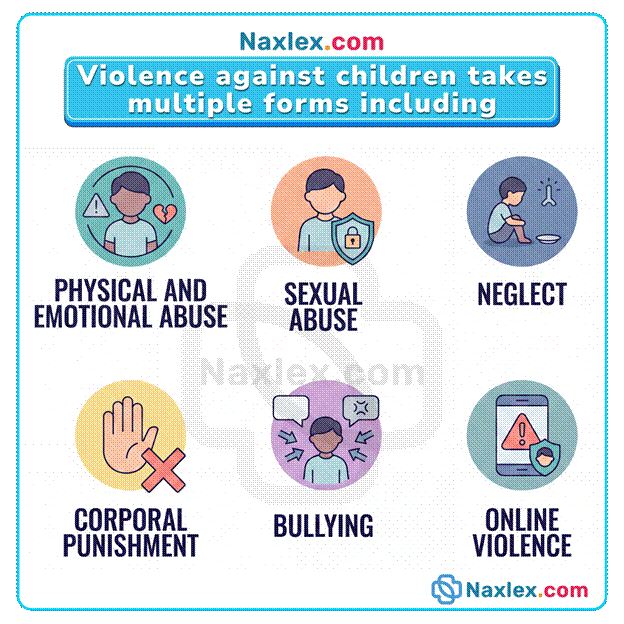
Foundational Concepts And Classification Of Child Maltreatment
Definitions And Operational Terminology
- Child — any human being below the age of 18 years, unless majority is attained earlier under applicable national law.
- Child maltreatment — all forms of physical and emotional ill-treatment, sexual abuse, neglect, and commercial or other exploitation resulting in actual or potential harm to the child's health, survival, development, or dignity in the context of a relationship of responsibility, trust, or power.
- Acts of commission — deliberate and intentional words or overt actions that cause harm, potential harm, or threat of harm. Physical abuse, sexual abuse, and psychological abuse are acts of commission.
- Acts of omission — failure to provide for the child's basic physical, emotional, medical, or educational needs, or failure to protect the child from harm. Neglect is the prototypical act of omission.
- Intentionality of the act, not intentionality of the harm, is what defines abuse. The caregiver need not have intended injury for the act to constitute abuse.
- Harm — impairment of physical, psychological, emotional, cognitive, or social functioning.
- Potential harm — a caregiver behaviour that places the child at substantial risk of injury even if no observable injury has yet occurred.
- Perpetrator — the individual responsible for the act of commission or omission. In most datasets the perpetrator is a biological parent in approximately 75-80% of substantiated cases.
- Sentinel injury — a minor but suspicious injury in a pre-mobile infant, such as bruising or intra-oral injury, that precedes severe or fatal abuse. Approximately 25% of infants with abusive fractures had a preceding documented sentinel injury.
- Substantiated case — an allegation investigated by child protective services and found supported by available evidence.
- Reasonable suspicion — the legal threshold triggering mandatory reporting. It denotes a level of concern that a reasonable professional with similar training would find sufficient to warrant a report.
- Corporal punishment — use of physical force intended to cause pain but not injury for purposes of correction or control. It exists on a continuum with physical abuse and is prohibited in an increasing number of jurisdictions.
- Child in need of care and protection — a statutory designation used in many jurisdictions, including Kenya's Children Act, to authorise state intervention.
- Revictimisation — the increased probability of subsequent victimisation in a child who has already been maltreated.
- Polyvictimisation — exposure of a child to multiple distinct types of victimisation across settings and perpetrators. Polyvictimisation predicts worse outcomes than repeated exposure to a single type.
- Vicarious trauma / secondary traumatic stress — the cumulative psychological impact on the professional who repeatedly witnesses the traumatic material of others.
Diagnostic And Classification Framework (DSM-5-TR, ICD-11, CDC Uniform Definitions)
- Child maltreatment is not classified as a mental disorder. It is an environmental event and a condition of clinical attention.
- In DSM-5-TR, maltreatment appears in the chapter "Other Conditions That May Be a Focus of Clinical Attention", under the heading Child Maltreatment and Neglect Problems.
- DSM-5-TR distinguishes confirmed from suspected maltreatment, and further distinguishes the encounter for the victim from the encounter related to the perpetrator.
- These are recorded using Z codes (encounters not attributable to a mental disorder) and T codes (confirmed maltreatment) of ICD-10-CM.
- DSM-5-TR recognises four maltreatment categories: child physical abuse, child sexual abuse, child neglect, and child psychological abuse.
- Child psychological abuse is defined in DSM-5-TR as non-accidental verbal or symbolic acts by a caregiver that result, or have reasonable potential to result, in significant psychological harm.
- Maltreatment codes may be applied alongside a psychiatric diagnosis such as PTSD, major depressive disorder, or reactive attachment disorder, and are used to document the aetiological context.
- ICD-11 codes maltreatment under QE82 Personal history of maltreatment and related categories, and provides a dedicated "Maltreatment" cluster.
- The CDC Uniform Definitions for Public Health Surveillance standardise definitions so that incidence data are comparable across jurisdictions.
- The World Health Organization classification aligns with CDC and adds exploitation as a distinct fifth category.
- Legal definitions differ from clinical definitions. A clinical concern may not meet a statutory threshold, but the nurse's duty to report is based on suspicion, not on legal analysis.
Table — Classification frameworks compared
|
Framework |
Primary purpose |
How maltreatment is handled |
Key terminology |
|
DSM-5-TR |
Psychiatric diagnosis and clinical attention |
Listed under "Other Conditions That May Be a Focus of Clinical Attention"; not a mental disorder |
Confirmed vs suspected; victim vs perpetrator encounters; Z and T codes |
|
ICD-11 |
Global morbidity and mortality coding |
Coded as maltreatment and personal history of maltreatment |
QE82 and related maltreatment cluster codes |
|
CDC Uniform Definitions |
Public health surveillance |
Defines acts of commission and acts of omission |
Physical, sexual, psychological abuse; neglect |
|
WHO |
Global policy and prevention |
Five-category model |
Adds exploitation as a separate category |
|
National statute (e.g., Children Act) |
Legal intervention and prosecution |
Defines "child in need of care and protection" |
Mandated reporting; statutory thresholds |
Epidemiology, Incidence, And Global Burden
- Global prevalence estimates derived from self-report are 10-20 times higher than officially reported and substantiated case numbers. Official statistics therefore represent the tip of the iceberg.
- Approximately 1 billion children aged 2-17 years worldwide experience some form of violence annually.
- Self-reported childhood physical abuse affects approximately 22.6% of adults globally.
- Self-reported childhood sexual abuse affects approximately 18% of females and 7.6% of males globally.
- Self-reported childhood emotional abuse affects approximately 36.3% of adults.
- Neglect is the most frequently reported category in child protection systems, accounting for approximately 74-76% of substantiated cases.
- Physical abuse accounts for approximately 17%, sexual abuse approximately 10%, and psychological abuse approximately 6-7% of substantiated cases. Categories overlap because many children experience more than one type.
- Fatality data: children <1 year have the highest maltreatment fatality rate. Children <3 years account for approximately 70-75% of all maltreatment deaths.
- Neglect is the leading cause of maltreatment fatality, followed by physical abuse. Abusive head trauma is the leading cause of fatal physical abuse.
- Sex distribution: victimisation rates are broadly similar in early childhood. Sexual abuse is significantly more prevalent in females, with the gap widening after age 12 years.
- Perpetrator profile: a parent is responsible in approximately 77-80% of cases. Mothers predominate in neglect. Fathers, stepfathers, and mother's male partners predominate in fatal physical abuse.
- In sexual abuse, approximately 90-95% of perpetrators are known to the child. Stranger perpetration is uncommon.
- Peak vulnerability periods are infancy (<1 year), the toddler years, and adolescence.
- Under-reporting is driven by fear, dependency on the perpetrator, shame, stigma, developmental inability to disclose, and professional reluctance.
- Economic burden includes acute medical care, long-term mental health care, child welfare costs, criminal justice costs, special education, and lost adult productivity. Lifetime cost per non-fatal victim is estimated in the hundreds of thousands of United States dollars.
- Maltreatment contributes measurably to the global burden of depression, suicide, substance use disorder, HIV infection, sexually transmitted infection, unintended pregnancy, and non-communicable disease.
Major Categories Of Child Maltreatment
- Maltreatment categories are not mutually exclusive. Co-occurrence is the rule rather than the exception.
- Approximately 1 in 3 maltreated children experience ≥2 categories simultaneously.
- Emotional abuse is intrinsic to all other forms. Every physically or sexually abused child is also psychologically injured.
- Categorisation is essential for surveillance, medico-legal proceedings, and directing intervention, but the nurse must assess the whole child, not the category.
Physical Abuse
- Definition — the intentional use of physical force against a child that results in, or has a high likelihood of resulting in, harm to the child's health, survival, development, or dignity.
- The act is intentional; the resulting injury need not be intended.
- Mechanisms of injury include hitting, beating, slapping, punching, kicking, shaking, throwing, biting, burning, scalding, poisoning, choking, suffocating, and forced ingestion.
- Instrumented injury occurs when an implement is used, producing patterned lesions that mirror the shape of the object.
- Commonly implicated implements are belts, buckles, electrical cords, sticks, canes, hairbrushes, cooking utensils, and cigarettes.
- Sentinel injuries in pre-mobile infants are of the highest concern. The clinical aphorism is "those who don't cruise rarely bruise."
- Bruising in an infant <4 months of age, or <6 months in a non-mobile infant, is highly suspicious for inflicted trauma.
- High-specificity sites for inflicted bruising follow the TEN-4-FACESp decision rule: Torso, Ears, Neck in a child ≤4 years; any bruise in an infant ≤4 months; and Frenulum, Angle of jaw, Cheek, Eyelid, Subconjunctival haemorrhage, and patterned bruising.
- Low-specificity sites for bruising are the bony prominences of the anterior shins, knees, elbows, and forehead, which are typical of normal ambulatory play.
- Abusive burns classically show immersion patterns: symmetrical stocking-and-glove distribution, sharply demarcated waterline, sparing of flexural creases, and absence of splash marks.
- Contact burns from cigarettes are round, ~8-10 mm, punched-out, and of uniform depth, often multiple and in clusters.
- Skeletal injuries with high specificity for abuse are classic metaphyseal lesions (bucket-handle or corner fractures), posterior rib fractures, scapular fractures, spinous process fractures, and sternal fractures.
- Multiple fractures in different stages of healing are a hallmark of repetitive inflicted trauma.
- Physical abuse is the second leading cause of maltreatment fatality and the leading cause of severe, non-fatal inflicted injury.
Sexual Abuse
- Definition — the involvement of a child in sexual activity that the child does not fully comprehend, is unable to give informed consent to, is not developmentally prepared for, or that violates the laws or social taboos of society.
- Legally, a child cannot consent to sexual activity with an adult or with a person in a position of trust or authority. Apparent compliance is never consent.
- Contact sexual abuse includes fondling, genital or anal penetration by penis, finger, or object, oral-genital contact, and forced masturbation.
- Non-contact sexual abuse includes exhibitionism, voyeurism, exposure to pornography, sexualised verbal harassment, and production or distribution of child sexual abuse material.
- Commercial sexual exploitation includes prostitution, sex trafficking, sex tourism, and transactional or "survival" sex.
- Grooming is a staged process of engagement, isolation, desensitisation, boundary erosion, secrecy induction, and maintenance of silence through threat, bribery, or manufactured guilt.
- Perpetrators are known to the child in approximately 90-95% of cases. Intrafamilial abuse (incest) carries a higher risk of chronicity and of severe psychological sequelae.
- Disclosure is typically delayed, partial, and tentative. Purposeful disclosure often occurs months to years after onset.
- Recantation of a truthful disclosure occurs in a substantial minority of children, particularly when the child is under family pressure or fears family disruption.
- Normal anogenital examination findings are the norm. Studies show >90-95% of sexually abused children have normal or non-specific examinations. A normal examination does not exclude abuse.
- Acute presentations may include genital bleeding, anogenital pain, dysuria, discharge, or anogenital injury.
- Sexually transmitted infection in a prepubertal child is highly suspicious. Gonorrhoea, syphilis, chlamydia (beyond the perinatal window), and HIV without another exposure route are diagnostic of sexual contact until proven otherwise.
- Age-inappropriate sexual knowledge or behaviour is a strong behavioural indicator, particularly in preschool children.
- Sexual abuse is strongly associated with PTSD, dissociation, self-injury, eating disorders, substance use, and adult sexual dysfunction.
Emotional And Psychological Abuse
- Definition — a repeated pattern of caregiver behaviour or a single extreme incident that conveys to the child that they are worthless, unloved, unwanted, endangered, or valuable only in meeting another's needs.
- This is the most prevalent but least reported and least substantiated category, because it produces no physical signs and no objective forensic marker.
- Spurning — hostile rejecting, belittling, ridiculing, shaming, and public humiliation of the child.
- Terrorising — threatening the child with death, abandonment, or harm; threatening a loved one or a pet; placing the child in unpredictable or chaotic circumstances.
- Isolating — confining the child, restricting movement, and preventing normal peer or extended family interaction.
- Exploiting or corrupting — modelling, permitting, or encouraging antisocial behaviour, criminality, substance use, or precocious sexual behaviour.
- Denying emotional responsiveness — ignoring the child's attempts to interact, showing no affection, and being emotionally unavailable or detached.
- Mental health, medical, and educational neglect in the emotional sphere — refusing or failing to provide indicated psychological or educational services.
- Witnessing intimate partner violence is now recognised as a distinct and powerful form of psychological maltreatment, with sequelae comparable to direct victimisation.
- Parental alienation, weaponising the child in custody conflict, and role reversal / parentification are additional recognised patterns.
- Diagnostic requirement is a pattern over time, except where a single incident is sufficiently severe.
- Emotional abuse produces impaired attachment, low self-esteem, internalising and externalising disorders, and impaired emotion regulation, and is a robust predictor of adult depression and personality pathology.
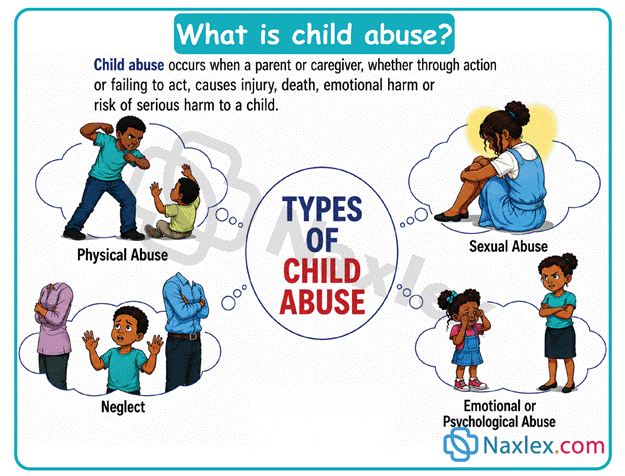
Neglect And Its Subtypes
- Definition — the failure of a parent or caregiver to provide for the child’s basic needs when they are able to do so, resulting in actual or potential harm.
- Neglect must be distinguished from poverty. Inability to provide due to material deprivation is not neglect. Failure to access available and affordable resources may constitute neglect.
- Neglect is the most common form of maltreatment and the leading cause of maltreatment-related death.
- Physical neglect — failure to provide adequate food, clothing, shelter, hygiene, and protection from environmental hazards.
- Supervisional neglect — inadequate supervision for the child’s developmental stage, abandonment, expulsion from the home, or leaving a young child in the care of an inappropriate caregiver.
- Medical neglect — refusal or delay in seeking indicated medical care, non-adherence to essential treatment, failure to haracte, or failure to attend follow-up.
- Dental neglect — untreated rampant caries, dental abscesses, and pain that impair eating, sleeping, and school attendance.
- Nutritional neglect — inadequate caloric intake producing non-organic failure to thrive, haracterized by weight falling across ≥2 major centiles with catch-up growth on adequate feeding.
- Educational neglect — permitting chronic truancy, failure to enrol the child in school, and failure to attend to special educational needs.
- Emotional neglect — failure to provide affection, attention, nurturance, and psychological support. It overlaps heavily with emotional abuse.
- Environmental neglect — exposure to unsafe housing, drug manufacture, unsecured firearms, unsafe sleep environments, and unrestrained motor vehicle travel.
- Prenatal neglect — maternal substance use in pregnancy resulting in neonatal opioid withdrawal syndrome or fetal alcohol spectrum disorder, and refusal of essential antenatal care.
- Cumulative and chronic neglect produces greater developmental and cognitive impairment than isolated episodes of physical abuse.
Table — Comparison of the four major categories
|
Feature |
Physical abuse |
Sexual abuse |
Emotional abuse |
Neglect |
|
Nature of act |
Commission |
Commission |
Commission |
Omission |
|
Relative frequency in substantiated cases |
~17% |
~10% |
~6-7% |
~75% |
|
Peak age |
Infancy and toddlerhood |
Adolescence; also preschool |
All ages |
Infancy and early childhood |
|
Typical perpetrator |
Male caregiver / mother’s partner |
Known male, often family |
Either parent |
Primary caregiver, often mother |
|
Physical evidence |
Often present and specific |
Usually absent (>90% normal exam) |
Absent |
Growth and hygiene findings |
|
Leading cause of fatality |
Second |
Rare |
Rare |
First |
|
Key nursing red flag |
Injury inconsistent with development |
Age-inappropriate sexual knowledge |
Persistent caregiver belittling |
Failure to thrive; missed appointments |
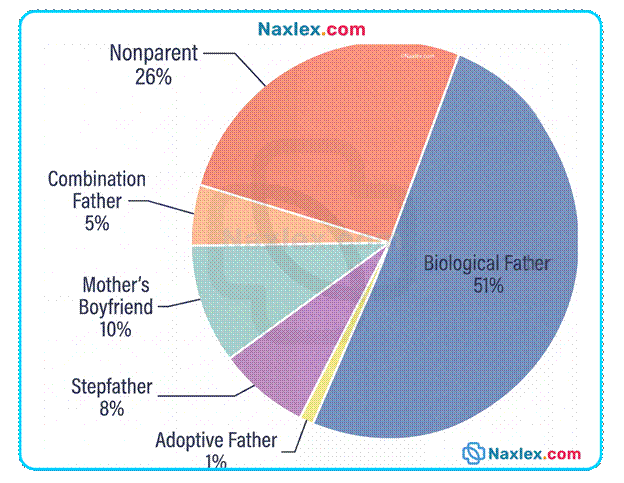
Special And Emerging Forms Of Maltreatment
- These entities are high-mortality, high-morbidity, or rapidly rising presentations that require specific nursing recognition.
- Several are covert, meaning the perpetrator actively presents as a concerned or cooperative caregiver.
Abusive Head Trauma And Factitious Disorder Imposed On Another
- Abusive head trauma (AHT) is the preferred term, replacing "shaken baby syndrome," because injury results from shaking, blunt impact, or a combination of mechanisms.
- AHT is the leading cause of fatal child physical abuse and the leading cause of traumatic death in infants.
- Peak incidence is 2-4 months of age, coinciding with the normal peak of infant crying. Inconsolable crying is the most common immediate trigger.
- Biomechanical basis — the infant has a proportionally large head, weak neck musculature, high brain water content, incomplete myelination, and a thin, pliable skull. Acceleration-deceleration and rotational forces shear bridging veins.
- Classic triad — subdural haemorrhage, retinal haemorrhage, and encephalopathy.
- Retinal haemorrhages in AHT are typically multilayered, too numerous to count, and extend to the ora serrata. This pattern is highly specific for inflicted injury.
- Associated findings include posterior and posterolateral rib fractures from thoracic compression, classic metaphyseal lesions from limb flailing, and cervical spinal or brainstem injury.
- Presentation is frequently non-specific: vomiting without diarrhoea, irritability, poor feeding, lethargy, apnoea, bulging fontanelle, seizures, or unresponsiveness.
- Missed AHT is common. Approximately 30% of cases are initially misdiagnosed as gastroenteritis, viral illness, colic, or accidental injury. Re-injury and death frequently follow a missed diagnosis.
- Outcomes — mortality approximately 20-25%; among survivors, up to two-thirds sustain permanent neurological impairment including cerebral palsy, epilepsy, cortical blindness, and intellectual disability.
- Factitious disorder imposed on another (FDIA) is the DSM-5-TR designation, replacing "Munchausen syndrome by proxy." It is classified among the somatic symptom and related disorders.
- In FDIA, the perpetrator carries the psychiatric diagnosis; the child receives a maltreatment code. This distinction is examinable.
- Diagnostic features — falsification of physical or psychological signs or symptoms, or induction of injury or disease, in another person; the individual presents the victim as ill, impaired, or injured; the deceptive behaviour is evident even in the absence of obvious external rewards.
- Methods of induction include suffocation, poisoning, insulin administration, salt loading, injection of contaminants into intravenous lines, laxative administration, and tampering with specimens or monitoring equipment.
- Red flags — symptoms witnessed only by the caregiver; symptoms that resolve when the caregiver is absent; a caregiver with medical knowledge who is unusually comfortable in hospital and resists discharge; recurrent unexplained illness; multiple providers and doctor-shopping; sibling with unexplained illness or death; laboratory results inconsistent with clinical findings.
- Nursing role in FDIA is pivotal because nurses provide continuous observation. Covert video surveillance, separation trials, and secure specimen handling are undertaken only under institutional and legal protocol.
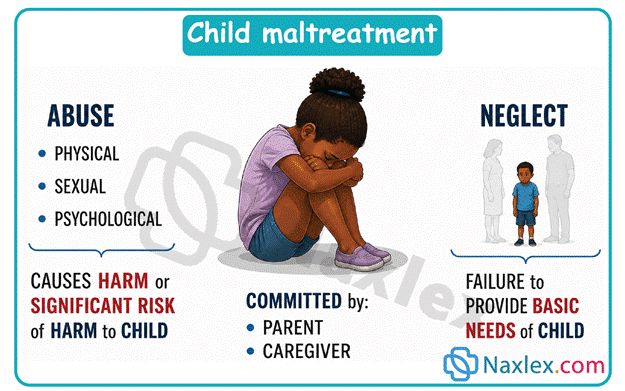
Child Trafficking, Online Exploitation, And Harmful Traditional Practices
- Child trafficking is the recruitment, transport, transfer, harbouring, or receipt of a child for the purpose of exploitation. For a child, means such as force, fraud, or coercion do not need to be proven.
- Forms of trafficking include commercial sexual exploitation, forced labour, domestic servitude, forced begging, forced marriage, forced criminality, child soldiering, and organ removal.
- Trafficking red flags — a child accompanied by a controlling adult who insists on answering all questions; scripted or inconsistent history; no identity documents; tattoos or branding; multiple sexually transmitted infections or pregnancies; signs of malnourishment and untreated chronic conditions; possession of hotel keys, prepaid cards, or large sums of cash; fearfulness, hypervigilance, and avoidance of eye contact.
- Nursing priority is to interview the child alone, using a professional interpreter rather than the accompanying adult.
- Online child sexual exploitation encompasses production and distribution of child sexual abuse material (CSAM), online grooming, live-streamed abuse, and sextortion.
- Sextortion is the coercion of a child into producing sexual images through threats of exposure. It is associated with acute suicidality and requires immediate mental health risk assessment.
- Sexting among adolescents may be consensual peer behaviour, but non-consensual dissemination constitutes exploitation and, depending on jurisdiction, a criminal offence.
- Female genital mutilation/cutting (FGM/C) is the partial or total removal of the external female genitalia, or other injury to the female genital organs, for non-medical reasons. It is recognised by WHO as a violation of human rights and a form of child abuse. There is no medical benefit.
- WHO classification of FGM/C — Type I clitoridectomy; Type II excision; Type III infibulation; Type IV all other harmful procedures including pricking, piercing, incising, scraping, and cauterisation.
- Complications of FGM/C — acute haemorrhage, shock, sepsis, tetanus, urinary retention; chronic dysmenorrhoea, dyspareunia, chronic pelvic pain, recurrent urinary tract infection, keloid, cyst formation, infertility, obstructed labour, obstetric fistula, and PTSD.
- Child marriage before 18 years is a harmful practice associated with school dropout, intimate partner violence, adolescent pregnancy, obstetric fistula, and elevated maternal mortality.
- Cultural practices with cutaneous findings — coining (cao gio), cupping, and moxibustion produce lesions that may mimic abuse. These are generally not abusive where the intent is healing and no significant harm results, but the nurse must assess harm and intent, not merely appearance.
- Ritual and spirit-possession-related abuse, exorcism-related beating, and abandonment of children labelled as witches are documented in several regions and constitute severe physical and psychological abuse.
- Cultural relativism does not override child protection. Where a practice causes significant harm, the nurse's duty to protect the child prevails.
Nursing Insights
- A bruise on an infant who cannot yet cruise or crawl is abuse until proven otherwise. Report it. Do not wait for a pattern.
- A normal anogenital examination never rules out sexual abuse; more than 90% of sexually abused children examine normally. Believe the history over the physical findings.
- In factitious disorder imposed on another, the caregiver holds the psychiatric diagnosis while the child is coded as a maltreatment victim. Nurses detect it because symptoms disappear when the caregiver leaves the bedside.
Etiology, Risk Factors, And Protective Factors
- Child maltreatment has no single cause. It is the product of interacting influences operating simultaneously at multiple levels.
- Contemporary understanding rejects the discredited "abuser personality" model. There is no reliable psychological profile that identifies a perpetrator.
- Maltreatment is best conceptualised through cumulative risk theory. The probability of maltreatment rises steeply as the number of concurrent risk factors increases, rather than with any single factor.
- The transactional model holds that maltreatment emerges when potentiating factors (risks) outweigh compensatory factors (protections) at a given moment in time.
- Risk factors indicate statistical association, not causation or inevitability. Most parents exposed to high risk never maltreat their children.
- The nurse uses risk assessment to direct surveillance and support, never to stereotype, label, or accuse a family.
The Socio-Ecological Model Of Child Maltreatment
- The socio-ecological model, derived from Bronfenbrenner's ecological systems theory, is the dominant framework used by WHO and CDC.
- It arranges determinants in four nested levels: individual, relationship, community, and societal.
- Risk at one level is amplified or buffered by conditions at other levels. Effective prevention therefore requires action at multiple levels simultaneously.
- Level 1 — Individual (ontogenic) level
- Encompasses the biological and personal history characteristics of both the child and the caregiver.
- Child factors include age, prematurity, disability, and temperament.
- Caregiver factors include age, mental illness, substance use, personal history of maltreatment, and knowledge of child development.
- Level 2 — Relationship (microsystem) level
- Encompasses the immediate family and close social circle in which maltreatment occurs.
- Includes parent-child attachment quality, intimate partner violence, family structure, marital conflict, and social isolation.
- The presence of an unrelated adult male in the household is a well-documented risk factor for fatal physical abuse.
- Level 3 — Community (exosystem) level
- Encompasses the settings in which family life is embedded: neighbourhood, school, workplace, and health services.
- Includes neighbourhood violence, residential instability, concentrated poverty, unemployment, alcohol outlet density, weak social cohesion, and inadequate access to childcare and health care.
- Low collective efficacy, meaning a neighbourhood in which adults do not intervene on behalf of others' children, predicts higher maltreatment rates independent of poverty.
- Level 4 — Societal (macrosystem) level
- Encompasses the broad cultural, economic, legal, and policy environment.
- Includes social acceptance of corporal punishment, patriarchal norms, gender inequality, economic inequality, weak child protection legislation, armed conflict, displacement, and normalisation of violence in media.
- Also includes chronosystem influences, meaning historical events and time-related transitions such as pandemics, economic recession, and forced migration, all of which elevate maltreatment incidence.
Table — Socio-ecological levels with representative factors and nursing action
|
Level |
Representative risk factors |
Prevention target |
Typical nursing action |
|
Individual |
Prematurity, disability, caregiver mental illness, caregiver substance use |
The child and the caregiver |
Developmental screening; maternal depression screening; referral |
|
Relationship |
Intimate partner violence, insecure attachment, social isolation, non-related male in home |
The family unit |
Attachment promotion; IPV screening; home visitation |
|
Community |
Poverty concentration, neighbourhood violence, poor service access |
The neighbourhood |
School programmes; community outreach; linkage to resources |
|
Societal |
Corporal punishment norms, gender inequality, weak legislation |
Policy and culture |
Advocacy; policy engagement; public education |
Child-Related Vulnerability Factors
- A child is never responsible for their own maltreatment. Child factors describe vulnerability, meaning increased caregiving demand, not provocation or blame.
- Age <4 years confers the highest risk of severe and fatal maltreatment. Infants <1 year have the highest fatality rate of any age group.
- Adolescence confers a second peak, with elevated risk of sexual abuse, exploitation, and expulsion from the home.
- Prematurity and low birth weight increase risk through prolonged neonatal separation, impaired bonding, difficult feeding, high-pitched cry, and increased caregiving burden.
- Neonatal intensive care admission disrupts the sensitive period for attachment formation and is an independent risk factor.
- Chronic illness requiring complex home care, frequent hospitalisation, or technology dependence increases caregiver strain.
- Disability approximately triples to quadruples the risk of maltreatment. Contributing mechanisms include communication impairment, dependence for intimate care, reduced credibility as a witness, and social isolation.
- Intellectual disability, communication disorders, and deafness confer particularly high risk of sexual abuse because the child may be unable to disclose or may not be believed.
- Difficult temperament, characterised by high negative emotionality, poor rhythmicity, low adaptability, and intense reactivity, increases the risk of a poor caregiver-child fit.
- Persistent inconsolable crying is the single most frequently reported immediate trigger of abusive head trauma. Normal crying peaks at 6-8 weeks of age.
- Congenital anomalies and disfigurement may impair caregiver acceptance and bonding.
- Unwanted or unplanned pregnancy, failed contraception, and pregnancy resulting from sexual violence increase risk of rejection and neglect.
- Multiple births and short interpregnancy intervals increase caregiving load and risk.
- Gender-based devaluation in some cultural contexts places female children at increased risk of neglect, nutritional deprivation, educational exclusion, and infanticide.
- Behavioural difficulty, including attention-deficit/hyperactivity disorder, oppositional behaviour, and enuresis, elevates risk of punitive caregiver responses. Toileting resistance is a documented trigger for fatal abuse in toddlers.
- Sexual and gender minority youth experience elevated rates of family rejection, physical abuse, and homelessness.
- Children in institutional care, foster placement, or refugee settings experience elevated rates of all forms of maltreatment.
- A child already maltreated is at high risk of revictimisation. Prior substantiated maltreatment is one of the strongest single predictors of future maltreatment.
Caregiver And Family-Related Risk Factors
- Caregiver history of childhood maltreatment is the classic intergenerational transmission risk. However, the majority of maltreated individuals do not go on to maltreat. Transmission is estimated at approximately 30%, not 100%.
- Young maternal age, particularly <20 years, is associated with incomplete education, economic dependence, and immature parenting expectations.
- Caregiver mental illness is a major determinant. Maternal depression is the most consistently replicated psychiatric risk factor, operating largely through emotional unavailability and neglect.
- Postpartum depression and postpartum psychosis create acute risk. Psychosis with infanticidal or delusional content involving the child constitutes a psychiatric emergency.
- Personality disorders, particularly antisocial and borderline patterns, are associated with impulsivity, affective instability, and hostile attributions toward the child.
- Substance use disorder in a caregiver is present in a very high proportion of severe neglect and fatality cases. It impairs supervision, judgement, and financial provision, and diverts household resources.
- Alcohol intoxication disinhibits aggression and is temporally associated with episodes of physical abuse.
- Prenatal substance exposure produces both fetal injury and postnatal caregiving impairment.
- Caregiver intellectual disability or cognitive impairment may impair capacity to anticipate hazards and to meet complex care needs, and requires supported rather than punitive intervention.
- Unrealistic developmental expectations are a central cognitive mechanism. Caregivers who believe a 6-month-old can be "spoiled" or that a 2-year-old is "defying" them are at elevated risk.
- Hostile attribution bias is the tendency to interpret neutral child behaviour as deliberately malicious.
- Low empathy and poor emotion regulation impair the caregiver's ability to tolerate distress signals such as crying.
- Approval of corporal punishment and rigid authoritarian discipline styles are strongly associated with escalation to physical abuse.
- Insecure or disorganised attachment in the caregiver's own history predicts disorganised attachment in the child.
- Intimate partner violence (IPV) co-occurs with child maltreatment in approximately 30-60% of households. Where IPV is present, the nurse must always assess the children.
- Presence of a male in the household who is not the child's biological father is a strongly replicated risk factor for fatal physical abuse.
- Single parenthood without support, large family size, and crowded households increase risk through resource dilution and caregiving demand.
- Social isolation and absent social support remove both practical assistance and informal surveillance.
- High family stress load, including bereavement, job loss, eviction, incarceration of a parent, and chronic illness, precipitates maltreatment episodes.
- Caregiver criminal history, particularly of violence or sexual offending, is a critical safety consideration in placement decisions.
- Parental separation, custody conflict, and repartnering transitions are periods of acutely elevated risk.
Environmental, Socioeconomic, And Cultural Determinants
- Poverty is the most powerful and consistently replicated societal correlate of child maltreatment, particularly of neglect.
- The relationship is mediated through material hardship, chronic stress, reduced access to services, unsafe housing, and food insecurity, not through parental morality.
- Neglect must be distinguished from poverty. A caregiver who cannot afford food is materially deprived. A caregiver who has resources or access and does not use them may be neglectful.
- Surveillance bias exists. Low-income families have greater contact with public systems and are therefore reported and substantiated more frequently, inflating apparent associations.
- Unemployment and economic recession are associated with measurable increases in abusive head trauma incidence.
- Food insecurity independently predicts both neglect and caregiver depression.
- Housing instability, homelessness, and frequent relocation disrupt schooling, health care continuity, and social support.
- Neighbourhood characteristics — high violent crime, low collective efficacy, high residential turnover, and high alcohol outlet density independently predict maltreatment rates.
- Community disorganisation removes the informal monitoring that normally deters maltreatment.
- Inadequate access to affordable childcare forces inappropriate supervision arrangements and is a direct cause of supervisional neglect.
- Cultural norms endorsing corporal punishment legitimise physical force and blur the boundary between discipline and abuse.
- Patriarchal norms and gender inequality underlie child marriage, FGM/C, differential nutrition, and educational exclusion of girls.
- Norms of family privacy and beliefs that discipline is a private matter suppress reporting.
- Weak legislation and weak enforcement, absence of mandatory reporting laws, and under-resourced child protection systems permit maltreatment to continue undetected.
- Armed conflict, displacement, and refugee status dismantle protective structures and elevate rates of all forms of maltreatment, including recruitment of child soldiers.
- Natural disasters and pandemics increase risk through school closure, loss of surveillance, caregiver job loss, confinement with perpetrators, and interrupted services.
- Migration and acculturation stress may produce intergenerational conflict, loss of extended family support, and use of discipline practices unacceptable in the host country.
- Digital environment — unsupervised internet access, social media, and encrypted platforms have created new vectors for grooming, sextortion, and distribution of child sexual abuse material.
- Media normalisation of violence contributes to societal tolerance of aggression toward children.
Protective Factors And Resilience Mechanisms
- Resilience is the process of achieving positive adaptation despite significant adversity. It is dynamic and modifiable, not a fixed personality trait.
- Protective factors reduce the probability of maltreatment occurring. Promotive factors improve outcomes regardless of risk level. Buffering factors specifically weaken the link between risk and adverse outcome.
- The single most powerful protective factor is at least one stable, committed, responsive relationship with a caring adult. This may be a parent, grandparent, teacher, coach, or nurse.
- Secure attachment in infancy provides the neurobiological buffer that prevents a tolerable stress response from becoming a toxic stress response.
- Caregiver protective factors
- Parental resilience and effective coping under stress.
- Accurate knowledge of child development and realistic expectations.
- Concrete support in times of need, including food, housing, and childcare assistance.
- Social connections and reliable informal support networks.
- Nurturing and attachment-promoting caregiving behaviour.
- Absence of untreated mental illness and substance use disorder; adherence to treatment where present.
- Child protective factors
- Easy or adaptable temperament and good emotion regulation.
- Above-average cognitive ability, executive function, and problem-solving skill.
- Internal locus of control and realistic self-efficacy.
- Positive self-esteem and a coherent sense of self-worth.
- Talents and interests that generate mastery experiences, such as sport, music, or academic achievement.
- Social competence and the ability to recruit support from adults.
- Faith, spirituality, or a sense of meaning.
- Family protective factors
- Household stability, predictable routines, and clear, consistent, non-violent discipline.
- Positive marital or partner relationship without IPV.
- Supportive extended family and engaged non-offending caregiver.
- Adequate and stable income and secure housing.
- Community protective factors
- Safe, cohesive neighbourhoods with high collective efficacy.
- Accessible, affordable, and culturally acceptable health, mental health, and childcare services.
- Quality schools with engaged teachers and effective anti-bullying programmes.
- Availability of after-school programmes and mentoring.
- Societal protective factors
- Legislation prohibiting corporal punishment and mandating reporting.
- Economic supports such as paid parental leave, child benefits, and income supplementation.
- Public education campaigns, including infant crying and safe-sleep education.
- Post-disclosure protective factors are of major prognostic importance. Belief and support by the non-offending caregiver following disclosure of sexual abuse is one of the strongest predictors of good psychological outcome.
- Interruption of intergenerational transmission is associated with the presence of a supportive adult in the survivor's own childhood, a stable adult partner relationship, and engagement in psychotherapy.
- Nursing implication — assessment must be strengths-based as well as risk-based. Interventions that build protective factors are as important as those that remove risk.
Table — Risk versus protective factors summarised by ecological level
|
Level |
Key risk factors |
Key protective factors |
|
Child |
Age <4 years, prematurity, disability, difficult temperament, chronic illness |
Easy temperament, cognitive ability, social competence, talents, self-efficacy |
|
Caregiver |
Own maltreatment history, depression, substance use, unrealistic expectations, young age |
Parenting knowledge, resilience, treatment adherence, empathy, secure attachment history |
|
Family |
Intimate partner violence, isolation, unrelated male in home, family stress, large family size |
Stable routines, supportive partner, engaged extended family, adequate income |
|
Community |
Poverty concentration, violence, low collective efficacy, poor service access |
Cohesive neighbourhood, quality schools, accessible services, mentoring programmes |
|
Society |
Corporal punishment norms, gender inequality, weak legislation, conflict, inequality |
Protective legislation, economic supports, parental leave, public education |
Nursing Insights
- A family's risk profile guides your support and surveillance; it never proves abuse and never excuses missing abuse in a low-risk family.
- Where intimate partner violence is disclosed, always assess the children in that home. The two forms of violence co-occur in 30-60% of households.
- After a sexual abuse disclosure, whether the non-offending caregiver believes and supports the child is the strongest predictor of psychological recovery. Actively reinforce that support.
Pathophysiology And Neurobiology Of Child Maltreatment
- Maltreatment is a biological event, not merely a social or psychological one. It produces measurable, durable changes in neuroendocrine, neuroanatomical, immune, and genomic function.
- The developing brain is experience-dependent. It is sculpted by the pattern, timing, frequency, and intensity of environmental input during sensitive periods.
- Sensitive periods are windows during which specific neural circuits are maximally plastic. Adverse input during these windows produces disproportionate and often irreversible effects.
- The prevailing organising concept is toxic stress, articulated by the National Scientific Council on the Developing Child and endorsed by the American Academy of Pediatrics.
- The clinical corollary is that maltreatment produces a chronic disease process, not a discrete injury event.
Toxic Stress And Hypothalamic-Pituitary-Adrenal Axis Dysregulation
- Three categories of stress response are recognised
- Positive stress — brief, mild to moderate physiological activation in the presence of a supportive caregiver. It is essential for healthy development. Examples include immunisation and the first day of school.
- Tolerable stress — more severe or prolonged activation, such as bereavement or natural disaster, buffered by a responsive caregiver, allowing the system to return to baseline.
- Toxic stress — strong, frequent, or prolonged activation in the absence of adequate adult buffering, producing physiological disruption. Chronic maltreatment is the prototypical cause.
- The critical determinant is the presence or absence of a buffering caregiver relationship, not the objective severity of the stressor.
- Normal HPA axis physiology
- Perceived threat activates the amygdala, which signals the paraventricular nucleus of the hypothalamus.
- The hypothalamus secretes corticotropin-releasing hormone (CRH) and arginine vasopressin into the hypophyseal portal system.
- CRH stimulates the anterior pituitary to release adrenocorticotropic hormone (ACTH).
- ACTH stimulates the zona fasciculata of the adrenal cortex to secrete cortisol.
- Cortisol exerts negative feedback at the hypothalamus, pituitary, and hippocampus, terminating the response.
- The parallel sympathetic-adrenomedullary (SAM) axis releases catecholamines, producing the immediate fight-or-flight response.
- HPA dysregulation in maltreatment
- Acute and early phase — hypercortisolaemia with elevated basal and reactive cortisol, exaggerated ACTH response, and blunted negative feedback.
- Chronic phase — progressive hypocortisolism with blunted diurnal rhythm, flattened cortisol awakening response, and attenuated cortisol reactivity to laboratory stressors.
- Glucocorticoid receptor down-regulation and resistance develop in the hippocampus, impairing feedback inhibition.
- Hippocampal glucocorticoid receptor density is reduced, an effect shown to be epigenetically mediated.
- Allostatic load describes the cumulative physiological wear from repeated or chronic activation of these systems.
- Allostatic overload is the point at which regulatory systems fail, producing hypertension, insulin resistance, dyslipidaemia, central adiposity, and immune dysfunction.
- Autonomic consequences include reduced heart rate variability, elevated resting heart rate, exaggerated startle, and impaired vagal regulation.
- Clinical translation — the chronically maltreated child may present with a paradoxically flat physiological and emotional response to threat, or alternatively with hypervigilance and exaggerated reactivity. Both are dysregulation.
Neurodevelopmental And Structural Brain Consequences
- Hippocampus
- Densely populated with glucocorticoid receptors and therefore highly vulnerable to cortisol toxicity.
- Chronic cortisol exposure causes dendritic atrophy, suppression of neurogenesis in the dentate gyrus, and reduced hippocampal volume.
- Consequences include impaired declarative and contextual memory, fragmented autobiographical narrative, and impaired contextual fear extinction.
- Amygdala
- Undergoes hypertrophy and hyperreactivity in early maltreatment, producing threat hypervigilance.
- Maltreated children show enhanced amygdala response to angry faces and a lowered threshold for threat detection.
- Institutionally deprived children may show enlarged amygdala volume with impaired emotional discrimination.
- Prefrontal cortex
- Matures last, continuing into the mid-20s, and is therefore exposed to adversity across a prolonged window.
- Maltreatment reduces medial and ventromedial prefrontal cortical volume and impairs top-down inhibitory control over the amygdala.
- Consequences include impaired executive function, working memory, impulse control, planning, and emotion regulation.
- The functional result is a hyperactive limbic accelerator with a weakened prefrontal brake.
- Corpus callosum
- Reduced volume and reduced myelination are among the most replicated structural findings, particularly in neglected males.
- Impaired interhemispheric transfer contributes to difficulty integrating cognition with affect and to dissociative phenomena.
- Cerebellum and cerebellar vermis
- Reduced volume is associated with impaired affect regulation, coordination, and procedural learning.
- Corticolimbic connectivity and white matter
- Diffusion tensor imaging demonstrates reduced fractional anisotropy in the uncinate fasciculus, cingulum bundle, and superior longitudinal fasciculus.
- These tracts connect prefrontal regulatory regions with limbic emotional regions.
- Sensory cortex effects are modality-specific and timing-specific
- Visual cortex and visual association areas are reduced in those who witnessed domestic violence.
- Auditory cortex changes are associated with verbal abuse.
- Somatosensory cortex regions representing the genitals are thinned in survivors of childhood sexual abuse.
- This demonstrates targeted adaptation, in which the brain reduces processing of the specific sensory channel through which trauma was delivered.
- Reward circuitry
- Blunted ventral striatal response to reward anticipation is associated with anhedonia and increased risk of depression and substance use disorder.
- Global effects
- Reduced total cerebral volume, delayed myelination, and accelerated cortical thinning.
- Institutional deprivation produces the most severe global effects. The Bucharest Early Intervention Project demonstrated markedly reduced grey and white matter, reduced electroencephalographic alpha power, and improved outcome with placement before 24 months of age.
- Plasticity persists. Structural and functional recovery is possible with early removal from adversity, stable placement, and evidence-based intervention. The nurse's message to families must be one of realistic hope, not determinism.
Epigenetic, Immunologic, And Inflammatory Mechanisms
- Epigenetics refers to heritable, potentially reversible modifications of gene expression that do not alter the underlying DNA sequence.
- Principal mechanisms are DNA methylation, histone acetylation and methylation, and non-coding RNA regulation.
- DNA methylation at cytosine-guanine (CpG) islands within promoter regions generally silences transcription.
- NR3C1 gene — encodes the glucocorticoid receptor. Hypermethylation of the NR3C1 promoter is consistently demonstrated in maltreated individuals. It reduces glucocorticoid receptor expression, impairs HPA negative feedback, and perpetuates dysregulation.
- FKBP5 gene — encodes a co-chaperone that regulates glucocorticoid receptor sensitivity. Demethylation of FKBP5 following early trauma increases the enduring stress response. A gene-environment interaction exists between FKBP5 risk alleles and childhood maltreatment in predicting adult PTSD.
- SLC6A4 gene — encodes the serotonin transporter. The short allele of 5-HTTLPR combined with childhood maltreatment predicts adult depression, illustrating diathesis-stress interaction.
- BDNF gene — brain-derived neurotrophic factor. Maltreatment-associated methylation reduces BDNF expression, impairing neuroplasticity, hippocampal neurogenesis, and antidepressant responsiveness.
- MAOA gene — low-activity MAOA genotype combined with maltreatment predicts antisocial behaviour in males.
- OXTR gene — oxytocin receptor methylation is associated with impaired social bonding and attachment behaviour.
- Transgenerational transmission — animal and emerging human data indicate that some epigenetic marks may be transmitted to subsequent generations, providing a biological substrate for intergenerational transmission of trauma.
- Telomere biology
- Maltreated children show accelerated telomere shortening, a marker of cellular ageing.
- This is dose-responsive to the number of adversities and predicts earlier onset of age-related disease.
- Immune and inflammatory consequences
- Chronic glucocorticoid exposure produces glucocorticoid receptor resistance in immune cells, releasing inflammatory pathways from suppression.
- Elevated C-reactive protein (CRP), interleukin-6 (IL-6), and tumour necrosis factor-alpha (TNF-α) are documented in adults with maltreatment histories, persisting decades after exposure.
- Nuclear factor-kappa B (NF-κB) signalling is up-regulated.
- Low-grade chronic inflammation links maltreatment mechanistically to atherosclerosis, type 2 diabetes mellitus, autoimmune disease, and depression.
- Increased risk of autoimmune disease and impaired vaccine response are reported.
- Neurotransmitter systems
- Serotonergic dysregulation contributes to depression, impulsivity, and suicidality.
- Dopaminergic blunting in reward circuits contributes to anhedonia and substance use.
- Noradrenergic hyperactivity, driven by the locus coeruleus, contributes to hyperarousal, insomnia, and startle.
- Glutamatergic excitotoxicity contributes to hippocampal neuronal loss.
- GABAergic deficits reduce inhibitory tone and increase anxiety.
- Endogenous opioid dysregulation is implicated in dissociation, analgesia, and self-injurious behaviour.
- Oxytocin deficits impair trust, bonding, and social affiliation.
Adverse Childhood Experiences And Lifespan Health Outcomes
- The Adverse Childhood Experiences (ACE) Study, conducted by Felitti and Anda with Kaiser Permanente and the CDC, is the foundational epidemiological evidence linking childhood adversity to adult disease.
- The original 10 ACE categories are grouped into three domains.
- Abuse — physical abuse; emotional abuse; sexual abuse.
- Neglect — physical neglect; emotional neglect.
- Household dysfunction — parental separation or divorce; witnessing intimate partner violence against the mother; household substance use; household mental illness or suicide attempt; incarcerated household member.
- Expanded ACE frameworks add community violence, bullying, racism and discrimination, poverty, food insecurity, homelessness, and war or forced displacement.
- ACEs are common. Approximately 60-64% of adults report ≥1 ACE. Approximately 12-16% report ≥4 ACEs.
- ACEs cluster. A person with one ACE has a high probability of having others, because adversities share common causes.
- The central finding is a graded, dose-response relationship between the ACE score and adult morbidity and mortality. Risk rises continuously with score; there is no safe threshold.
- An ACE score ≥4 is the conventional high-risk cut-off used in clinical practice.
Table — Approximate adult outcomes associated with an ACE score ≥4 compared with a score of 0
|
Outcome domain |
Specific outcome |
Approximate increase in odds |
|
Mental health |
Attempted suicide |
12-30 times |
|
Mental health |
Depression |
4-5 times |
|
Substance use |
Injection drug use |
~10 times |
|
Substance use |
Alcohol use disorder |
~7 times |
|
Substance use |
Current smoking |
~2-3 times |
|
Sexual health |
≥50 lifetime sexual partners |
~3 times |
|
Sexual health |
Sexually transmitted infection |
~2.5 times |
|
Chronic disease |
Chronic obstructive pulmonary disease |
~3-4 times |
|
Chronic disease |
Ischaemic heart disease |
~2 times |
|
Chronic disease |
Stroke |
~2 times |
|
Chronic disease |
Type 2 diabetes mellitus |
~1.6 times |
|
Chronic disease |
Cancer |
~2 times |
|
Functional |
Severe obesity |
~1.6 times |
|
Functional |
Learning or behaviour problems in childhood |
~30-32 times |
|
Mortality |
Death ≥20 years earlier with ACE score ≥6 |
Life expectancy reduced by ~20 years |
- Mechanistic pathways from ACEs to disease
- Biological embedding pathway — toxic stress, HPA dysregulation, inflammation, epigenetic change, and accelerated cellular ageing produce disease directly.
- Behavioural pathway — adoption of health-risk behaviours such as smoking, alcohol use, substance use, overeating, and high-risk sexual behaviour, which frequently function as coping mechanisms rather than as failures of self-control.
- Social pathway — educational disruption, unemployment, poverty, and impaired relationships reduce access to health-promoting resources.
- Cognitive-affective pathway — impaired executive function, hostile attribution, and poor emotion regulation impair adherence and self-care.
- ACE score limitations that the nurse must understand
- It is a population-level epidemiological tool, not a validated individual diagnostic or predictive instrument.
- It weights all adversities equally, ignoring severity, chronicity, timing, and relationship to the perpetrator.
- It omits protective factors and resilience, so a high score without context is misleading.
- It does not capture community-level adversity in its original form.
- A high ACE score is not a prognosis. Screening must always be paired with a resilience and strengths assessment and with an offer of support.
- Positive Childhood Experiences (PCEs) — a parallel construct including feeling able to talk to family about feelings, feeling supported by friends, enjoying participation in community traditions, feeling a sense of belonging at school, and having ≥2 non-parent adults who take genuine interest. Higher PCE counts predict better adult mental health independent of ACE score.
- Nursing application — ACE-informed practice shifts the clinical question from "What is wrong with you?" to "What happened to you, and what is strong in you?"
Nursing Insights
- Chronic maltreatment first raises cortisol, then exhausts the axis into hypocortisolism. A calm, flat, unreactive child in a frightening situation may be severely dysregulated, not coping well.
- Brain changes from maltreatment are plastic and partly reversible. Early removal from adversity plus stable caregiving improves outcomes, so counsel families with realistic hope.
- An ACE score is a population risk tool, never an individual prognosis. Always pair ACE screening with a strengths and support assessment.
Clinical Manifestations And Recognition Of Abuse
- Recognition is the single most important nursing competency in child protection. Missed abuse leads to re-injury, escalation, and death.
- No single sign is pathognomonic. Diagnosis rests on the triad of history, physical findings, and developmental capability, interpreted together.
- The four cardinal features that raise suspicion are
- Injury inconsistent with the history offered.
- Injury inconsistent with the child's developmental stage.
- Changing, evolving, or contradictory explanations.
- Unexplained delay in seeking care.
- The nurse must maintain a low threshold of suspicion combined with a neutral, non-accusatory clinical stance.
Cutaneous And Skeletal Indicators Of Physical Abuse
- Bruising is the most common presenting injury in physical abuse and the most commonly overlooked.
- "Those who don't cruise rarely bruise." Bruising in a pre-mobile infant is abnormal and demands evaluation.
- TEN-4-FACESp clinical decision rule — bruising is high risk when located on the Torso, Ears, or Neck in a child ≤4 years; any bruising in an infant ≤4 months; or bruising of the Frenulum, Angle of jaw, Cheeks (fleshy part), Eyelids, Subconjunctival region, or any patterned bruise.
- Accidental bruises are typically small, on the front of the body, and over bony prominences: forehead, chin, anterior shins, knees, elbows, and iliac crests.
- Patterned bruises reproduce the shape of the implement.
- Loop marks from folded electrical cord or belt.
- Linear parallel tramline bruises from a rod or stick, with central sparing due to capillary displacement.
- Buckle, hand, or finger-pad imprints, including grab marks on the upper arms and chest.
- Slap marks showing parallel linear petechiae outlining the interdigital spaces.
- Ligature marks encircling wrists, ankles, or neck.
- Human bite marks with paired arched contusions; an intercanine distance >3 cm suggests an adult perpetrator.
- Bruise dating by colour is unreliable and must not be documented as a definitive age. The nurse describes colour objectively without assigning an age.
- Burns account for approximately 10% of physical abuse and carry high mortality.
- Immersion scald — sharply demarcated waterline, symmetrical stocking-and-glove or "doughnut" distribution, sparing of flexural creases and of skin pressed against the tub base, and absence of splash marks.
- Forced immersion for toileting accidents classically produces buttock and perineal burns with sparing of the central buttock.
- Contact burns — cigarette burns are circular, ~8-10 mm, deep, uniform, and often multiple; iron, radiator, and heated implement burns reproduce the object shape.
- Accidental spill burns show irregular margins, an arrowhead or splash pattern, and depth decreasing distally.
- Oral injuries — torn frenulum in a non-mobile infant is highly suspicious and results from forced feeding or a blow to the mouth. Dental fracture, palatal petechiae, and mucosal laceration also raise concern.
- Alopecia with broken hairs of varying lengths and subgaleal haematoma suggests hair pulling.
- Ocular findings — subconjunctival haemorrhage, periorbital bruising ("raccoon eyes") without basal skull fracture, hyphaema, and lens dislocation.
- Ear findings — bruising of the pinna and the "tin ear syndrome" triad of unilateral ear bruising, ipsilateral cerebral oedema, and retinal haemorrhage.
- Skeletal injuries
- Fractures occur in approximately one-third of physically abused children and are second only to bruising in frequency.
- Approximately 80% of abusive fractures occur in children <18 months.
- Any fracture in a non-ambulatory infant must be considered abusive until proven otherwise.
Table — Specificity of skeletal findings for inflicted injury
|
Specificity |
Fracture type |
Mechanism |
|
High |
Classic metaphyseal lesion (bucket-handle, corner fracture) |
Torsion and traction on limb; shaking |
|
High |
Posterior and posteromedial rib fractures |
Anteroposterior thoracic compression by adult hands |
|
High |
Scapular fracture |
Direct severe force |
|
High |
Spinous process fracture |
Hyperflexion or direct blow |
|
High |
Sternal fracture |
Direct anterior force |
|
Moderate |
Multiple fractures, especially bilateral |
Repetitive trauma |
|
Moderate |
Fractures of differing ages |
Repetitive trauma over time |
|
Moderate |
Vertebral body fracture or subluxation |
Hyperflexion |
|
Moderate |
Digital fractures in a non-ambulatory child |
Twisting or crushing |
|
Moderate |
Complex or bilateral skull fracture crossing sutures |
High-force impact |
|
Low |
Clavicular fracture, long bone shaft fracture, linear parietal skull fracture |
Common accidentally; interpret with history |
- Spiral fractures of the humerus or femur in a non-ambulatory child imply torsional force and are strongly suspicious. The toddler's fracture of the tibia in an ambulatory child is commonly accidental.
- Visceral injury is the second leading cause of death from physical abuse after head trauma.
- Duodenal haematoma, pancreatic transection, mesenteric tear, liver and splenic laceration, and renal contusion result from blunt abdominal force.
- External abdominal bruising is frequently absent, so a high index of suspicion is required.
- Presentation may be non-specific vomiting, abdominal distension, or unexplained shock.
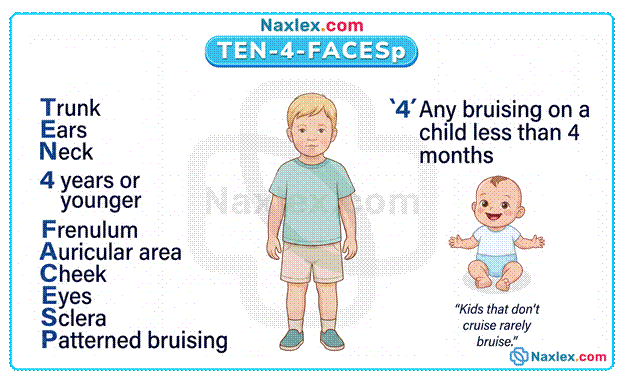
Indicators Of Sexual Abuse And Anogenital Findings
- The most important principle is that a normal examination is the most common examination. More than 90-95% of sexually abused children have a normal or non-specific anogenital examination.
- Reasons for a normal examination — most abuse is non-penetrative; genital mucosa heals rapidly and completely; delayed presentation; and hymenal tissue is elastic and oestrogenised after puberty.
- A normal examination therefore never excludes abuse, and the child must be told explicitly that their body is normal and undamaged.
- The child's verbal disclosure is the single most important piece of evidence.
- Findings diagnostic of trauma or sexual contact (per Adams criteria)
- Acute laceration or bruising of the hymen, posterior fourchette, labia, or perianal tissues in the absence of an accidental straddle history.
- Complete hymenal transection in the posterior half (between 3 and 9 o'clock in supine position), healed.
- Perianal laceration extending to the external sphincter.
- Pregnancy in an adolescent.
- Presence of semen or sperm in or on the child's body.
- Confirmed Neisseria gonorrhoeae beyond the neonatal period.
- Confirmed syphilis with perinatal transmission excluded.
- Confirmed Chlamydia trachomatis in a child >3 years of age.
- Confirmed Trichomonas vaginalis beyond infancy.
- HIV infection with vertical, transfusion, and needle transmission excluded.
- Findings of concern but not diagnostic
- Anogenital warts (condylomata acuminata) or herpes simplex virus in a child, especially >5 years; vertical and autoinoculation transmission must be considered.
- Marked, immediate anal dilatation >2 cm without stool in the ampulla and without constipation or neurological cause.
- Deep notch or cleft in the posterior hymenal rim.
- Non-specific findings frequently misattributed to abuse
- Erythema of the vulva or perianal skin, common with hygiene issues, irritant dermatitis, and infection.
- Labial adhesions, common in prepubertal girls.
- Increased vascularity, anterior hymenal notches, hymenal bumps, mounds, and tags.
- Anal fissures and skin tags, usually caused by constipation.
- Perianal venous congestion, related to positioning.
- Vaginal discharge, which may be physiological, infective, or due to a foreign body.
- Acute physical presentations — anogenital bleeding, pain, dysuria, discharge, difficulty walking or sitting, recurrent urinary tract infection, and encopresis or enuresis of new onset.
- Behavioural indicators
- Age-inappropriate sexual knowledge, drawings, or language. This is the strongest behavioural indicator, especially in preschool children.
- Sexualised play, coercive sexual behaviour toward other children, and compulsive masturbation that resists redirection.
- Sudden fear of a specific person or place, refusal to be alone with a caregiver.
- Regression, nightmares, night terrors, and new-onset enuresis or encopresis.
- Self-injurious behaviour, running away, substance use, eating disturbance, and suicidal ideation in adolescents.
- "Pseudomaturity" or precocious independence.
- Somatic complaints, particularly recurrent abdominal pain and headache without organic cause.
- Normal childhood sexual behaviour — genital self-touch for self-soothing, curiosity about bodies, and consensual mutual exploration between developmentally similar peers. It is transient, redirectable, and non-coercive. Behaviour that is compulsive, coercive, adult-like, or not redirectable is abnormal.
Indicators Of Emotional And Psychological Abuse
- Emotional abuse is diagnosed from observed caregiver behaviour and the child's psychological presentation, because there are no physical signs and no laboratory marker.
- Observable caregiver indicators
- Persistently belittling, blaming, shaming, ridiculing, or name-calling the child, including in front of staff.
- Describing the child in wholly negative or dehumanising terms, such as "evil," "useless," or "a mistake."
- Overt rejection, refusal to comfort, and absence of physical affection.
- Failure to make eye contact or respond to the child's distress.
- Setting expectations far beyond the child's developmental capacity, then punishing failure.
- Scapegoating one child while treating siblings warmly, which is a strong indicator.
- Threatening abandonment, harm, or removal of a pet or possession.
- Excessive, unpredictable, and inconsistent discipline.
- Child indicators
- Low self-esteem, self-deprecating statements, and expectation of failure.
- Excessive compliance, watchfulness, and "frozen watchfulness" in which the child remains still while visually tracking the caregiver.
- Indiscriminate affection-seeking toward unfamiliar adults, including staff.
- Extremes of behaviour, either markedly withdrawn or markedly aggressive.
- Emotional lability, poor frustration tolerance, and difficulty naming emotions (alexithymia).
- Developmental delay, especially of speech and language.
- Failure to thrive without organic cause, described as psychosocial short stature.
- Habit disorders such as rocking, head-banging, hair-pulling, and biting.
- Poor peer relationships, social withdrawal, and school refusal.
- Self-harm, suicidal ideation, and running away in older children.
- Role reversal, in which the child comforts, protects, or parents the caregiver.
- Exposure to intimate partner violence produces a comparable profile, with additional hypervigilance, sleep disturbance, startle, and re-enactment play.
Indicators Of Physical, Medical, Educational, And Emotional Neglect
- Neglect is diagnosed from a pattern over time, not a single observation, except where a single omission causes serious harm.
- Physical neglect
- Persistently poor hygiene, ingrained dirt, offensive body odour, and matted hair.
- Severe, chronic, untreated nappy dermatitis with ulceration or secondary infection.
- Clothing that is dirty, inappropriate for the weather, or badly ill-fitting.
- Untreated infestations such as scabies, head lice, and tinea capitis.
- Constant hunger, food-seeking, hoarding, or stealing food.
- Non-organic failure to thrive — weight crossing ≥2 major centiles downward, weight-for-age <3rd centile, with catch-up growth on adequate feeding in hospital.
- In prolonged deprivation, height and finally head circumference are affected, indicating chronicity.
- Unsafe home environment, unsafe sleep practices, unsecured medications and chemicals, and unrestrained motor vehicle travel.
- Repeated presentation with ingestions or preventable injuries indicating supervisional failure.
- Abandonment or being left with unsuitable caregivers.
- Medical and dental neglect
- Delay in seeking care for an obvious and serious problem.
- Non-adherence to essential treatment, for example insulin, antiepileptics, or antiretroviral therapy, resulting in repeated admissions.
- Repeated failure to attend appointments and immunisation defaulting.
- Untreated rampant dental caries, abscesses, and pain interfering with eating and sleeping.
- Failure to obtain prescribed spectacles, hearing aids, or mobility devices.
- Note: refusal of treatment on religious or cultural grounds where the child faces serious harm may constitute medical neglect and requires legal and ethical review, not unilateral confrontation.
- Educational neglect
- Chronic unexplained absenteeism and truancy.
- Failure to enrol a school-age child.
- Failure to engage with identified special educational needs.
- Frequent lateness, falling asleep in class, and lack of school materials.
- Emotional neglect
- Caregiver emotionally unavailable, detached, or unresponsive to the child's bids for attention.
- Absence of comforting behaviour when the child is distressed, injured, or undergoing a procedure.
- Failure to visit or telephone the hospitalised child.
- Child appears apathetic, listless, and lacking normal social reciprocity.
- In infants, this presents as gaze aversion, absent social smile, reduced vocalisation, and hypotonia or a rag-doll posture.
Behavioural And Psychological Manifestations By Developmental Stage
- Manifestations must be interpreted against developmental norms. The same behaviour has different meaning at different ages.
- Regression to an earlier developmental stage is a universal indicator of distress across all ages.
Table — Manifestations of maltreatment by developmental stage
|
Stage |
Age |
Key manifestations |
|
Infancy |
0-12 months |
Failure to thrive; gaze aversion; absent social smile; excessive irritability or unusual passivity; poor feeding; sleep disturbance; hypotonia; delayed milestones; absence of stranger anxiety |
|
Toddlerhood |
1-3 years |
Regression in toileting and speech; frozen watchfulness; indiscriminate affection; extreme separation reactions or none at all; aggression; head-banging; language delay; poor exploratory play |
|
Preschool |
3-6 years |
Nightmares; new enuresis or encopresis; somatic complaints; magical thinking with self-blame; sexualised play or age-inappropriate sexual knowledge; repetitive post-traumatic play; clinging; fear of specific adults |
|
School age |
6-12 years |
Declining academic performance; school refusal; peer difficulties; aggression or extreme withdrawal; somatic complaints, particularly abdominal pain and headache; lying and stealing; fire-setting; cruelty to animals; low self-esteem; hypervigilance |
|
Adolescence |
12-18 years |
Depression; self-harm; suicidal ideation and attempts; substance use; running away; truancy; delinquency; eating disorders; high-risk sexual behaviour; early pregnancy; dissociation; identity disturbance |
- Preschool self-blame is developmentally driven by egocentric and magical thinking. The child concludes the abuse occurred because they were bad. This belief must be actively and repeatedly corrected.
- Post-traumatic play in young children is repetitive, joyless, literal, and lacks resolution. It differs from ordinary imaginative play.
- Traumatic sexualisation, betrayal, stigmatisation, and powerlessness are the four traumagenic dynamics that explain the psychological outcome pattern of sexual abuse.
- Adolescent presentations are frequently mislabelled as delinquency, conduct problems, or attention-seeking. The nurse must ask what happened to the young person rather than what is wrong with them.
Differentiating Accidental From Inflicted Injury
- Differentiation rests on the fit between the mechanism described, the injury observed, and the child's motor capability.
- Developmental milestone anchors used in this analysis
- Rolls over: 4-6 months.
- Sits unsupported: 6-8 months.
- Crawls: 8-10 months.
- Pulls to stand and cruises: 9-12 months.
- Walks independently: 12-15 months.
- Runs and climbs: 18-24 months.
- A 3-month-old cannot roll off a bed, climb, or fracture a femur by "kicking." Any such history is implausible.
Table — Accidental versus inflicted injury
|
Feature |
Accidental injury |
Inflicted injury |
|
History |
Consistent, detailed, spontaneously offered, unchanged over retellings |
Vague, changing, contradictory between caregivers, or absent |
|
Fit with development |
Mechanism within the child's motor capability |
Mechanism beyond the child's capability |
|
Time to presentation |
Prompt |
Delayed, often with implausible explanation |
|
Location |
Bony prominences, anterior surfaces, single region |
Torso, ears, neck, buttocks, genitals, inner thighs, multiple regions |
|
Pattern |
Irregular, non-patterned |
Patterned, mirroring an implement; symmetrical; grouped |
|
Number and age |
Usually single, uniform age |
Multiple lesions of different ages |
|
Symmetry |
Usually asymmetrical |
Often bilateral and symmetrical |
|
Attribution of blame |
None, or the caregiver blames themselves |
Blamed on a sibling, the child, or the child's own clumsiness |
|
Caregiver affect |
Concerned, engaged, comforting |
Detached, hostile, evasive, or disproportionately angry with the child |
|
Prior history |
Occasional |
Repeated attendances, multiple facilities, previous injuries |
|
Child's behaviour |
Seeks comfort from caregiver |
Avoids caregiver, frozen watchfulness, or indiscriminate affection |
- Additional historical red flags
- No history at all offered for a significant injury.
- The injury is attributed to a sibling under 5 years, who typically cannot generate sufficient force.
- "Doctor shopping" across multiple facilities.
- Caregiver focuses on their own needs rather than the child's.
- Caregiver resists admission, investigation, or examination without plausible reason.
- Disclosure by the child that is later retracted under family pressure.
Medical Mimics And Differential Diagnoses Of Child Abuse
- The nurse must consider medical mimics, because a false accusation causes profound harm to a family, and a missed medical diagnosis endangers the child.
- Considering mimics does not delay reporting. Reporting and medical evaluation proceed in parallel.
- Mimics of bruising and purpura
- Idiopathic thrombocytopenic purpura, leukaemia, and aplastic anaemia.
- Haemophilia A and B, von Willebrand disease, and vitamin K deficiency bleeding of the newborn.
- Henoch-Schönlein purpura — palpable purpura on buttocks and extensor legs with arthralgia, abdominal pain, and haematuria.
- Congenital dermal melanocytosis (formerly Mongolian spots) — blue-grey, non-tender, present from birth, lumbosacral, fading over years. Must be documented at birth or on admission to prevent misinterpretation.
- Cultural healing practices — coining (cao gio) producing linear petechial streaks, cupping producing circular ecchymoses, and moxibustion producing small round burns.
- Phytophotodermatitis — bizarre streaky hyperpigmentation from citrus juice plus sunlight, often mistaken for grab marks.
- Erythema multiforme, fixed drug eruption, contact dermatitis, and dye transfer from clothing.
- Ehlers-Danlos syndrome with easy bruising and skin fragility.
- Mimics of fractures and skeletal injury
- Osteogenesis imperfecta — blue sclerae, wormian bones, dentinogenesis imperfecta, family history, and low-impact fractures.
- Rickets — nutritional or vitamin D deficient; metaphyseal cupping and fraying, rachitic rosary, widened wrists.
- Scurvy, copper deficiency, and osteopenia of prematurity.
- Osteomyelitis and septic arthritis producing periosteal reaction.
- Caffey disease (infantile cortical hyperostosis).
- Normal variants such as physiological periosteal new bone formation in infants.
- Birth trauma, including clavicular fracture and cephalohaematoma.
- Mimics of abusive head trauma and retinal haemorrhage
- Accidental high-force trauma such as a motor vehicle collision or a fall from significant height.
- Birth-related retinal haemorrhage — present in up to 30% of neonates, but resolves within 2-6 weeks and is typically intraretinal and posterior.
- Coagulopathy, leukaemia, and glutaric aciduria type 1, which causes macrocephaly with subdural collections.
- Benign enlargement of the subarachnoid space, meningitis, and arteriovenous malformation.
- Cardiopulmonary resuscitation rarely causes retinal haemorrhage and does not cause the extensive multilayered pattern of abusive head trauma.
- Mimics of burns
- Impetigo and staphylococcal scalded skin syndrome.
- Contact dermatitis, chemical burn from nappy contents, and severe nappy dermatitis.
- Epidermolysis bullosa and fixed drug eruption.
- Accidental sunburn and hot water bottle contact.
- Mimics of anogenital findings of sexual abuse
- Lichen sclerosus et atrophicus — hypopigmented, atrophic, figure-of-eight distribution, subepidermal haemorrhage that mimics trauma.
- Straddle injury — anterior and unilateral, involving labia majora and mons, typically sparing the hymen and posterior fourchette.
- Perianal streptococcal dermatitis, threadworm infestation, urethral prolapse, and vulvovaginal candidiasis.
- Constipation with anal fissures and skin tags.
- Foreign body producing bloody vaginal discharge.
- Vaginal bleeding from precocious puberty, neonatal oestrogen withdrawal, or vaginal rhabdomyosarcoma.
- Mimics of failure to thrive and neglect
- Malabsorption syndromes including coeliac disease and cystic fibrosis.
- Congenital heart disease, chronic renal failure, and HIV infection.
- Endocrine disorders including hypothyroidism and growth hormone deficiency.
- Inborn errors of metabolism and chromosomal syndromes.
- Severe food insecurity due to poverty, which is deprivation rather than neglect.
- Mimics of behavioural indicators
- Autism spectrum disorder may mimic reactive attachment disorder in terms of impaired social reciprocity.
- Attention-deficit/hyperactivity disorder overlaps with post-traumatic hyperarousal and inattention.
- Sensory processing difficulty may present as aversion to touch and undressing.
- Normal childhood sexual curiosity may be misread as sexualised behaviour.
Nursing Assessment And Diagnostic Evaluation
- Assessment of the possibly maltreated child is systematic, multidisciplinary, and forensically defensible.
- The nurse's role is data collection, observation, documentation, and protection, not adjudication of guilt.
- Assessment must proceed in a non-accusatory, neutral, and professional manner. Confrontation of a caregiver endangers the child and destroys the evidential process.
- The child's physiological stability always takes priority over forensic evidence collection. Life-threatening injury is treated first.
- Every assessment answers four questions: Is the child safe now? What are the injuries? Does the explanation fit? Who else is at risk?
- Siblings and other children in the household must always be assessed, because they share the same risk environment.
History Taking And Identification Of Historical Red Flags
- Interview the caregiver and the verbal child separately. Separation prevents coaching, intimidation, and contamination of accounts.
- Where more than one caregiver is present, interview each separately to detect discrepancies.
- Use open-ended, non-leading questions. Begin with "Tell me what happened from the beginning."
- Record the history verbatim in quotation marks, attributing each statement to the named person who gave it.
- Do not paraphrase, sanitise, or interpret caregiver statements. The exact words carry evidential weight.
- Do not document conclusions such as "child abused" or "story does not add up." Document observations; let the pattern speak.
- Content of a complete history
- Precise mechanism, time, place, and witnesses of the injury.
- Who was caring for the child at the moment of injury and who else was present.
- The child's condition immediately before, during, and after the event.
- Time elapsed between injury and presentation, and reason for any delay.
- What first aid or home treatment was given.
- Full past medical history, including previous injuries, admissions, and attendances at other facilities.
- Birth history, prematurity, neonatal unit admission, and birth trauma.
- Detailed developmental history with achieved milestones.
- Immunisation status and growth chart review.
- Feeding history and, in infants, a detailed 24-hour feed record.
- Bleeding history, including epistaxis, prolonged bleeding after circumcision, and gum bleeding.
- Family history of bleeding disorder, bone fragility, and metabolic or genetic disease.
- Social history: household composition, all adults with access to the child, childcare arrangements, and recent household changes.
- Caregiver history of mental illness, substance use, intimate partner violence, and their own childhood.
- Financial stress, housing stability, and social support.
- Any prior involvement with child protective services.
- Historical red flags (high-yield)
- No explanation offered for a significant injury.
- The explanation changes between tellings or between caregivers.
- The injury is developmentally impossible for the child's motor stage.
- Unexplained delay in seeking medical attention.
- The injury is blamed on a young sibling, on the child, or on self-infliction.
- The mechanism described produces insufficient force for the observed injury, such as a short household fall causing multiple fractures.
- Repeated attendances for injury, or use of multiple different facilities.
- Caregiver is evasive, hostile, or resistant to admission or investigation.
- Caregiver appears more concerned with their own situation than the child's condition.
- Caregiver shows inappropriate affect, either flat or excessively dramatic.
- The child avoids or shows fear of the caregiver.
- A child of any age spontaneously discloses. A disclosure is never disregarded.
- Caregiver has unrealistic developmental expectations or describes the child in hostile, dehumanising terms.
- The presentation is triggered by a classic trigger event: crying, toileting accident, or feeding refusal.
- Nursing conduct during history taking
- Maintain a calm, neutral, non-judgemental demeanour.
- Avoid facial expressions of shock, disgust, or disbelief.
- Do not signal suspicion. Do not accuse, warn, or interrogate.
- Never promise the child or caregiver secrecy. Confidentiality cannot be guaranteed where safety is at stake.
- Use a professional interpreter, never a family member, sibling, or the accompanying adult.
Principles Of Forensic And Developmentally Appropriate Interviewing
- The formal forensic interview is conducted once, by a trained specialist, in a child advocacy centre setting, and is video-recorded.
- Repeated interviewing is harmful and evidentially damaging. It re-traumatises the child, degrades memory accuracy, and creates inconsistencies that defence counsel will exploit.
- The nurse's role is to obtain only the minimal facts necessary for medical care and immediate safety, then to stop and refer.
- Minimal facts are: what happened, who did it, when it happened, and where on the body. Nothing further.
- If a child begins to disclose spontaneously, do not interrupt, redirect, or question in detail. Listen, allow the child to finish, and document verbatim.
- Principles of developmentally appropriate questioning
- Use the child's own vocabulary, particularly the child's own names for body parts. Do not correct or substitute anatomical terms during disclosure.
- Use open-ended invitations: "Tell me more about that." "What happened next?"
- Use the funnel technique, moving from broad open questions to focused questions only when necessary.
- Avoid leading and suggestive questions. Never ask "Did your uncle touch you?" Ask "Tell me about your uncle."
- Avoid "why" questions. They imply blame and the child cannot answer them.
- Avoid repeated questions on the same point, because children interpret repetition as meaning their first answer was wrong.
- Use short sentences, one idea per sentence, and active voice.
- Avoid pronouns and use names, as young children confuse referents.
- Preschool children have limited temporal concepts. Anchor time to events such as meals, television programmes, birthdays, or school terms.
- Establish that the child understands truth versus lie, and give explicit permission to say "I don't know" and to correct the interviewer.
- Do not use anatomical dolls or drawings unless specifically trained; misuse contaminates evidence.
- Communication by developmental stage
- Infants and toddlers — rely on observation of behaviour and caregiver-child interaction, not verbal report.
- Preschool — concrete, egocentric, magical thinking. Correct self-blame explicitly. Play and drawing may be used as engagement, not as interrogation.
- School age — capable of sequential narrative. Address fears about family consequences and about being believed.
- Adolescents — address confidentiality limits honestly at the outset. Respect autonomy and privacy. Interview separately from caregivers as a routine.
- Essential nursing statements to the disclosing child
- "I believe you."
- "This is not your fault."
- "You were brave to tell."
- "I am going to help keep you safe."
- "I have to tell some people whose job it is to keep children safe."
- Never express anger toward the perpetrator in front of the child, because the child may love that person and may retract to protect them.
- Never ask the child to repeat the disclosure for other staff members.
Comprehensive Head-To-Toe Physical Examination
- The child must be fully undressed and examined from scalp to soles, including between skin folds, behind the ears, and in the mouth. Injuries are frequently concealed by clothing and hair.
- Explain each step in age-appropriate language and obtain the child's assent. Give the child control where possible, such as choosing which arm to start with.
- Do not force an examination on a resisting child. Forced examination replicates the dynamic of abuse. Defer to an examination under sedation or anaesthesia if clinically essential.
- Offer a chaperone and document the chaperone's presence.
- General assessment
- Full vital signs, including temperature, and pain assessment using an age-appropriate scale.
- Weight, length or height, and head circumference, plotted on growth charts and compared with previous values.
- Level of consciousness and neurological status.
- Nutritional status, hydration, hygiene, and state of clothing.
- Observation of caregiver-child interaction, including whether the child seeks comfort from the caregiver.
- The child's affect, eye contact, and response to examination.
- Head, face, and neck
- Scalp for swelling, boggy subgaleal haematoma, alopecia, and broken hairs.
- Fontanelle for bulging in the infant.
- Eyes for periorbital bruising, subconjunctival haemorrhage, hyphaema, and pupillary response.
- Ears for pinna bruising, haemotympanum, and discharge.
- Nose for deformity, epistaxis, and septal haematoma.
- Mouth for torn frenulum, dental fracture, avulsed teeth, palatal petechiae, and mucosal laceration. Palatal petechiae may indicate forced oral penetration.
- Neck for bruising, ligature marks, petechiae above the level of constriction, and hoarseness suggesting strangulation.
- Chest, abdomen, and back
- Chest wall for bruising, crepitus, and tenderness suggesting rib fracture.
- Auscultation and respiratory effort.
- Abdomen for distension, guarding, rigidity, bruising, and bowel sounds. Absence of external bruising does not exclude visceral injury.
- Back, buttocks, and flanks, which are high-specificity sites for inflicted injury.
- Limbs
- Inspect and palpate all long bones for tenderness, swelling, deformity, and crepitus.
- Assess range of movement and any refusal to use a limb (pseudoparalysis).
- Inspect the palms, soles, axillae, and inner aspects of arms and thighs.
- Skin survey
- Document every lesion by anatomical site, size in millimetres or centimetres, shape, colour, borders, and pattern.
- Measure with a rigid ruler or forensic L-scale.
- Never estimate the age of a bruise from its colour.
- Note areas of tenderness without visible lesion.
- Anogenital examination
- Performed by the most experienced available examiner and, wherever possible, only once.
- The prepubertal examination is external and visual only. Speculum examination is never performed on a prepubertal child except under anaesthesia for major trauma.
- Positions used are supine frog-leg, supine knee-chest, and prone knee-chest. Prone knee-chest allows the hymen to fall open and clarifies apparent notches.
- Labial separation followed by labial traction is used to visualise the hymen.
- Saline irrigation, not instrumentation, is used to unfold hymenal edges.
- Examine perineum and perianal region for fissures, tags, laceration, dilatation, and discharge.
- Colposcopy or a video otoscope provides magnification and photodocumentation.
- In postpubertal adolescents, a speculum examination may be appropriate if there is bleeding or suspected internal injury, with consent.
- Assess Tanner stage, which affects interpretation of findings and choice of prophylaxis.
- Tell the child clearly, before and after, that their body is healthy and normal.
Laboratory Investigations And Diagnostic Imaging
- Investigations serve two purposes: detecting occult injury and excluding medical mimics.
- Screening for occult injury
- Skeletal survey is mandatory in all children <2 years with suspected physical abuse, and considered from 2-5 years based on clinical concern.
- A skeletal survey is a series of ~20 dedicated, collimated radiographs. A "babygram" (single whole-body film) is unacceptable and inadequate.
- A repeat skeletal survey at 11-14 days identifies additional fractures in approximately 10-25% of cases by revealing periosteal reaction and callus.
- Neuroimaging — non-contrast CT of the head is the acute investigation of choice for suspected abusive head trauma. MRI is superior for dating, parenchymal injury, diffuse axonal injury, and cervical spine assessment.
- Neuroimaging is indicated in all infants <6 months with suspected physical abuse, in any child with rib fractures, multiple fractures, facial injury, or neurological signs, and in any child with altered consciousness.
- Dilated indirect ophthalmoscopy by an ophthalmologist within 24 hours is required in all suspected abusive head trauma, with retinal photography where available.
- Abdominal CT with contrast is indicated for suspected visceral injury.
- Bone scintigraphy may supplement the skeletal survey for rib and subtle metaphyseal injury.
- Laboratory investigations for occult injury and mimics
- Full blood count with platelet count.
- Coagulation screen: prothrombin time, activated partial thromboplastin time, INR, fibrinogen; von Willebrand factor antigen and activity, and factor VIII and IX levels where bruising is prominent.
- Liver transaminases (AST and ALT) — an ALT or AST >80 IU/L warrants abdominal imaging for occult visceral injury.
- Amylase and lipase for pancreatic injury.
- Urinalysis for haematuria and myoglobinuria.
- Creatine kinase for muscle injury and rhabdomyolysis.
- Calcium, phosphate, alkaline phosphatase, 25-hydroxyvitamin D, and parathyroid hormone to exclude rickets and metabolic bone disease.
- Urea, electrolytes, and creatinine.
- Toxicology screen of urine and blood where poisoning, sedation, or drug exposure is suspected.
- Genetic testing for osteogenesis imperfecta (COL1A1/COL1A2) where clinically indicated.
- Newborn screening review and metabolic screen, including glutaric aciduria type 1, in infants with subdural collections.
- Investigations specific to sexual abuse
- Nucleic acid amplification testing (NAAT) for Neisseria gonorrhoeae and Chlamydia trachomatis from vaginal, urethral, rectal, pharyngeal, and urine specimens as indicated. Positive NAAT in a child should be confirmed by a second method or by culture for medico-legal purposes.
- Trichomonas vaginalis wet mount or NAAT.
- Serology for HIV, syphilis (VDRL/RPR with confirmatory test), hepatitis B, and hepatitis C, with repeat testing at 6 weeks, 3 months, and 6 months.
- Pregnancy test (beta-hCG) in all postmenarchal females.
- Hepatitis B surface antibody to determine vaccination status.
- Baseline renal and liver function if post-exposure prophylaxis is to be commenced.
Standardized Screening And Assessment Instruments
- Instruments supplement, never replace, clinical judgement and direct observation.
- Injury and abuse recognition tools
- TEN-4-FACESp bruising clinical decision rule for children ≤4 years.
- PediBIRN (Pediatric Brain Injury Research Network) rule for abusive head trauma screening.
- PredAHT for estimating probability of abusive head trauma.
- Escape instrument and SPUTOVAMO checklist for emergency department triage screening.
- Adversity and trauma exposure
- ACE Questionnaire and Pediatric ACEs and Related Life Events Screener (PEARLS).
- Childhood Trauma Questionnaire (CTQ) — retrospective, 28-item, five subscales covering emotional, physical, and sexual abuse and emotional and physical neglect.
- Traumatic Events Screening Inventory (TESI).
- Trauma symptom measures
- Trauma Symptom Checklist for Children (TSCC) — self-report, ages 8-16 years.
- Trauma Symptom Checklist for Young Children (TSCYC) — caregiver report, ages 3-12 years.
- UCLA PTSD Reaction Index for DSM-5 — widely used for paediatric PTSD.
- Child PTSD Symptom Scale (CPSS).
- Child Sexual Behavior Inventory (CSBI) — caregiver report distinguishing normative from problematic sexual behaviour, ages 2-12 years.
- General mental health and behaviour
- Child Behavior Checklist (CBCL) with internalising and externalising scales.
- Strengths and Difficulties Questionnaire (SDQ).
- Patient Health Questionnaire-9 Modified for Adolescents (PHQ-A) for depression.
- Ask Suicide-Screening Questions (ASQ) and Columbia-Suicide Severity Rating Scale (C-SSRS) for suicide risk.
- CRAFFT for adolescent substance use.
- Developmental and parenting measures
- Ages and Stages Questionnaire (ASQ-3) and Denver Developmental Screening Test II.
- Child Abuse Potential Inventory (CAPI) — caregiver risk of physical abuse.
- Parenting Stress Index (PSI).
- Adult-Adolescent Parenting Inventory (AAPI-2).
- Related household screening
- HITS, WAST, or AAS for intimate partner violence.
- Edinburgh Postnatal Depression Scale (EPDS) for maternal depression.
- Human trafficking screening tools such as the Rapid Screening Tool for Child Trafficking.
Forensic Evidence Collection And Chain Of Custody
- Clinical stabilisation always precedes evidence collection.
- Evidence yield falls sharply with time. Collection is generally indicated within 72 hours in prepubertal children and up to 120 hours (5 days) in adolescents, with local protocol governing.
- In prepubertal children, most recoverable DNA is found on clothing and linen, not on the body.
- Obtain informed consent or assent for the examination and for evidence collection, documented separately from consent for treatment.
- Principles of collection
- Follow the standardised sexual assault forensic evidence kit in the sequence specified.
- Wear gloves and change them between specimen sites to prevent cross-contamination.
- Have the child undress standing on two sheets of paper; the top sheet is folded inward and packaged.
- Collect all clothing, particularly underwear, and package each item separately.
- Package all biological evidence in paper bags, never plastic. Plastic retains moisture and promotes bacterial and fungal degradation of DNA.
- Air-dry moist swabs completely before packaging.
- Collect swabs from oral, vaginal, perianal, and any bite or stained skin sites as indicated.
- Use an alternate light source (Wood's lamp) to identify possible seminal or salivary staining.
- Bite marks are swabbed for salivary DNA before any cleaning of the area.
- Collect fingernail scrapings or clippings where the child may have scratched the assailant.
- Obtain a reference sample from the child, usually a buccal swab or blood, for elimination purposes.
- Retain the toxicology sample early if drug-facilitated assault is suspected.
- Do not allow the child to bathe, urinate, defecate, drink, or brush teeth before collection where feasible, but never at the cost of the child's dignity or medical need.
- Chain of custody
- Chain of custody is the documented, unbroken record of every person who has handled the evidence from collection to court.
- Each specimen is labelled with the child's name, hospital number, date, exact time, anatomical site, and the collector's signature.
- Evidence is sealed with tamper-evident tape, and the collector signs across the seal.
- Every transfer is documented with the name, signature, date, and time of both the releasing and the receiving person.
- Evidence is stored in a locked, secured, restricted-access location until handover to law enforcement.
- A break in chain of custody renders the evidence inadmissible. This is a common examination point.
- Evidence is never left unattended and never handed to a family member.
Documentation, Body Mapping, And Photographic Standards
- The health record is a legal document and is frequently the most important evidence in court, often years later.
- Documentation must be contemporaneous, objective, factual, legible, complete, dated, and timed.
- Rules of documentation
- Record statements verbatim, in quotation marks, attributed to the named speaker.
- Distinguish clearly between what was observed, what was reported, and by whom.
- Use objective descriptive language. Write "a 3 cm x 2 cm purple, oval bruise on the left lateral thigh," not "a suspicious bruise."
- Avoid conclusory or judgemental terms such as "alleged," "claims," "denies," "abused," and "uncooperative mother." The term "alleged" implies disbelief and should be avoided.
- Do not attempt to date bruises by colour.
- Document the child's behaviour and affect, and the caregiver-child interaction, in objective terms.
- Document who was present at every interaction.
- Document the time of the report to child protective services, the name of the person who received it, and any reference number.
- Never alter or delete an entry. Errors are corrected with a single line through the text, the correction, and the signature, date, and time of the person correcting.
- Late entries are labelled as such with the actual time of writing and the time of the events described.
- Body maps
- Use age-appropriate anatomical diagrams showing anterior, posterior, lateral, and where relevant genital views.
- Mark every lesion with a number, and cross-reference each number to a written description in the notes.
- Record site, size in centimetres, shape, colour, border characteristics, and pattern for each lesion.
- Sign, date, and time the body map.
- Photographic documentation
- Obtain consent for photography, or document the legal authority under which it is taken.
- Take an identifying photograph including the child's face and identification band, followed by orientation, mid-range, and close-up views of each lesion.
- Include a forensic L-scale ruler and a colour reference standard in close-up images.
- Take at least two images of each lesion: one with and one without the scale.
- Ensure adequate, consistent lighting; avoid flash glare and shadow.
- Photograph before any cleaning or treatment of the wound.
- Photograph serially over subsequent days, because some bruising becomes more apparent with time.
- Preserve the digital original unaltered. Never crop, filter, enhance, or edit forensic images.
- Store images in the secure medical record with restricted access. Personal mobile telephones must never be used.
- Maintain chain of custody for photographic media as for physical evidence.
- Preserve the child's dignity: photograph only what is clinically necessary, drape all other areas, and use a same-gender chaperone where the child prefers.
Nursing Insights
- Ask minimal facts only, then stop. Repeated interviews retraumatise the child and destroy the case; the trained forensic interviewer asks the rest, once, on video.
- Package all biological evidence in paper bags, never plastic. Plastic traps moisture and degrades DNA, and a broken chain of custody makes the evidence inadmissible.
- Never date a bruise by its colour and never write "alleged" or "claims." Describe size, site, shape, and colour objectively, and quote the child word for word.
Psychiatric Sequelae And Associated DSM-5-TR Disorders
- Maltreatment is a transdiagnostic risk factor. It increases the probability of nearly every psychiatric disorder rather than producing a single characteristic syndrome.
- Approximately 80% of maltreated young people meet criteria for ≥1 psychiatric disorder by age 21 years.
- Comorbidity is the norm. Single-diagnosis presentations are uncommon.
- Timing, chronicity, severity, relationship to the perpetrator, and the response of the non-offending caregiver determine outcome more than the abuse category itself.
- Complex PTSD, characterised by the PTSD triad plus affect dysregulation, negative self-concept, and interpersonal disturbance, is recognised in ICD-11 but is not a separate DSM-5-TR diagnosis. In DSM-5-TR these features are captured within PTSD and comorbid diagnoses.
- Developmental trauma disorder was proposed but not adopted into DSM-5-TR.
Trauma- And Stressor-Related Disorders Including Posttraumatic Stress Disorder In Children ≤6 Years
- DSM-5-TR groups PTSD, acute stress disorder, adjustment disorders, reactive attachment disorder, disinhibited social engagement disorder, and prolonged grief disorder under trauma- and stressor-related disorders.
- All require exposure to a traumatic or stressful event as a diagnostic criterion.
- Posttraumatic stress disorder — general criteria (children >6 years, adolescents, adults)
- Criterion A — Exposure to actual or threatened death, serious injury, or sexual violence by direct experience, witnessing in person, learning it occurred to a close relative or friend, or repeated extreme exposure to aversive details. Exposure through electronic media does not qualify unless work-related.
- Criterion B — Intrusion (≥1 symptom): recurrent involuntary distressing memories; distressing dreams; dissociative flashbacks; intense psychological distress at cues; marked physiological reactivity to cues.
- Criterion C — Avoidance (≥1 symptom): avoidance of internal reminders such as thoughts and feelings; avoidance of external reminders such as people, places, and situations.
- Criterion D — Negative alterations in cognitions and mood (≥2 symptoms): dissociative amnesia for aspects of the event; persistent exaggerated negative beliefs about self, others, or the world; distorted cognitions leading to self-blame or blame of others; persistent negative emotional state; markedly diminished interest; feelings of detachment or estrangement; persistent inability to experience positive emotions.
- Criterion E — Alterations in arousal and reactivity (≥2 symptoms): irritable behaviour and angry outbursts; reckless or self-destructive behaviour; hypervigilance; exaggerated startle; concentration problems; sleep disturbance.
- Criterion F — Duration >1 month.
- Criterion G — clinically significant distress or functional impairment.
- Criterion H — not attributable to a substance or another medical condition.
- Specifiers — "with dissociative symptoms" (depersonalisation or derealisation) and "with delayed expression" (full criteria not met until ≥6 months after the event).
- PTSD in children ≤6 years (the developmental subtype)
- This is a separate, developmentally sensitive criteria set in DSM-5-TR and is a high-yield examination point.
- Lower symptom thresholds are required overall.
- Criterion B — Intrusion (≥1): intrusive memories, which may be expressed as repetitive play and may not appear distressing; frightening dreams without recognisable content; trauma-specific re-enactment in play; distress at reminders; physiological reactivity.
- Criterion C — combined avoidance and negative cognitions: only ≥1 symptom is required from the combined category, rather than separate avoidance and cognition criteria.
- Cognitive symptoms are expressed behaviourally: increased negative emotional states such as fear, guilt, sadness, shame, and confusion; diminished interest in play; social withdrawal; reduced expression of positive emotions.
- Criterion D — Arousal (≥2): irritability and extreme temper tantrums; hypervigilance; exaggerated startle; concentration problems; sleep disturbance.
- Criterion E — Duration >1 month.
- Reckless and self-destructive behaviour is not included in this age group.
- Distinctive young-child manifestations — regression in toileting and speech; new separation anxiety; clinginess; somatic complaints; repetitive post-traumatic play that is joyless and lacks resolution; new fears unrelated to the trauma.
- Acute stress disorder
- Duration is 3 days to 1 month after exposure.
- Requires ≥9 symptoms from any of five categories: intrusion, negative mood, dissociation, avoidance, and arousal.
- If symptoms persist >1 month, the diagnosis is changed to PTSD.
- Adjustment disorders
- Emotional or behavioural symptoms in response to an identifiable stressor, beginning within 3 months of onset of the stressor.
- Symptoms are out of proportion to the stressor's severity or cause significant impairment.
- Symptoms resolve within 6 months after the stressor or its consequences end.
- Specifiers include with depressed mood, with anxiety, with mixed anxiety and depressed mood, with disturbance of conduct, and with mixed disturbance of emotions and conduct.
- Prolonged grief disorder — added in DSM-5-TR. Diagnosed ≥12 months after the death in adults and ≥6 months in children and adolescents, with intense yearning or preoccupation plus ≥3 additional symptoms.
Reactive Attachment Disorder And Disinhibited Social Engagement Disorder
- Both disorders require a documented history of pathogenic care, defined in DSM-5-TR as ≥1 of the following.
- Social neglect or deprivation — persistent lack of having basic emotional needs for comfort, stimulation, and affection met by caregiving adults.
- Repeated changes of primary caregivers that limit opportunity to form stable attachments, such as frequent foster placement changes.
- Rearing in unusual settings that severely limit opportunities to form selective attachments, such as institutions with high child-to-caregiver ratios.
- The pathogenic care is presumed to be responsible for the disturbed behaviour.
- Both require a developmental age of at least 9 months, the point at which selective attachment normally forms.
- Both must be evident before age 5 years.
- Reactive attachment disorder (RAD)
- The core feature is a consistent pattern of inhibited, emotionally withdrawn behaviour toward adult caregivers.
- The child rarely or minimally seeks comfort when distressed and rarely or minimally responds to comfort when offered.
- Persistent social and emotional disturbance with ≥2 of: minimal social and emotional responsiveness to others; limited positive affect; episodes of unexplained irritability, sadness, or fearfulness even during non-threatening interactions with caregivers.
- Criteria for autism spectrum disorder are not met. This differential is critical.
- Specify persistent if present >12 months, and severe if all symptoms are present at high levels.
- Clinical picture is the internalising, withdrawn presentation.
- Disinhibited social engagement disorder (DSED)
- The core feature is a pattern of actively approaching and interacting with unfamiliar adults with ≥2 of: reduced or absent reticence in approaching unfamiliar adults; overly familiar verbal or physical behaviour inconsistent with cultural norms; diminished or absent checking back with the caregiver after venturing away, even in unfamiliar settings; willingness to go off with an unfamiliar adult with minimal or no hesitation.
- The behaviours are not limited to impulsivity and include socially disinhibited behaviour.
- DSED may persist even after the caregiving environment improves and after the child forms a selective attachment, unlike RAD.
- DSED bears clinical resemblance to ADHD, but ADHD lacks the attachment history and the indiscriminate social approach.
- DSED confers major safety risk, because the child will readily leave with a stranger.
Table — Reactive attachment disorder compared with disinhibited social engagement disorder
|
Feature |
Reactive attachment disorder |
Disinhibited social engagement disorder |
|
Core behaviour |
Emotionally withdrawn and inhibited |
Indiscriminately social and disinhibited |
|
Comfort-seeking |
Rarely seeks or responds to comfort |
Seeks comfort from anyone, including strangers |
|
Attachment |
Absent or grossly underdeveloped |
May have formed an attachment yet remains indiscriminate |
|
Emotional presentation |
Limited positive affect; unexplained irritability, sadness, fear |
Superficially engaging and charming |
|
Course after improved care |
Usually improves markedly |
Often persists despite improved caregiving |
|
Chief differential |
Autism spectrum disorder |
Attention-deficit/hyperactivity disorder |
|
Primary risk |
Failure to thrive, developmental delay, social withdrawal |
Abduction, exploitation, revictimisation |
|
Required history |
Pathogenic care |
Pathogenic care |
|
Age requirements |
Developmental age ≥9 months; evident before 5 years |
Developmental age ≥9 months; evident before 5 years |
- Attachment classifications relevant to maltreatment
- Secure — uses caregiver as a safe base, distressed at separation, comforted on reunion.
- Insecure-avoidant — minimises attachment behaviour, avoids caregiver on reunion.
- Insecure-ambivalent/resistant — heightened distress, clingy yet resistant to comfort.
- Disorganised/disoriented — contradictory, freezing, apprehensive, or stereotyped behaviour on reunion. Disorganised attachment is the pattern most strongly associated with maltreatment and predicts later dissociation and psychopathology.
- The disorganised pattern arises because the caregiver is simultaneously the source of and the solution to fear, an irresolvable biological paradox for the infant.
Dissociative Disorders And Depersonalization Phenomena
- Dissociation is a disruption of the normally integrated functions of consciousness, memory, identity, emotion, perception, body representation, motor control, and behaviour.
- It functions as an escape when physical escape is impossible, and is therefore strongly associated with chronic, early, inescapable, intrafamilial abuse.
- Early onset, chronicity, and sexual abuse involving a caregiver are the strongest predictors of dissociative pathology.
- Dissociative identity disorder (DID)
- Disruption of identity characterised by ≥2 distinct personality states, described in some cultures as an experience of possession, involving marked discontinuity in sense of self and agency with alterations in affect, behaviour, consciousness, memory, perception, cognition, and sensorimotor functioning.
- Recurrent gaps in recall of everyday events, important personal information, or traumatic events, beyond ordinary forgetting.
- Significant distress or impairment.
- The disturbance is not a normal part of a broadly accepted cultural or religious practice, and in children is not attributable to imaginary playmates or fantasy play.
- Not attributable to a substance or another medical condition.
- Reported childhood maltreatment rates in DID exceed 90%.
- Dissociative amnesia
- Inability to recall important autobiographical information, usually of a traumatic or stressful nature, inconsistent with ordinary forgetting.
- Most commonly localised or selective amnesia for a specific event or period; may be generalised.
- Specify with dissociative fugue if there is purposeful travel or bewildered wandering associated with the amnesia.
- Depersonalization/derealization disorder
- Depersonalization — experiences of unreality, detachment, or being an outside observer of one's own thoughts, feelings, sensations, body, or actions. Children may describe "watching myself from the ceiling" or feeling "like a robot."
- Derealization — experiences of unreality or detachment regarding surroundings, which may seem dreamlike, foggy, lifeless, or visually distorted.
- Reality testing remains intact throughout. This is the key differentiator from psychosis and is frequently examined.
- Dissociative presentations in children
- Trance-like staring episodes that must be differentiated from absence seizures by electroencephalography.
- Marked inconsistency in skills, knowledge, and academic performance from day to day.
- Referring to oneself in the third person or by another name.
- Denying behaviour clearly witnessed by others, without evidence of lying.
- Extreme forgetfulness for personal events.
- Imaginary companions persisting beyond the developmentally typical age.
- Rapid, unexplained shifts in behaviour, preferences, handwriting, or voice.
- Peritraumatic dissociation, meaning dissociation at the time of the event, is one of the strongest predictors of subsequent PTSD.
- Nursing implication — dissociation during examination or procedures indicates the child is overwhelmed. Grounding techniques, orientation to the present, and pausing the procedure are indicated.
Depressive Disorders, Anxiety Disorders, And Suicidal Behaviour
- Depressive disorders
- Childhood maltreatment approximately doubles to quadruples lifetime risk of major depressive disorder and predicts earlier onset, longer episodes, greater severity, and poorer treatment response.
- In major depressive disorder, irritable mood may substitute for depressed mood in children and adolescents, and failure to make expected weight gain may substitute for weight loss.
- Persistent depressive disorder requires depressed or irritable mood for ≥1 year in children and adolescents, compared with ≥2 years in adults.
- Disruptive mood dysregulation disorder (DMDD) — severe recurrent temper outbursts ≥3 times per week, persistently irritable or angry mood between outbursts, present ≥12 months with no symptom-free period ≥3 months, in ≥2 settings, with onset before 10 years and diagnosis made only between ages 6 and 18 years. It was introduced to reduce overdiagnosis of paediatric bipolar disorder and is common in maltreated children.
- Anhedonia in maltreated children is mechanistically linked to blunted ventral striatal reward response.
- Anxiety disorders
- Separation anxiety disorder — developmentally inappropriate fear of separation; requires duration ≥4 weeks in children and adolescents, compared with ≥6 months in adults.
- Generalised anxiety disorder requires only 1 of 6 associated symptoms in children, compared with 3 of 6 in adults.
- Specific phobia and social anxiety disorder — in children, fear may be expressed by crying, tantrums, freezing, or clinging, and the individual need not recognise the fear as excessive.
- Selective mutism is associated with early trauma and social anxiety.
- Panic disorder and agoraphobia are elevated in survivors, particularly of sexual abuse.
- Obsessive-compulsive disorder and body-focused repetitive behaviours such as trichotillomania and excoriation disorder occur at increased rates.
- Suicidal and self-injurious behaviour
- Childhood maltreatment is one of the strongest modifiable risk factors for suicide attempt, with an ACE score ≥4 associated with a 12- to 30-fold increase in attempt risk.
- Sexual abuse carries the highest association among maltreatment types.
- Non-suicidal self-injury (NSSI) is common and serves functions of affect regulation, self-punishment, ending dissociation, and communicating distress.
- NSSI is not a suicide attempt, but it is a significant risk factor for future suicide attempt. This distinction is examinable.
- Warning signs include hopelessness, giving away possessions, withdrawal, escalating substance use, sudden calm after a period of depression, and explicit or implicit statements of intent.
- All suicidal statements are taken seriously and assessed directly. Asking about suicide does not increase risk.
- Nursing priority is safety: continuous or close observation, environmental safety measures, removal of access to means, and immediate psychiatric referral.
Disruptive, Impulse-Control, Conduct, And Substance-Related Disorders
- Externalising disorders in maltreated children frequently represent trauma responses that have been misread as wilful misbehaviour.
- Oppositional defiant disorder (ODD)
- A pattern of angry/irritable mood, argumentative/defiant behaviour, and vindictiveness lasting ≥6 months, with ≥4 symptoms.
- For children <5 years, behaviour must occur on most days for ≥6 months; for those ≥5 years, at least once per week for ≥6 months.
- Specify severity as mild (one setting), moderate (two settings), or severe (≥3 settings).
- Conduct disorder (CD)
- A repetitive and persistent pattern of behaviour violating the basic rights of others or major age-appropriate societal norms, with ≥3 criteria in the past 12 months and ≥1 in the past 6 months.
- Four symptom categories: aggression to people and animals; destruction of property; deceitfulness or theft; serious violations of rules.
- Specify childhood-onset type (≥1 symptom before 10 years, worse prognosis), adolescent-onset type, or unspecified onset.
- Specify "with limited prosocial emotions" where ≥2 of the following persist for ≥12 months in ≥2 relationships: lack of remorse or guilt; callous lack of empathy; unconcern about performance; shallow or deficient affect.
- Cruelty to animals and fire-setting are strongly associated with a history of maltreatment and witnessing violence.
- Intermittent explosive disorder — recurrent behavioural outbursts representing failure to control aggressive impulses; chronological age ≥6 years is required.
- Attention-deficit/hyperactivity disorder
- Post-traumatic hyperarousal, hypervigilance, and intrusive re-experiencing closely mimic ADHD inattention and hyperactivity. Misdiagnosis is common and clinically consequential.
- Careful trauma history is mandatory before stimulant initiation.
- True comorbidity also occurs, and ADHD itself is a risk factor for being maltreated.
- Substance-related and addictive disorders
- Maltreatment markedly elevates risk. An ACE score ≥4 is associated with approximately a 7-fold increase in alcohol use disorder and up to a 10-fold increase in injection drug use.
- Substance use commonly functions as self-medication for intrusive symptoms, hyperarousal, and insomnia.
- Earlier age of first use, faster progression to disorder, and poorer treatment retention are characteristic.
- Integrated, concurrent treatment of trauma and substance use is superior to sequential treatment.
- Behavioural addictions, including gambling and problematic internet use, are also elevated.
- Other associated externalising outcomes
- Running away, truancy, gang involvement, and juvenile justice contact.
- The "abuse-to-prison pipeline" describes the disproportionate criminalisation of maltreated young people, particularly girls with sexual abuse histories.
- Sexual behaviour problems in children, which require specialised assessment and are not synonymous with future offending.
Somatic Symptom, Feeding, Eating, And Elimination Disorders
- Somatic symptom and related disorders
- Somatic symptom disorder — ≥1 distressing somatic symptom with disproportionate thoughts, high anxiety, or excessive time and energy devoted to symptoms, persisting typically >6 months.
- Conversion disorder (functional neurological symptom disorder) — altered voluntary motor or sensory function with clinical findings incompatible with recognised neurological conditions. Presentations include non-epileptic seizures, paralysis, gait disturbance, aphonia, and blindness. Strongly associated with childhood sexual and physical abuse.
- Illness anxiety disorder and factitious disorder imposed on self.
- Recurrent functional abdominal pain and headache are the commonest paediatric somatic presentations of maltreatment.
- Somatisation reflects the body expressing what the child cannot verbalise, and must never be dismissed as "not real." The pain is genuinely experienced.
- Feeding and eating disorders
- Pica — persistent eating of non-nutritive, non-food substances for ≥1 month, inappropriate to developmental level. Strongly associated with neglect and institutional deprivation. Requires screening for lead toxicity, iron deficiency, and helminth infestation.
- Rumination disorder — repeated regurgitation of food for ≥1 month, associated with neglect and understimulation.
- Avoidant/restrictive food intake disorder (ARFID) — avoidance or restriction of intake with weight loss, nutritional deficiency, dependence on supplements, or psychosocial interference, without body image disturbance. May follow a choking or forced-feeding trauma.
- Anorexia nervosa and bulimia nervosa — childhood sexual abuse is a well-established, non-specific risk factor, particularly for bulimia nervosa and binge-eating disorder.
- Restriction may function as an attempt to regain control over a body experienced as violated, or to suppress pubertal development and sexual attention.
- Binge-eating disorder and obesity are strongly ACE-associated; overeating may serve affect regulation and, in some survivors, a protective function.
- Elimination disorders
- Enuresis — repeated voiding into bed or clothes, occurring ≥2 times per week for ≥3 consecutive months, or causing clinically significant distress or impairment. Chronological or developmental age ≥5 years is required. Subtypes are nocturnal only, diurnal only, and nocturnal and diurnal.
- Encopresis — repeated passage of faeces into inappropriate places, ≥1 event per month for ≥3 months, with chronological or developmental age ≥4 years. Subtypes are with constipation and overflow incontinence, and without constipation and overflow incontinence.
- New-onset secondary enuresis or encopresis in a previously continent child is a significant behavioural red flag for maltreatment, particularly sexual abuse.
- Punishment for elimination accidents is a classic trigger for physical abuse and for immersion burns. Caregiver education on this point is a direct preventive intervention.
- Sleep-wake disorders
- Insomnia, nightmare disorder, and non-rapid eye movement sleep arousal disorders including sleep terrors are common.
- Sleep disruption maintains hyperarousal and impairs emotional processing, so sleep is a priority treatment target.
Nursing Management Of The Maltreated Child
- Management is guided by three hierarchical goals: physiological stabilisation, protection from further harm, and psychological restoration.
- Safety is always the first priority after physiological stability. The child must not be discharged into an unsafe environment.
- Care is multidisciplinary, trauma-informed, developmentally appropriate, and culturally responsive.
Application Of The Nursing Process And Priority Setting
- Assessment — systematic collection of physiological, developmental, psychological, and social data as detailed in section 9.
- Diagnosis — formulation of nursing diagnoses reflecting actual and potential problems.
- Planning — establishment of measurable, realistic, time-bound outcomes, prioritised by urgency.
- Implementation — delivery of interventions, including mandated reporting, which is a nursing intervention, not an optional referral.
- Evaluation — reassessment against stated outcomes with revision of the plan.
- Priority framework
- First — Airway, breathing, circulation, disability, exposure. Life-threatening injury such as abusive head trauma, visceral haemorrhage, or airway compromise from strangulation takes absolute precedence.
- Second — Safety. Immediate protection from the suspected perpetrator, mandated reporting, and safety planning.
- Third — Pain and physiological comfort. Adequate analgesia is a fundamental right and is frequently under-delivered in these children.
- Fourth — Psychological safety and emotional support, including reassurance, presence of a trusted adult, and trauma-informed interaction.
- Fifth — Forensic evidence collection and documentation, which follows stabilisation but is time-sensitive.
- Sixth — Long-term planning, including placement, therapy referral, and follow-up.
- Maslow's hierarchy applied: physiological needs, then safety, then love and belonging, then esteem, then self-actualisation.
- Applying the ABC framework, a child with abusive head trauma and a co-existing disclosure of sexual abuse receives neurological stabilisation before forensic examination.
Nursing Diagnoses Relevant To Child Maltreatment
- Physiological
- Impaired skin integrity related to inflicted trauma as evidenced by multiple contusions and burns.
- Acute pain related to tissue injury as evidenced by facial grimacing and guarding.
- Ineffective cerebral tissue perfusion related to subdural haematoma.
- Risk for injury related to unsafe home environment and inadequate supervision.
- Imbalanced nutrition: less than body requirements related to inadequate caloric provision as evidenced by weight below the 3rd centile.
- Deficient fluid volume related to inadequate intake and neglect.
- Risk for infection related to disrupted skin integrity and sexual assault exposure.
- Impaired physical mobility related to fractures.
- Delayed growth and development related to chronic deprivation and understimulation.
- Psychosocial
- Post-trauma syndrome related to physical and sexual abuse as evidenced by nightmares, hypervigilance, and avoidance.
- Rape-trauma syndrome related to sexual assault as evidenced by disorganisation, somatic complaints, and emotional lability.
- Fear related to threats of harm as evidenced by frozen watchfulness and avoidance of the caregiver.
- Anxiety related to unpredictable environment.
- Chronic low self-esteem related to persistent caregiver belittling as evidenced by self-deprecating statements.
- Powerlessness related to inability to influence the abusive situation.
- Hopelessness related to chronic maltreatment.
- Complicated or maladaptive grieving related to loss of family, home, and trust.
- Ineffective coping related to overwhelming stressors as evidenced by self-injurious behaviour.
- Impaired social interaction related to disrupted attachment.
- Risk for self-directed violence related to trauma history, hopelessness, and prior attempt.
- Risk for other-directed violence related to modelling of aggression.
- Disturbed sleep pattern related to nightmares and hypervigilance.
- Spiritual distress related to loss of meaning and trust.
- Family and system
- Impaired parenting related to unrealistic developmental expectations and own maltreatment history.
- Risk for impaired attachment related to caregiver emotional unavailability.
- Interrupted family processes related to removal of the child and child protective services involvement.
- Caregiver role strain related to a child with complex care needs and absent support.
- Deficient knowledge regarding normal growth, development, and non-violent discipline.
- Compromised or disabled family coping.
Planning, Goal Setting, And Outcome Identification
- Outcomes must be specific, measurable, achievable, relevant, and time-bound, and stated as client outcomes, not nursing actions.
- Involve the child, developmentally appropriately, and the non-offending caregiver in goal setting to restore a sense of agency.
- Short-term outcomes (hours to days)
- The child will remain free from further injury throughout hospitalisation.
- The child will report pain ≤3/10 on an age-appropriate scale within 1 hour of analgesia.
- The child will maintain haemodynamic stability with vital signs within age-appropriate parameters.
- A report to child protective services will be filed within the statutory timeframe and documented.
- The child will demonstrate ≥1 grounding technique when distressed by the end of day 2.
- The child will verbalise that the abuse was not their fault before discharge.
- The child will consume ≥80% of prescribed caloric intake daily.
- Intermediate outcomes (weeks)
- The child will demonstrate weight gain along an appropriate growth trajectory.
- The child will attend all scheduled trauma-focused therapy sessions.
- The child will report a reduction in nightmare frequency.
- The non-offending caregiver will verbalise belief in and support for the child.
- The caregiver will identify ≥3 non-violent discipline strategies.
- The caregiver will demonstrate ≥2 age-appropriate developmental expectations for the child.
- Long-term outcomes (months to years)
- The child will be placed in and remain in a safe, stable caregiving environment.
- The child will demonstrate developmental progress appropriate to age.
- The child will form ≥1 secure, trusting relationship with a caregiving adult.
- The child will demonstrate age-appropriate emotion regulation and coping skills.
- The child will remain free from recurrent maltreatment.
- The family will engage with and complete the agreed case plan.
Acute And Emergency Nursing Interventions
- Physiological stabilisation
- Assess and manage airway, breathing, and circulation. Anticipate airway compromise following strangulation and cervical injury.
- Establish intravenous access and resuscitate for haemorrhagic shock from visceral injury.
- Perform continuous neurological observation using the paediatric Glasgow Coma Scale in suspected abusive head trauma.
- Monitor for raised intracranial pressure: bulging fontanelle, vomiting, altered consciousness, pupillary changes, and Cushing's triad of hypertension, bradycardia, and irregular respiration, which is a late and ominous sign.
- Institute seizure precautions and administer anticonvulsants as prescribed.
- Maintain normothermia, normoglycaemia, normocapnia, and adequate oxygenation to protect the injured brain.
- Immobilise suspected fractures and the cervical spine.
- Provide burn care with fluid resuscitation, thermoregulation, and infection prevention.
- Administer adequate analgesia. Use a validated tool: FLACC for pre-verbal children, Wong-Baker FACES for young children, and numeric rating for older children.
- Maintain nil by mouth if surgery is anticipated, and manage refeeding cautiously in severe malnutrition to prevent refeeding syndrome with hypophosphataemia, hypokalaemia, and hypomagnesaemia.
- Safety interventions
- Never leave the child alone with the suspected perpetrator.
- Arrange continuous or close observation and consider a bedside sitter.
- Restrict visitors according to institutional and legal protocol, and notify security where necessary.
- Consider a pseudonym or restricted registration in the patient record where there is a risk of abduction.
- Hospital admission is a legitimate protective intervention where safe discharge cannot be assured, even when the injury alone would not require it.
- Assess and arrange assessment of all siblings and other children in the household.
- File the mandated report immediately, within the statutory timeframe, and document time, recipient, and reference number.
- Contact hospital social work and the child protection team.
- Assess for intimate partner violence in the caregiver and offer resources.
- Undertake suicide risk assessment and implement means restriction and observation as indicated.
- Psychological interventions
- Assign consistent nursing staff to minimise the number of unfamiliar adults.
- Explain every procedure before performing it, in developmentally appropriate language.
- Permit the child to have a comfort object, and involve child life or play therapy services.
- Provide predictable routine and clear structure, since predictability restores a sense of safety.
- Offer choices within safe limits to restore control.
- Never restrain except where there is imminent danger, and use the least restrictive measure for the shortest time, because restraint replicates the powerlessness of abuse.
- Support the non-offending caregiver, whose distress directly affects the child's recovery.
Principles Of Trauma-Informed Care
- Trauma-informed care shifts the organising question from "What is wrong with you?" to "What happened to you?"
- It is a system-wide approach, not a discrete intervention, and applies to every patient because trauma history is often unknown.
- The four Rs (SAMHSA framework)
- Realise the widespread impact of trauma and understand potential paths for recovery.
- Recognise the signs and symptoms of trauma in clients, families, staff, and others.
- Respond by fully integrating knowledge about trauma into policies, procedures, and practices.
- Resist re-traumatisation actively.
- The six core principles
- Safety — physical and psychological safety for the child, the family, and the staff.
- Trustworthiness and transparency — decisions are made openly, and the nurse does exactly what was promised.
- Peer support — connection with others who have shared experience.
- Collaboration and mutuality — power is levelled; the child and family are partners, not passive recipients.
- Empowerment, voice, and choice — strengths are recognised and choice is offered wherever possible.
- Cultural, historical, and gender issues — practice is responsive to culture, gender, and historical trauma, and moves beyond stereotypes.
- Practical application at the bedside
- Announce yourself, knock, and explain before touching the child.
- Ask permission before each part of the physical examination and honour a refusal where clinically safe.
- Position yourself at the child's eye level and avoid looming over the bed.
- Avoid sudden movements, raised voices, and approaching from behind.
- Minimise the number of people in the room and the number of examinations.
- Preserve privacy and dignity by draping and closing doors and curtains.
- Anticipate that procedures involving undressing, restraint, restraint-like positioning, or genital exposure are potent triggers.
- Recognise dissociation and use grounding: name five things the child can see, offer a textured object, orient to the day and place.
- Interpret challenging behaviour as a trauma adaptation, not defiance.
- Avoid re-traumatising practices: unnecessary restraint, seclusion, forced examination, and repeated interviewing.
- Attend to staff self-care and secondary traumatic stress, since staff wellbeing is a structural component of trauma-informed care.
Therapeutic Communication With The Child And The Caregiver
- With the child
- Approach at eye level, speak calmly, and use short simple sentences with the child's own vocabulary.
- Use open-ended, non-leading prompts and allow silence.
- Believe the child and say so explicitly.
- Repeatedly and explicitly state that the abuse was not the child's fault, because self-blame is developmentally driven and persistent.
- Never promise to keep a secret. Say honestly: "I cannot keep this a secret, because my job is to keep you safe, and I need to tell people whose job that also is."
- Praise the child for telling, without reinforcing pressure to say more.
- Do not express anger toward the perpetrator, whom the child may love.
- Do not ask the child to repeat the disclosure to additional staff.
- Accept ambivalent feelings, since the child may simultaneously love and fear the perpetrator.
- Prepare the child honestly for what will happen next, without making promises you cannot keep.
- Use play, drawing, and storytelling as expressive outlets rather than interrogation tools.
- With the caregiver
- Maintain a calm, neutral, non-accusatory stance throughout.
- Do not confront, accuse, interrogate, or express suspicion. Confrontation increases the risk to the child, prompts removal from the facility, and may destroy the investigation.
- Explain that certain injuries require investigation as a matter of routine policy, which is true and depersonalises the process.
- Inform the caregiver that a report is being made, unless doing so would endanger the child, in accordance with local protocol.
- Acknowledge the caregiver's distress without endorsing or condemning.
- Manage your own countertransference: anger, revulsion, and rescue fantasies are normal and must not enter the interaction.
- Support the non-offending caregiver actively, as their belief and support is the strongest predictor of the child's recovery.
- Provide education on normal child development, infant crying, safe sleep, and non-violent discipline as universal, non-accusatory teaching.
- Use a professional interpreter, never a family member.
Specialized Care Of The Sexually Abused Child
- Immediate care
- Assess for and manage acute anogenital or other injury, including surgical repair under anaesthesia if required.
- Determine eligibility for forensic evidence collection based on the elapsed interval and local protocol.
- Ensure the examination is performed once, by the most experienced examiner available.
- Tell the child their body is normal and healthy, both before and after the examination.
- Infection prophylaxis and management
- HIV post-exposure prophylaxis (PEP) — indicated where there has been mucosal exposure with a source of unknown or positive HIV status. PEP must commence as soon as possible, ideally within 2 hours and no later than 72 hours after exposure, and is continued for 28 days.
- Paediatric PEP regimens are weight-based combination antiretroviral therapy prescribed per national guideline; baseline HIV testing precedes initiation.
- Nursing responsibilities for PEP include adherence support, management of nausea and other adverse effects, and follow-up testing.
- Sexually transmitted infection prophylaxis is generally given empirically to adolescents and given selectively to prepubertal children, in whom follow-up testing is usually preferred because the risk of transmission is lower and diagnostic yield has forensic value.
- Hepatitis B — administer vaccine and, where indicated, hepatitis B immunoglobulin if the child is unimmunised.
- Human papillomavirus vaccination is offered according to national schedule and age eligibility.
- Tetanus prophylaxis where there are penetrating wounds.
- Emergency contraception for postmenarchal females, most effective within 72 hours and usable up to 120 hours depending on the agent.
- Arrange repeat serological testing at 6 weeks, 3 months, and 6 months.
- Psychological care
- Address the four traumagenic dynamics: traumatic sexualisation, betrayal, stigmatisation, and powerlessness.
- Correct self-blame and the belief that the body is damaged or dirty.
- Address the child's fear of family disruption, of not being believed, and of the perpetrator's threats.
- Anticipate and normalise recantation pressure, and support the non-offending caregiver to maintain belief.
- Provide age-appropriate body safety education: private parts, safe and unsafe touch, permission to say no, and identifying trusted adults.
- Refer for trauma-focused cognitive behavioural therapy, which is the first-line evidence-based treatment.
- Address problematic sexual behaviour with specialised assessment and structured supervision, avoiding punitive responses.
- Coordinate care through a child advocacy centre where available, which minimises repeated interviews and integrates services.
Evaluation Of Nursing Care And Continuity Of Care
- Evaluation is continuous, comparing the child's actual response with the stated outcomes and revising the plan accordingly.
- Indicators of effective care
- Absence of further injury and of recurrent maltreatment.
- Pain controlled and physiological parameters stable.
- Weight gain and developmental progress documented on standardised charts.
- Reduction in trauma symptom scores on repeated standardised measures.
- The child verbalises that the abuse was not their fault.
- The child demonstrates use of coping and grounding strategies.
- The child engages in age-appropriate play and peer relationships.
- The child forms a trusting relationship with at least one adult.
- Attendance at therapy and follow-up appointments.
- The caregiver demonstrates realistic expectations and non-violent discipline.
- The report was filed within the statutory timeframe and documented.
- Discharge and continuity of care
- Discharge occurs only when a safe environment has been confirmed by the child protection team, never on the caregiver's assurance alone.
- Produce a written discharge plan naming the responsible social worker, the placement address, and the follow-up schedule.
- Handover between shifts, units, and agencies must be structured and complete, using a tool such as SBAR (Situation, Background, Assessment, Recommendation), because information loss between services is a recognised contributor to child deaths.
- Ensure referral to trauma-focused psychotherapy, developmental services, and school liaison.
- Ensure medication supply, dressing supplies, and appointment dates are provided in writing.
- Arrange follow-up for repeat skeletal survey at 11-14 days where indicated, and repeat serology at 6 weeks, 3 months, and 6 months after sexual assault.
- Provide the caregiver with emergency contact details and a clear safety plan.
- Participate in multidisciplinary case conferences and, where a death occurs, in the child death review process.
- Attend to staff debriefing and secondary traumatic stress, and use clinical supervision.
Nursing Insights
- After ABCs, safety is the priority. Never discharge on a caregiver's reassurance alone, and never leave the child alone with the suspected perpetrator; admitting the child is a legitimate protective act.
- Never promise a child secrecy. Say plainly that you must tell people whose job it is to keep children safe, then tell the child you believe them and that it was not their fault.
- HIV post-exposure prophylaxis after sexual assault must start within 72 hours, ideally within 2 hours, and continue for 28 days; emergency contraception is most effective within 72 hours.
Legal, Ethical, And Interprofessional Dimensions
- Child protection work occurs at the intersection of clinical care, law, and ethics. The nurse must function competently within all three domains simultaneously.
- The duty to protect the child supersedes ordinary rules of confidentiality and caregiver autonomy wherever the child's safety is at risk.
- Legal frameworks vary by jurisdiction, but the underlying nursing obligations are internationally consistent: recognise, report, document, and protect.
Mandatory Reporting Obligations Of The Registered Nurse
- The registered nurse is a mandated reporter in the great majority of jurisdictions worldwide, including under Kenya's Children Act, which establishes a statutory duty to report a child in need of care and protection.
- The threshold for reporting is "reasonable suspicion," not proof, certainty, or a completed investigation. This is one of the most frequently examined points in child protection nursing.
- Reasonable suspicion is the level of concern that a reasonable professional with similar training and experience would consider sufficient to warrant a report.
- The nurse is not required to, and must not attempt to, prove or investigate the allegation before reporting. Investigation is the statutory function of child protective services and law enforcement.
- Reporting is a legal duty, not a discretionary courtesy. Failure to report where reasonable suspicion exists may constitute professional misconduct and, in many jurisdictions, a criminal offence.
- The report must be made regardless of whether the caregiver consents, is informed, or objects. Consent is not required for a report made in the child's protective interest.
- Reports are made promptly, generally immediately or within the same shift, and always within the statutory timeframe specified by local law and institutional policy.
- Reports are typically made both verbally, by immediate telephone contact with child protective services or the police, and in writing, using the designated reporting form, within the timeframe the jurisdiction specifies.
- Content of a mandated report
- The child's identifying information, including name, age, and address.
- The nature and location of the injury or concern, described objectively.
- The history given, and by whom.
- The identity of the suspected perpetrator, if known.
- The names of other children who may be at risk in the same household.
- The reporter's name, role, and contact details.
- The date, time, and reference number of the report, which must be documented in the health record.
- Legal protections for the reporting nurse
- Good-faith reporting carries statutory immunity from civil and criminal liability, even where the report is ultimately unsubstantiated.
- Immunity does not extend to reports made maliciously or in bad faith.
- Many jurisdictions provide confidentiality of the reporter's identity from the family, though this cannot always be guaranteed and must not be promised as absolute.
- Retaliation against a reporting employee is generally prohibited by statute and institutional policy.
- Common reporting errors to avoid
- Waiting for the child to disclose explicitly before reporting; suspicious injury alone is sufficient.
- Waiting for a supervisor's or physician's permission; any mandated reporter may and must report independently.
- Confronting the caregiver before reporting, which risks flight, coaching, or retaliation against the child.
- Delaying the report to "gather more evidence."
- Failing to report because the family is known, respected, or of high social standing.
- Documenting suspicion in the record without also making the formal report.
- A report is required even when the nurse is uncertain, because the reporting threshold exists precisely to capture ambiguous presentations before harm escalates.
Child Protection Systems, Custody, And Placement Processes
- Following a report, the statutory child protection agency conducts a risk assessment and, where warranted, a formal investigation.
- Emergency protective custody may be authorised where the child faces immediate danger, permitting removal from the home without prior parental consent, subject to prompt judicial review within a statutory timeframe.
- The court, not the nurse, the physician, or child protective services alone, has the ultimate authority over custody and placement decisions, except in genuine emergencies where immediate removal is necessary to prevent serious harm.
- Placement options following removal
- Kinship care — placement with a relative, which is generally preferred where it is safe, because it preserves family and cultural continuity.
- Foster care — placement with an approved, trained, and licensed foster family.
- Residential or institutional care — used where family-based placement is unavailable or where the child's needs require a specialised therapeutic setting; associated with poorer outcomes the longer it continues, particularly for children <3 years.
- Reunification — return to the family of origin once safety has been established and the case plan requirements have been met.
- Guardianship — a legally permanent arrangement short of adoption.
- Adoption — permanent legal transfer of parental rights, pursued when reunification is not achievable or safe.
- The overarching legal and ethical standard applied throughout is the "best interests of the child."
- Permanency planning aims to secure a stable, permanent living arrangement within a defined statutory timeframe, because prolonged placement instability is itself harmful to development.
- Case conferences and case plans set out the specific conditions the family must meet for reunification, such as completion of parenting programmes, substance use treatment, and safe housing.
- The nurse's role in this process is to provide accurate clinical documentation, attend case conferences when invited, communicate the child's medical and developmental needs to the placement team, and support the child through transitions.
Ethical Principles, Confidentiality, And Consent Dilemmas
- Child protection nursing is governed by the four classical principles of biomedical ethics, applied within a context of the child's evolving autonomy.
- Beneficence — acting in the child's best interest, including through mandated reporting even when unwelcome to the family.
- Non-maleficence — avoiding harm, including the harm caused by unnecessary repeated examinations, interviews, or premature accusation.
- Autonomy — respecting the child's evolving capacity for self-determination, balanced against the child's dependency and vulnerability.
- Justice — ensuring equitable access to protection and services regardless of the family's socioeconomic status, ethnicity, or circumstance.
- Fidelity and veracity require the nurse to be truthful with the child and caregiver about what will happen next, and never to make a promise, such as absolute secrecy, that cannot be honoured.
- Confidentiality
- Ordinary rules of confidentiality yield to the overriding duty to protect the child from serious harm.
- The nurse should, wherever it does not endanger the child, inform the caregiver that a report is being made, since transparency supports trust and the therapeutic relationship, but safety takes precedence where disclosure would increase danger.
- Information is shared with the multidisciplinary team and statutory agencies on a need-to-know basis for the purpose of protecting the child, not disseminated beyond that purpose.
- Consent
- Consent for examination and treatment is normally obtained from a parent or legal guardian, except where the suspected perpetrator is that same parent or guardian, in which case alternative consent pathways apply, such as another parent, a court order, or emergency doctrine.
- Emergency doctrine permits treatment without consent where delay would endanger life or health.
- Adolescent consent provisions vary by jurisdiction but frequently allow a minor of sufficient maturity to consent independently to specific services such as sexual health care, HIV testing, and, in some jurisdictions, mental health treatment.
- Assent is sought from the child wherever developmentally possible, even where formal legal consent rests with an adult. Assent means the child's affirmative agreement and understanding, appropriate to their developmental level.
- Forensic evidence collection requires its own specific, separately documented consent or assent, distinct from consent for medical treatment.
- Recurrent ethical dilemmas
- Balancing the child's safety against family preservation and cultural respect.
- Managing disclosure that implicates a parent the child continues to love and wish to protect.
- Weighing cultural or religious practice against demonstrable harm; cultural relativism does not override the duty to prevent significant harm to a child.
- Managing situations where the adolescent patient's wishes conflict with the caregiver's wishes or the nurse's protective judgement.
- Resource allocation dilemmas in under-resourced child protection systems.
- The tension between truthful transparency with the family and the operational need for confidentiality during an active investigation.
Composition And Function Of The Multidisciplinary Team
- Child protection response is inherently multidisciplinary; no single profession can meet the full range of the child's medical, forensic, psychological, social, and legal needs.
- Child advocacy centres provide a co-located, coordinated model that minimises the number of interviews and examinations the child undergoes.
Table — Core multidisciplinary team members and their function
|
Team member |
Primary function |
|
Registered nurse |
Assessment, stabilisation, documentation, evidence collection support, mandated reporting, care coordination, therapeutic communication |
|
Paediatrician / child abuse physician |
Medical diagnosis, examination interpretation, expert medical opinion |
|
Social worker |
Psychosocial assessment, case management, family support, placement coordination |
|
Child protective services officer |
Statutory investigation, risk assessment, placement decisions |
|
Law enforcement officer |
Criminal investigation, evidence gathering, offender apprehension |
|
Forensic interviewer |
Single, video-recorded, developmentally appropriate forensic interview |
|
Mental health clinician / psychologist |
Psychological assessment, trauma-focused therapy |
|
Forensic nurse examiner (SANE) |
Specialised forensic examination and evidence collection |
|
Prosecuting attorney / legal counsel |
Case preparation, prosecution, courtroom presentation |
|
Child life specialist |
Developmental support, procedural preparation, coping facilitation |
|
School liaison / educator |
Educational continuity, classroom-based observation |
|
Guardian ad litem / child's legal representative |
Independent representation of the child's best interests in court |
|
Medical examiner / forensic pathologist |
Determination of cause and manner of death in fatal cases |
- Effective multidisciplinary function depends on clear role definition, shared information systems within legal limits, regular case conferences, and mutual professional respect.
- The nurse frequently functions as the coordinating hub, because of continuous bedside presence and comprehensive documentation.
- Multidisciplinary team meetings and case conferences review evidence, plan interventions, and monitor case progress.
- Child death review teams conduct retrospective multidisciplinary review of every child fatality where maltreatment is suspected, to identify systemic failures and prevent future deaths.
Medico-Legal Responsibilities And Courtroom Testimony
- The health record is frequently the single most important piece of evidence presented in child protection proceedings, and may be examined years after the events it describes.
- Records must be able to stand alone, comprehensible to a reader with no other knowledge of the case.
- Types of legal proceedings the nurse may encounter
- Civil child protection proceedings, determining custody, placement, and parental rights.
- Criminal proceedings, determining the guilt of an alleged perpetrator.
- Family court proceedings, addressing custody and access disputes.
- Coronial or inquest proceedings, in fatal cases.
- Forms of nursing testimony
- Fact witness testimony — the nurse testifies only to what was personally observed, heard, or documented. Opinion and speculation are not permitted.
- Expert witness testimony — reserved for nurses with specialised forensic qualification and demonstrated expertise, permitted to offer clinical opinion within their defined scope.
- Subpoena — a legal order compelling attendance and, where specified, production of records. A subpoena must be complied with; it does not itself authorise voluntary release of information outside the proceeding.
- Principles of courtroom testimony
- Testify only to facts within personal knowledge and documented observation. Do not offer opinions beyond scope of practice or qualification.
- Answer only the question asked. Do not volunteer additional information.
- Use clear, plain, professional language, avoiding jargon where possible or explaining it when necessary.
- Refer to contemporaneous notes to refresh memory, as permitted by the court.
- Remain calm, factual, and non-defensive under cross-examination.
- Never alter, destroy, or withhold a record, even one that appears unfavourable. Falsification or destruction of records is a criminal act and ends a nursing career.
- Dress and conduct oneself professionally, and address the court with appropriate formality.
- Say "I don't know" or "I don't recall" when true, rather than speculating or guessing.
- Common courtroom pitfalls for nurses
- Offering an opinion on guilt or innocence, which is never the nurse's role.
- Using conclusory language such as "abused" instead of describing objective findings.
- Inconsistency between courtroom testimony and the written record, which severely damages credibility.
- Appearing to advocate for one party rather than presenting objective findings.
- Poor documentation that cannot be defended under cross-examination years later.
- The overriding medico-legal principle is that thorough, objective, contemporaneous documentation is the nurse's best protection and the child's best advocate in any legal proceeding.
Nursing Insights
- Report on reasonable suspicion, not proof. Do not investigate, do not wait for permission, and do not confront the caregiver first.
- Good-faith reporting carries legal immunity even if the report is later unsubstantiated; failing to report does not.
- In court, testify only to what you personally observed or documented, answer only the question asked, and never alter a record.
Therapeutic And Pharmacologic Management
- Treatment of the maltreated child targets trauma symptoms, disrupted attachment, comorbid psychiatric disorder, and family functioning simultaneously.
- Psychotherapy is first-line for the great majority of trauma presentations. Pharmacotherapy is adjunctive, not primary, and targets specific comorbid symptoms rather than the trauma itself.
Evidence-Based Psychotherapies For Traumatized Children
- Trauma-focused cognitive behavioural therapy (TF-CBT)
- The single most robustly evidence-based treatment for childhood traumatic stress, including maltreatment-related PTSD.
- Structured around the PRACTICE components: Psychoeducation and Parenting skills; Relaxation; Affective expression and regulation; Cognitive coping; Trauma narrative development and processing; In vivo mastery of trauma reminders; Conjoint child-caregiver sessions; Enhancing future safety and development.
- Delivered conjointly with the non-offending caregiver, whose participation strongly predicts outcome.
- Typically delivered over 12-16 structured sessions.
- Child-parent psychotherapy (CPP)
- Dyadic intervention for children 0-5 years and their caregiver together, focused on repairing the attachment relationship disrupted by trauma or violence exposure.
- Parent-child interaction therapy (PCIT)
- Live-coached intervention improving caregiver-child interaction, reducing coercive discipline, and strengthening positive attachment behaviours; strong evidence base in physically abusive and high-conflict families.
- Eye movement desensitization and reprocessing (EMDR)
- Uses bilateral stimulation, typically guided eye movements, to facilitate adaptive reprocessing of traumatic memory; evidence-supported for paediatric PTSD, adapted for developmental level.
- Attachment, Self-Regulation, and Competency (ARC) framework
- A flexible, phase-based model addressing attachment, self-regulation, and developmental competency, suited to complex and chronic trauma presentations.
- Play therapy
- Uses play as the primary medium of communication and processing for young children who cannot yet articulate trauma verbally; may be directive or non-directive.
- Group therapy
- Reduces isolation and stigma, particularly valuable for adolescent survivors of sexual abuse, through shared experience with peers.
- Family therapy
- Addresses family communication patterns, boundaries, and the restoration of a protective family structure, used selectively and only where clinically appropriate and safe.
- Dialectical behaviour therapy (DBT), adapted for adolescents
- Targets emotion dysregulation, self-injury, and suicidality, particularly relevant in adolescents with complex trauma presentations.
- Common therapeutic factors across modalities
- Safety and stabilisation before trauma processing. Processing the trauma narrative before the child is stabilised risks re-traumatisation.
- Active involvement of a supportive, non-offending caregiver predicts markedly better outcomes across all modalities.
- Gradual, titrated exposure to trauma material, rather than avoidance or flooding.
- Psychoeducation for both the child and the caregiver about normal trauma responses.
Pharmacologic Considerations And Nursing Responsibilities
- No medication is approved to treat trauma itself. Pharmacotherapy targets specific, functionally impairing comorbid symptoms such as severe depression, significant anxiety, sleep disturbance, or marked hyperarousal, and is used adjunctively to psychotherapy.
- Selective serotonin reuptake inhibitors (SSRIs) are first-line pharmacologic agents for comorbid major depressive disorder and significant anxiety disorders in children and adolescents where indicated.
- Black box warning: SSRIs carry an increased risk of suicidal ideation and behaviour in children, adolescents, and young adults, requiring close monitoring, particularly during the first weeks of treatment and following dose changes.
- Nursing responsibility includes baseline and ongoing mood and suicidality assessment, and clear caregiver education on warning signs.
- Alpha-agonists, such as prazosin for trauma-related nightmares and clonidine or guanfacine for hyperarousal and impulsivity, are used adjunctively; nursing monitoring includes blood pressure and sedation.
- Second-generation antipsychotics are reserved for severe aggression, significant dissociation, or comorbid conditions unresponsive to other measures, used cautiously given metabolic risk; nursing monitoring includes weight, metabolic parameters, and extrapyramidal symptoms.
- Stimulant medication for genuine comorbid ADHD requires careful differentiation from trauma-related hyperarousal and inattention before initiation, since trauma-driven symptoms may not respond as expected and may be exacerbated.
- Benzodiazepines are generally avoided in paediatric trauma populations because of dependence risk, paradoxical disinhibition, and interference with trauma memory processing; used only for short-term, specific indications under specialist guidance.
- General nursing responsibilities in pharmacologic management
- Administer medications safely with correct weight-based paediatric dosing.
- Monitor for therapeutic effect and adverse effects, and document systematically.
- Provide medication education to the child, at their developmental level, and to the caregiver.
- Assess and reinforce adherence, recognising that placement instability frequently disrupts medication continuity.
- Advocate for medication as adjunctive, never as a substitute for indicated psychotherapy.
- Coordinate closely with child and adolescent psychiatry.
Family-Focused, Caregiver, And Placement Interventions
- Non-offending caregiver support
- Provide psychoeducation on trauma symptoms and realistic recovery expectations.
- Actively support the caregiver's belief in the child's disclosure, since ambivalence or doubt significantly worsens the child's outcome.
- Screen the caregiver for depression, anxiety, and their own trauma history, and refer for their own treatment as indicated.
- Address caregiver guilt, which is common even where the caregiver was not responsible for the abuse.
- Caregiver skills interventions
- Positive parenting programmes teaching non-violent discipline, realistic developmental expectations, and nurturing interaction.
- Home visitation programmes, which combine practical, educational, and emotional support delivered in the family's own environment.
- Substance use treatment and mental health treatment for the caregiver where indicated, addressed concurrently with parenting intervention.
- Concrete supports, including housing assistance, financial support, and childcare access, which directly reduce environmental risk.
- Foster and kinship caregiver support
- Provide the receiving caregiver with the child's full relevant medical and developmental history.
- Educate foster and kinship caregivers in trauma-informed parenting techniques, since these caregivers are managing trauma responses without the specialised training of clinical staff.
- Prepare the caregiver for behavioural challenges such as regression, testing behaviour, and attachment difficulty during the transition period.
- Support placement stability, since repeated placement disruption independently worsens outcome and re-traumatises the child.
- Sibling considerations
- Maintain sibling contact wherever safe and consistent with the case plan, since sibling relationships are frequently the most stable relationship in the child's life.
- Assess each sibling individually, since risk and impact frequently differ between children in the same household.
- Reunification support
- Provide structured, supervised contact where reunification is the case plan goal.
- Support gradual, monitored transition rather than abrupt return.
- Continue therapeutic and family support through and beyond the point of reunification, since risk does not end with legal case closure.
Prevention, Health Promotion, And Advocacy
- Prevention is organised using the classical public health model of primary, secondary, and tertiary prevention, applied across the socio-ecological levels described in section 4.
- Prevention is the most cost-effective and humane response to child maltreatment, and nurses are positioned at every level of this model.
Primary, Secondary, And Tertiary Levels Of Prevention
- Primary prevention — universal strategies directed at the whole population, before any maltreatment has occurred.
- Public education campaigns on non-violent discipline, normal infant crying, and the dangers of shaking.
- Universal parenting education in antenatal and postnatal care.
- Comprehensive sexuality and body-safety education in schools.
- Legislative prohibition of corporal punishment.
- Economic supports such as paid parental leave and income support, which reduce population-level family stress.
- Public awareness campaigns reducing stigma around seeking parenting help.
- Secondary prevention — targeted strategies directed at identified high-risk families, before maltreatment occurs or at the earliest sign.
- Nurse-led home visitation programmes, such as the Nurse-Family Partnership model, for first-time young or high-risk mothers.
- Screening for maternal depression, intimate partner violence, and substance use at every point of contact with the health system.
- Targeted parenting skills programmes for identified high-risk caregivers.
- Respite care and concrete support services for families under identified stress.
- Safe-sleep and shaken-baby prevention education delivered universally at the point of newborn discharge, since this is a low-cost, high-yield intervention.
- Tertiary prevention — intervention after maltreatment has occurred, aimed at treating its effects and preventing recurrence.
- Trauma-focused psychotherapy and the full range of nursing and multidisciplinary interventions described in sections 12 and 15.
- Intensive family preservation or family reunification services.
- Ongoing case management, monitoring, and follow-up.
- Child death review processes directed at systemic prevention of future fatalities.
Home Visitation And Evidence-Based Parenting Programmes
- The Nurse-Family Partnership is the most extensively evaluated home visitation model, delivering structured nurse home visits from early pregnancy through the child's second birthday to first-time, low-income mothers.
- Randomised trials demonstrate reductions in substantiated child maltreatment, in childhood injury, and in subsequent criminal behaviour, together with improved maternal life-course outcomes.
- Healthy Families America and similar paraprofessional home visiting models provide structured support beginning prenatally or at birth, with demonstrated reductions in specific risk indicators.
- Common active ingredients across effective home visitation models
- Beginning as early as possible, ideally in pregnancy or at birth.
- Sustained, regular contact over an extended period rather than a single encounter.
- A trusting relationship with a consistent visitor.
- Combined focus on maternal health, child development, and concrete practical support.
- Structured parenting programmes
- Triple P (Positive Parenting Program) — tiered, population-level to intensive parenting skills programme.
- Incredible Years — group-based parenting and child social skills programme.
- Parent-Child Interaction Therapy, described in section 15.1, also functions as a secondary prevention tool in high-risk families before maltreatment occurs.
- The nurse's role in these programmes includes direct home-visiting delivery, screening and referral, and reinforcement of programme content during routine well-child contacts.
Community, School, And Policy-Level Strategies
- Community-level strategies
- Strengthening neighbourhood collective efficacy through community organising and mutual support networks.
- Expanding access to affordable, quality childcare, which directly reduces supervisional neglect.
- Faith-based and community organisation partnerships for family support and early identification.
- Community-based mentoring programmes, which build child-level protective factors.
- School-based strategies
- Universal, age-appropriate body safety and personal boundary education, teaching children the correct names for body parts and the right to refuse unwanted touch.
- Training teachers as mandated reporters, since schools are a major site of disclosure and observation.
- Anti-bullying and peer violence prevention programmes.
- School-based mental health services providing early identification and intervention.
- Attendance monitoring as a surveillance mechanism for educational and physical neglect.
- Policy-level strategies
- Enactment and enforcement of mandatory reporting legislation.
- Legislative prohibition of corporal punishment in the home, school, and all settings.
- Adequate funding and staffing of child protection and social welfare systems.
- Paid family leave and income support policies that reduce household stress.
- Regulation and monitoring of institutional and residential childcare settings.
- Cross-sectoral coordination between health, education, social welfare, and justice systems.
- Investment in data systems and surveillance to guide resource allocation and measure programme impact.
The Nurse's Role In Advocacy, Education, And Self-Care
- Advocacy
- Advocate for the individual child's needs within the multidisciplinary team and the legal process.
- Advocate at the institutional level for trauma-informed policies, adequate staffing, and access to forensic resources.
- Advocate at the policy level for child protection legislation, funding, and evidence-based prevention programmes.
- Participate in professional nursing organisations engaged in child protection policy.
- Public and professional education
- Deliver universal parent education on infant crying, safe sleep, and non-violent discipline at every well-child contact.
- Provide in-service education to colleagues on recognition and reporting of maltreatment.
- Contribute to community education on body safety and healthy relationships.
- Precept and mentor students and new nurses in trauma-informed, forensically sound practice.
- Professional self-care and management of secondary traumatic stress
- Vicarious or secondary traumatic stress is an expected occupational hazard of child protection nursing, not a sign of personal or professional inadequacy.
- Recognise the warning signs: intrusive imagery of cases, emotional numbing, cynicism, sleep disturbance, and declining empathy.
- Compassion fatigue must be distinguished from burnout: compassion fatigue arises specifically from repeated empathic engagement with traumatised patients, while burnout arises more broadly from chronic workplace stress.
- Engage in regular clinical supervision and structured case debriefing.
- Maintain professional boundaries and a sustainable caseload where possible.
- Use peer support networks within the multidisciplinary team.
- Attend to personal physical health, sleep, and restorative activity outside work.
- Seek professional mental health support without stigma when needed. A nurse who is depleted cannot sustain safe, attentive, trauma-informed care.
- Institutional responsibility includes providing debriefing resources, manageable caseloads, and a culture that normalises help-seeking among staff.
Nursing Insights
- Nurse-led home visitation beginning in pregnancy has trial evidence for reducing substantiated maltreatment and childhood injury; refer high-risk first-time mothers early.
- Universal safe-sleep and shaken-baby prevention teaching at newborn discharge is low-cost and high-yield; deliver it to every family, not only those flagged as high-risk.
- Secondary traumatic stress is an expected occupational hazard, not a personal failing. Use supervision and debriefing, and seek support without stigma.
Summary
- Child maltreatment is the intentional or negligent act, or failure to act, by a caregiver that results in actual or potential harm to a child <18 years, encompassing physical abuse, sexual abuse, emotional/psychological abuse, and neglect, with neglect the most common and most fatal category.
- DSM-5-TR situates maltreatment under "Other Conditions That May Be a Focus of Clinical Attention," distinguishing confirmed from suspected cases and victim from perpetrator encounters, coded alongside any resulting psychiatric diagnosis.
- Abusive head trauma remains the leading cause of fatal physical abuse, presenting with the classic triad of subdural haemorrhage, retinal haemorrhage, and encephalopathy, frequently missed on first presentation.
- Maltreatment arises from the interaction of factors across the socio-ecological model: child vulnerability, caregiver and family risk, community disadvantage, and societal norms, buffered by protective factors at every level, most powerfully one stable, responsive adult relationship.
- Chronic maltreatment produces toxic stress, dysregulating the HPA axis, altering hippocampal, amygdalar, and prefrontal architecture, and producing epigenetic changes such as NR3C1 methylation, with the ACE study demonstrating a graded dose-response relationship between adversity and lifespan disease.
- Clinical recognition rests on the fit between history, physical findings, and developmental capability, applying tools such as TEN-4-FACESp, while remembering that a normal anogenital examination never excludes sexual abuse.
- Nursing assessment follows a structured sequence: separated, non-leading history taking; minimal-facts-only interviewing; full head-to-toe examination; targeted laboratory and imaging investigation; standardized screening; forensic evidence collection with unbroken chain of custody; and objective, verbatim documentation with body mapping and photography.
- Maltreatment is a transdiagnostic risk factor for PTSD (including the distinct ≤6 years criteria set), reactive attachment disorder, disinhibited social engagement disorder, dissociative disorders, depression, anxiety, disruptive and substance use disorders, and somatic, feeding, and elimination disorders.
- Nursing management follows the nursing process, prioritising ABCs, then safety, then pain, then psychological support, then forensic evidence, then long-term planning, delivered through trauma-informed care principles of safety, trust, choice, collaboration, and empowerment.
- The registered nurse is a mandated reporter on the threshold of reasonable suspicion, protected by good-faith immunity, whose objective documentation may become the central evidence in civil, criminal, and coronial proceedings.
- Trauma-focused cognitive behavioural therapy is the most robustly evidence-based treatment; pharmacotherapy remains adjunctive, targeting specific comorbid symptoms rather than the trauma itself.
- Prevention operates at primary, secondary, and tertiary levels, with nurse-led home visitation carrying the strongest evidence for reducing substantiated maltreatment, and the nurse's role extending to advocacy, public education, and active management of their own secondary traumatic stress.